Why Senegal's disallowed goal should have stood in the AFCON final: a breakdown of the refereeing error
Referee's early whistle denies Senegal's goal in AFCON final
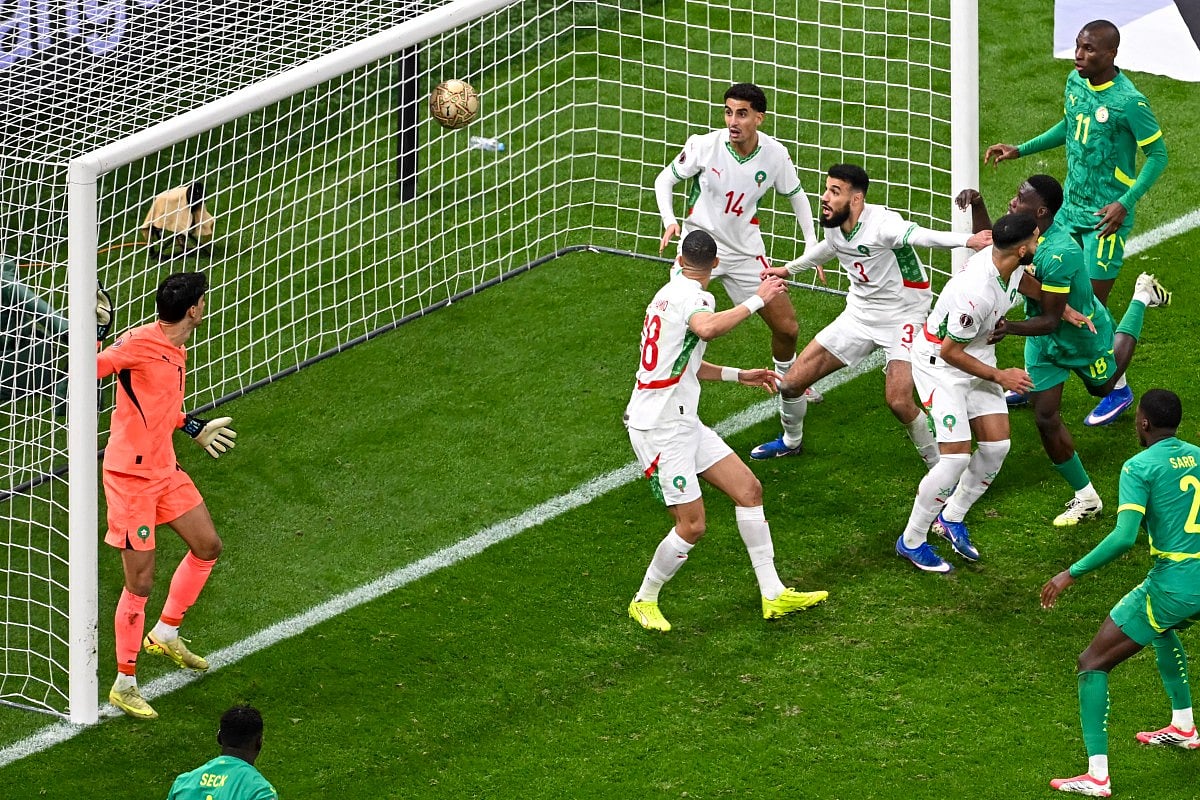
The disallowance of Senegal's goal in the AFCON 2025 final against Morocco has reignited debate about referee decision-making in the most crucial moments. What makes this incident particularly controversial is not just the call itself, but the timing and mechanics that made it impossible for VAR to provide a second look, especially in stoppage time of a continental championship.
What happened
During a corner kick in the first minute of stoppage time, Abdoulaye Seck's header struck the crossbar. As the rebound came loose, Ismaila Sarr pounced to bundle the ball into the net with a sharp reaction. However, the Congolese referee Jean-Jacques Ndala whistled for a foul, disallowing the goal. He had ruled that Seck had fouled Morocco captain Achraf Hakimi in the buildup to the chance.
The problem
By blowing the whistle before the ball entered the net, the referee stopped play prematurely. This created a situation where VAR couldn't intervene, despite what many observers believe was a legitimate goal. Once a whistle is sounded, the play is dead, the video assistant referee's hands are effectively tied.
A matter of timing and judgment
The core issue isn't necessarily the referee's interpretation of contact between Seck and Hakimi, but rather his decision to whistle immediately rather than allowing play to continue. In modern football, referees are increasingly encouraged to let play develop, especially in fast-moving situations like corner kicks and in the final moments of a match. The contact between the two players, while physical, may well have fallen within acceptable parameters for such a competitive moment.
By stopping play prematurely, the referee denied Senegal what could have been a legitimate goal and removed the opportunity for VAR to review a marginal decision.
Conclusion
This incident highlights why the timing of a referee's whistle matters as much as the decision itself. Better refereeing often means allowing the play to unfold before making the call, which is a lesson that applies across all levels of football.
Network Links
GN StoreDownload our app
© Al Nisr Publishing LLC 2026. All rights reserved.