When Spain's star Nico Williams' mother walked 3,000km while pregnant
Nico's gesture of placing the medal over his mother captured hearts around the world
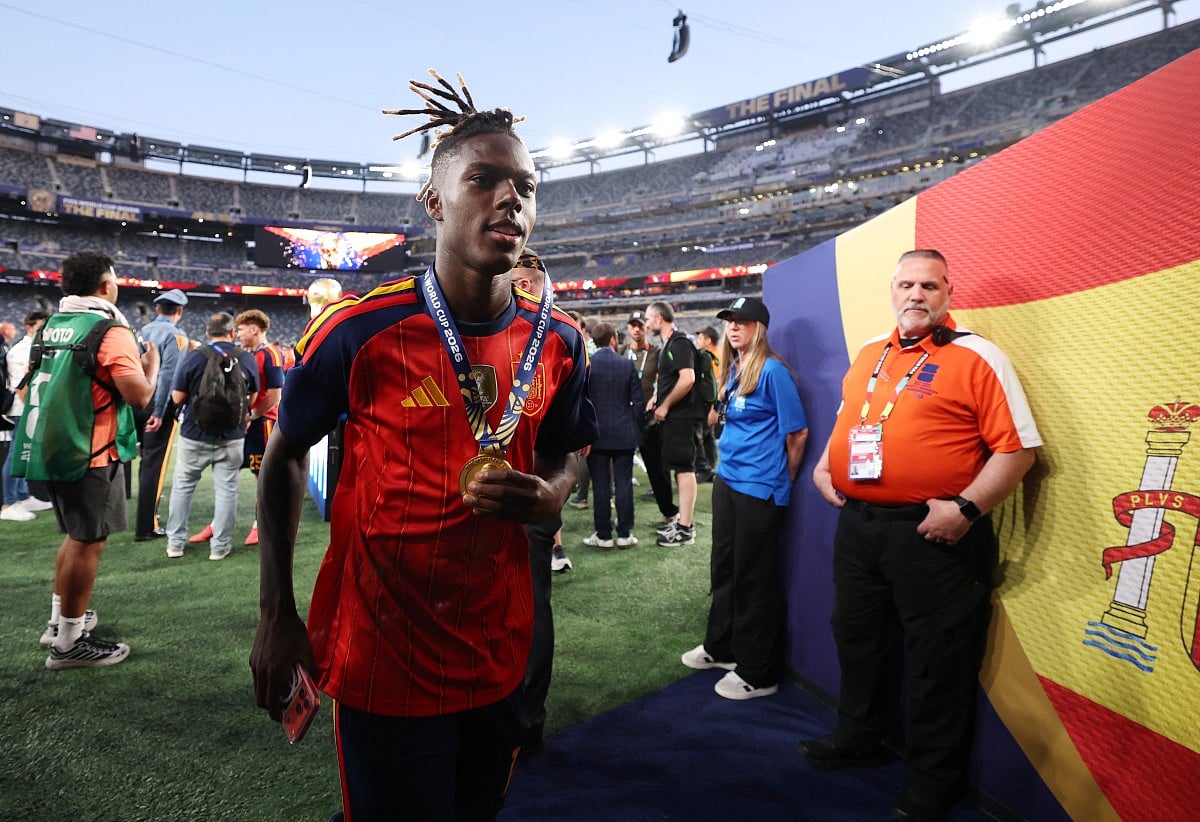
After Spain were crowned Fifa World Cup 2026 champions, countless moments from the celebrations flooded social media. But among them, one clip where Spanish winger Nico Williams went over to his mother at the stands and placed the medal around her neck captured hearts around the world.
To many, it was simply a touching moment between a son and his mother. But behind that gesture lies a remarkable story of survival, sacrifice and unwavering parental love that began long before Nico Williams became one of football’s brightest stars.
Better future
Much before Nico was born in Bilbao in 2002, his parents, Maria and Felix Williams, left Ghana in the 1990s in search of a better future.
Maria was seven months pregnant with their first child, Iñaki, when the couple travelled over 3,000kms towards Spain. Part of the journey was made in overcrowded trucks, while much of it involved crossing the Sahara Desert on foot, enduring extreme heat and unimaginable hardship.
Years later, Nico’s elder brother, Iñaki Williams, revealed what his mother eventually told him about those harrowing days.
“They did part in a truck, one of those with the open back, 40 people packed in, then walked days,” he told The Guardian. “People fell, left along the way, people they buried. It’s dangerous: there are thieves waiting, rapes, suffering... People go not knowing what’s ahead, if they’ll make it.”
When they finally reached Melilla, Spain’s enclave in North Africa, Maria and Felix climbed the border fence hoping to enter Spanish territory. They were detained soon afterwards and, as undocumented migrants, faced deportation.
According to Iñaki, a lawyer from the Catholic aid organisation Caritas gave them one piece of advice that changed the course of their lives.
“The only thing you can try is tell them you’re from a country at war.”
The couple destroyed their Ghanaian documents and sought asylum as Liberians, enabling them to remain in Spain. They eventually settled in Bilbao, where Catholic priest Iñaki Mardones helped the young family rebuild their lives. In gratitude, they named their first son after him. But life wasn’t easy and the worked had to work their way to ensure a decent life for the family.
Today, the brothers represent different nations. Iñaki plays for Ghana, honouring his family’s birthplace, while Nico represents Spain, the country where he was born and raised.
So on Sunday after the final It was more than a celebration of football and a quiet tribute from a son acknowledging that the medal belonged first to the woman who carried him long before the world knew his name.
Network Links
GN StoreDownload our app
© Al Nisr Publishing LLC 2026. All rights reserved.