Senegal are challenging the Confederation of African Football's (CAF) decision to award the championship to Morocco, despite beating the hosts 1-0 after extra time in January's final in Rabat.
Senegal are AFCON champions again: justice served, football wins in legal battle
Senegal's AFCON title restored: Justice prevails in football's legal battle
Last updated:
3 MIN READ
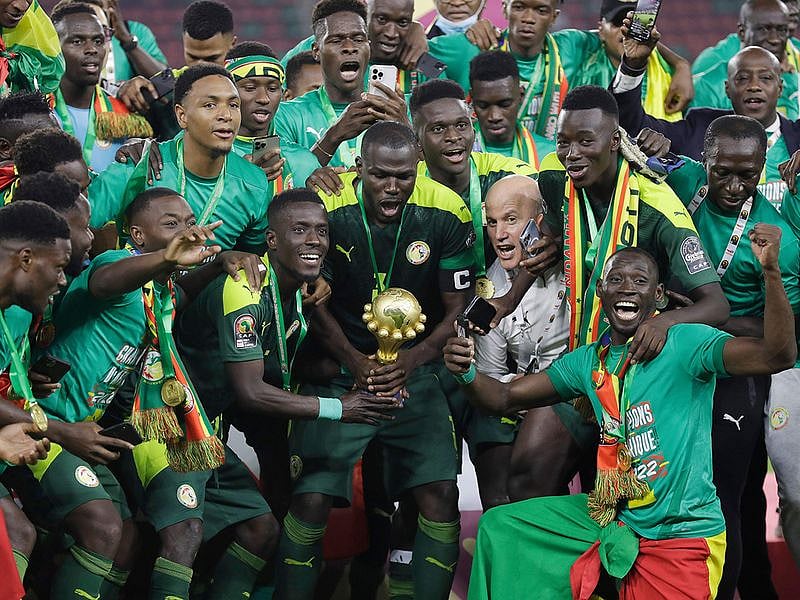
Senegal are challenging the Confederation of African Football's (CAF) decision to award the championship to Morocco, despite beating the hosts 1-0 after extra time in January's final in Rabat.
AP
It's not Morocco.
Senegal are the champions of Africa. Again. But for anyone who watched the Africa Cup of Nations final on January 18, they always were.
More than 10 months after Sadio Mane and his teammates celebrated their triumph in Rabat, the Court of Arbitration for Sport (CAS) has finally restored the result that was achieved on the football pitch.
Justice has been served.
The unanimous decision on Tuesday to overturn the Confederation of African Football's (CAF) ruling that awarded Morocco a 3-0 victory is a welcome one, not just for Senegal but for football itself.
Two wrongs do not make a right
There is no defending Senegal's decision to walk off the pitch after Morocco were awarded a controversial penalty in stoppage time.
Players and coaches cannot simply threaten to abandon a football match whenever they think a refereeing decision has gone against them.
Such behaviour deserves punishment.
But taking away a championship months after the final whistle was not the answer.
Senegal eventually returned to the pitch. Brahim Diaz had the opportunity to win the match for Morocco from the penalty spot but failed to convert. Pape Gueye then scored the winner in extra time.
Both teams had the opportunity to win the trophy on the pitch. Senegal took theirs.
The referee's authority matters
At the heart of the CAS ruling is one of football's most fundamental principles: the authority of the referee.
Congolese referee Jean-Jacques Ndala decided to resume the match despite the chaotic circumstances.
CAS concluded that the decision was within his authority and that the regulations cited to declare Senegal's defeat by forfeiture applied only to matches that were permanently abandoned.
The final was never abandoned.
If the referee had decided to call off the match when Senegal walked away, the outcome could have been entirely different. But he allowed the game to continue, and both teams played until its conclusion.
Overturning that result months later would have set a worrying precedent for football.
A supporter with a Moroccan national flag sprays fire in Brussels, on January 18, 2026 following the Africa Cup of Nations (AFCON) final football match between Senegal and Morocco played in Rabat, Morocco.
Morocco deserve sympathy too
None of this takes away from Morocco's remarkable journey to the final.
Their players and supporters deserved better than being caught in a prolonged legal battle. Morocco also had every right to pursue an appeal through the available legal channels.
But there is a significant difference between punishing misconduct and rewriting a sporting result.
Senegal's federation, coach Pape Thiaw and certain players had already faced separate disciplinary sanctions from CAF. The restoration of the title does not excuse their behaviour.
A victory for football
The CAS verdict should not be interpreted as permission for teams to walk off the pitch in protest. Rather, it reinforces the importance of applying the rules correctly and distinguishing disciplinary offences from sporting outcomes.
It is unfortunate that African football needed more than 10 months to officially establish what the scoreboard had already told us in January.
Senegal won the final. They lifted the trophy. They earned their second continental title on the pitch.
AFCON finally has its rightful champions again.
Network Links
GN StoreAbout Gulf NewsTerms & ConditionsReach by GNSitemapContact usPrivacy PolicyGN FocusHave your sayWork with usAdvertise with usGulf News epaperPrinting Services
Download our app
© Al Nisr Publishing LLC 2026. All rights reserved.