UAE salary paid late every month? Here’s what employees can do
You can report repeated salary delays even if your wages eventually reach your account
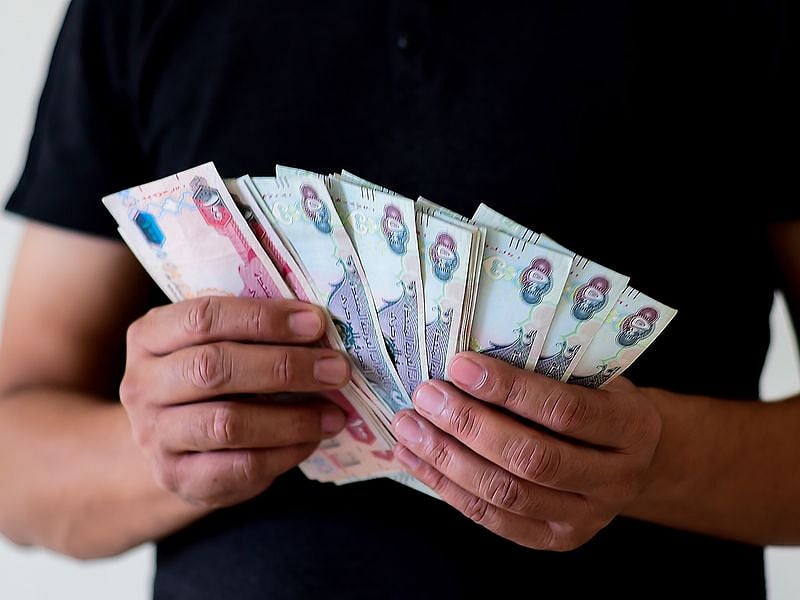
Dubai: Your salary eventually reaches your bank account, but there is a problem – it arrives late every month, or your employer pays you on different dates without a consistent schedule.
For UAE private-sector employees, repeated salary delays can create serious problems, particularly when monthly payments for rent, school fees, loans and other expenses depend on wages arriving on time.
Salaries are monitored through the UAE's Wage Protection System (WPS), an electronic salary transfer system that allows authorities to track whether eligible private-sector employees are being paid correctly and on time.
So, when does a late salary become a violation, and what can you do if your employer eventually pays you but repeatedly misses the due date?
When is a salary considered late in the UAE?
Late payment can constitute a breach of the employment contract once the agreed pay date has passed. The employer's obligation to pay wages on their due dates is set out under Article 22(2) of Federal Decree-Law No. 33 of 2021.
"Under the WPS framework, wages are due on the first day of the following Gregorian month, and MOHRE's monitoring starts on that date," Salam Pappinissery, CEO of Yab Legal Services, told Gulf News.
According to Pappinissery, administrative action against the employer can then escalate:
From day two: System alerts are issued requesting payment.
Day five: Issuance of new work permits may be suspended.
Day 11: In the case of a repeat breach within six months, a fine and adverse reclassification of the establishment may apply.
Day 16: In relevant cases, a labour dispute may be registered automatically.
However, employees do not have to wait for these enforcement stages before raising the issue.
Salary repeatedly late? Put your complaint in writing
If your salary has not arrived when expected, your first step should be to create a written record of the problem.
"First, put it in writing. Email HR and payroll with the pay date, the month and amount outstanding, a request for a specific payment date, and a reservation of your rights. Ask for a date, not just reassurance, and keep the replies," Pappinissery said.
Keeping these communications can become particularly important if late payments continue.
How can I complain about a late salary to MOHRE?
Employees covered by the Ministry of Human Resources and Emiratisation (MOHRE) have several routes available if the problem continues.
These include:
Calling the MOHRE call centre on 80084 for guidance.
Filing a 'My Salary Complaint', a confidential complaint that does not disclose the employee's identity to the employer and may lead to a labour inspection.
Filing a formal individual labour complaint when seeking recovery of a specific unpaid amount. MOHRE initially seeks an amicable settlement and may decide the dispute or refer it to the competent court, depending on the case.
Employees working for companies in free zones outside MOHRE's jurisdiction should instead approach the relevant free-zone authority. DIFC and ADGM have separate employment regimes.
What evidence should you keep if your salary is always late?
If salary delays are becoming a pattern, Pappinissery recommends keeping a dated record, preferably somewhere other than your work email.
Important documents can include:
Employment contract and offer letter
Bank statements showing when each salary was actually credited
Payslips and WPS records
A record of the salary due date, payment date, amount due and amount received
Emails, WhatsApp messages and HR correspondence
Written explanations provided by the employer
MOHRE complaint references and correspondence
Evidence of financial losses caused by the delay
Pappinissery also warned employees to be cautious when signing settlement documents.
"Do not sign a document saying you have received 'all dues' unless it is accurate and you understand its scope. Under Article 65(3), a waiver of rights that violates the law is void, but disputing a signed paper later is harder than not signing it carelessly," he said.
What if my employer eventually pays the salary?
Receiving the money does not necessarily make a repeated pattern of late payments irrelevant.
"Yes, payment clears the unpaid principal for that month, but it does not erase a pattern of late payment. You can still report the pattern through the confidential salary complaint," Pappinissery said.
However, employees should not assume that receiving their salary late automatically entitles them to additional compensation.
"You do not automatically get extra compensation just because your salary was paid late. If the late payment caused you an actual financial loss – for example, bank charges or penalties because you could not make a payment on time – you may be able to claim that, but you would need evidence," he said.
Network Links
GN StoreDownload our app
© Al Nisr Publishing LLC 2026. All rights reserved.