Ramayana nears Rs 17 billion worldwide after strong third-weekend recovery
Weekend boost propels Ramayana closer to Rs 17 billion worldwide milestone
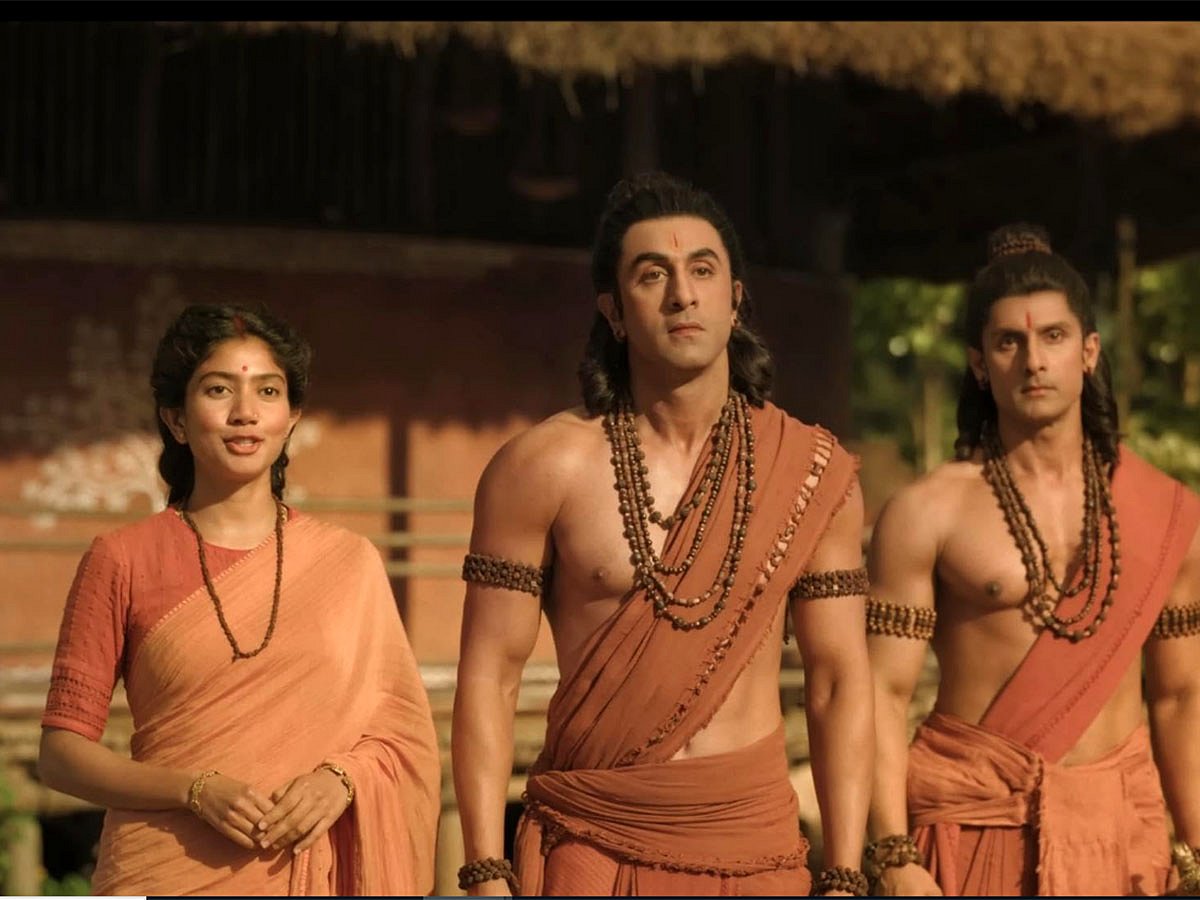
Ramayana: Part 1 has spent less than three weeks in cinemas, and it already sits among the most commercially successful Indian films ever made. The Ranbir Kapoor and Yash-led epic had a predictable dip on weekdays during its third week. Then audiences came back in large numbers over the weekend, and the film's worldwide total is now close to Rs 1,700 crore.
A Sunday surge
Sunday, November 22, was day 18 of the film's run, and it brought in Rs 35.60 crore net in India across about 16,277 shows, according to trade tracker Sacnilk. That was an increase of nearly 29% over Saturday's Rs 27.65 crore. It was also more than twice Friday's figure of Rs 15.75 crore, which had been the lowest single day of the third week.
The week-three numbers show a familiar pattern for a big release. The week opened at Rs 32 crore on Monday. Takings then eased steadily to Rs 28.60 crore on Tuesday, Rs 23.20 crore on Wednesday and Rs 19.35 crore on Thursday. They bottomed out on Friday before the weekend lift.
How the languages stacked up
The Hindi version continued to account for most of the business. It earned Rs 26.25 crore on day 18 from roughly 13,850 shows. The southern-language versions added a smaller but steady amount:
Malayalam: Rs 3.40 crore
Kannada: Rs 2.50 crore
Tamil: Rs 2.40 crore
Telugu: Rs 1.05 crore
Where the totals stand
The film has now earned Rs 942.75 crore net in India, or Rs 1,126.50 crore gross. Overseas markets have added around Rs 567 crore, which puts the global tally at roughly Rs 1,693 crore. Trade watchers expect it to cross Rs 1,700 crore on Monday.
North America has been a particular highlight. A box office tracking account on X reported that Ramayana's earnings there have reached about $29 million. That is just ahead of Dhurandhar 2: The Revenge at $28.6 million, which makes Ramayana the top-grossing Indian release ever in that market. The same tracker says the film is on course to pass $200 million worldwide.
Records from day one
The film's strong position comes from an unusually big launch. Ticket sales opened on Dussehra, a full 15 days before release, and pre-sales reached around Rs 200 crore globally before the first show. The film then opened at Rs 64.85 crore net in India on November 5, the fourth-largest opening day for a Bollywood film. Over the next two days it collected Rs 107 crore and Rs 94 crore, setting new single-day records for Indian cinema. It crossed Rs 500 crore before the end of its first week.
Big numbers, divided opinion
The collections may look unshakeable, but the reception has been far more mixed. The film has drawn objections on several fronts.
The biggest flashpoint has been the scenes of Sita in combat. Some viewers objected to scenes in which Sita fights demons alongside Ram and trains children and young villagers in combat, arguing that this is too much creative liberty with a revered figure. Veteran actor Mukesh Khanna argued on his YouTube channel that the portrayal departs from Valmiki's Ramayana. The makers say the characterisation draws on the Adbhuta Ramayana, a lesser-known text in which Sita takes a fierce, Kali-like form to defeat the thousand-headed demon Sahasra Ravana.
Lara Dutta on the age gap
The casting of Kaikeyi has prompted its own discussion. Lara Dutta is 48. She plays stepmother to Ranbir Kapoor's Ram, who is only four years younger than her, and mother to Bharat, played by Addinath M Kothare, who is six years younger.
Dutta has said the age gap never bothered her. Speaking to News18, she rejected the idea that she might have hesitated over the role. She said actors today focus on inhabiting a character rather than worrying about how a woman of a certain age will be perceived in it. In her words, "We're all beyond all of this."
She also pointed to the epic itself. She noted that King Dasharath had three queens of different ages and backgrounds, and that Kaikeyi was the youngest of them, so a relatively young Kaikeyi fits the story. Before filming, she and Tiwari worked out the character's full backstory, including material that never appears on screen: who she was, where she came from, and why she asked for her two boons.
Dutta has been one of the cast's most vocal defenders more broadly. She has backed the warrior portrayal of Sita, arguing that royal children of that era, daughters included, were usually trained in both the arts and weaponry. Her position fits a view she has expressed before. She has welcomed the shift towards female actors being cast in roles that match their real age, saying Indian cinema long failed to represent women over a certain age.
Behind the epic
Nitesh Tiwari, who directed Dangal and Chhichhore, is making the adaptation as two films. Ranbir Kapoor plays Lord Rama and Sai Pallavi plays Sita. Yash plays Ravana and also co-produces the film. Ravie Dubey plays Lakshman. The supporting cast includes Arun Govil as King Dashrath, Lara Dutta as Kaikeyi, Rakul Preet Singh as Surpanakha and Kajal Aggarwal as Mandodari. Overseas audiences know the film as Ramayana: Rise of a Legend.
Namit Malhotra's Prime Focus Studios produces the film alongside Yash's Monster Mind Creations. DNEG and ReDefine handle the visual effects. The score is a collaboration between Oscar winners Hans Zimmer and AR Rahman.
The project is reported to cost around Rs 4,000 crore, and that figure has drawn attention. Malhotra has said he is not relying on ticket sales alone to recover it and is looking at merchandise and theme parks as well. Actor Nitish Bharadwaj, meanwhile, has publicly called for an inquiry into the budget.
Fans will have to wait for the second instalment. The closing moments of Part 1 confirm that Ramayana: Part 2, originally expected in 2027, will now arrive on Diwali 2028.
Network Links
GN StoreDownload our app
© Al Nisr Publishing LLC 2026. All rights reserved.