Percy Jackson Season 3 is almost here: Why the Disney+ series is one of TV’s better book adaptations
The series will release on November 20, and promises to be the darkest yet
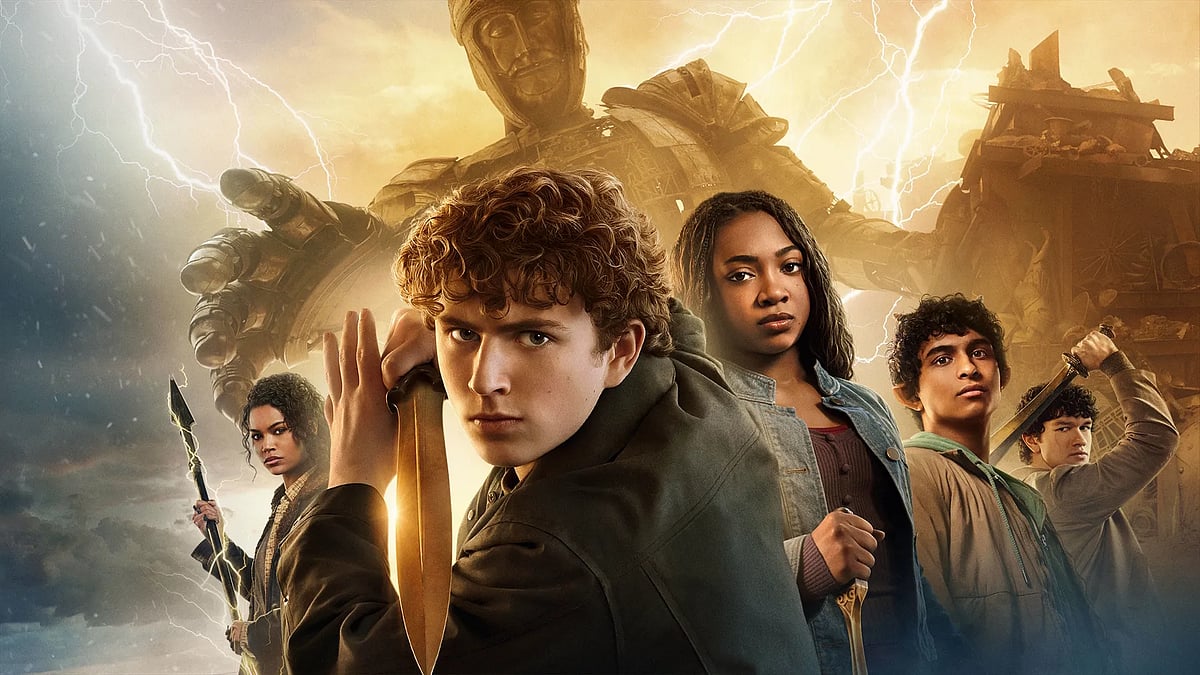
Book adaptations usually fail in one of two ways. Some treat the source like a museum exhibit, reproducing every scene and forgetting to be television. Others treat it as a loose suggestion, keeping the title and a few names and quietly discarding everything readers cared about. Disney+’s Percy Jackson and the Olympians has avoided both, and with Season 3 arriving on November 20, it’s worth looking at how.
The premise
Set in present-day America, Percy Jackson and the Olympians follows Percy, a sarcastic, restless kid who has never quite fit in, until he learns that the monsters of Greek mythology are real and he is one of the half-human children they are hunting. His refuge is Camp Half-Blood, a summer camp on Long Island where young people like him train to survive in a world that ordinary humans can’t see.
From there, Percy sets out on a series of cross-country quests alongside Annabeth Chase, a sharp strategist with little patience for his shortcuts, and Grover Underwood, a loyal satyr assigned to protect him.
And so, why does it work?
The author is in the room
The simplest explanation is also the most important one. Rick Riordan is closely involved with the series, and it shows. That matters more than it sounds. When a writer helps adapt his own work, decisions about what to cut and what to change come from someone who knows which threads hold the story together.
The earlier film duology is a useful contrast. It aged up its young heroes, rearranged the plot, and stopped after Sea of Monsters. The series has now outlasted it. Season 3 adapts The Titan’s Curse, which means a book published in 2007 is reaching the screen for the first time. Fans who were children when it came out may now be watching with children of their own.
One book, one season
The show gives each novel a full season, and that structure does a lot of quiet work. Season 3 runs for eight episodes, opening with two on November 20 and then releasing two each Friday until the finale on December 11. Eight hours is enough room for a quest to breathe, for side characters to register as people rather than plot devices, and for the slower emotional beats that films usually cut first.
It also means the show’s pacing tracks the books’ pacing. Readers know roughly where each season will land, so the series can focus on how the story is told rather than whether it will get there.
Casting that serves the story
Walker Scobell, Leah Sava’ Jeffries and Aryan Simhadri lead as Percy, Annabeth and Grover, and the casting succeeds because it avoids stunt-casting the core trio. The three feel like friends who have spent two seasons learning each other’s habits, which is exactly what Season 3 needs. This time Annabeth is the one who goes missing, captured by Kronos’s forces, and her absence only lands because the show spent so long making her presence matter.
Where the series does go for bigger names, it does so with purpose. The Olympians are played by actors whose existing screen personas do some of the characterisation for them. Lin-Manuel Miranda brings a slippery charm to Hermes, the deity of messengers and thieves. Jason Mantzoukas plays Dionysus with familiar chaotic energy. Professional wrestler Adam Copeland is a suitably blunt Ares.
Toby Stephens gives Poseidon both authority and warmth, which is the balance the character requires. After Lance Reddick’s death, Courtney B. Vance took over as Zeus, and the recast was handled with care rather than treated as a footnote.
Season 3 completes the set: All twelve Olympian deities appear for the first time. Dafne Keen plays Artemis, Kate McKinnon plays Aphrodite, Ming-Na Wen plays Hera, Jennifer Beals plays Demeter, and Hunter Smielecki plays Apollo. Given that Olympus spends much of this book deciding how to respond to the Titans, it is fitting that the council finally has a full attendance record.
Letting the story grow up
The real test of any long-running adaptation is whether it can change tone when the books do. The Titan’s Curse is where Riordan’s series stops being a tour of famous myths and starts building a mythology of its own, and it gets noticeably darker. The show’s producers have said plainly that their job is to follow the books there, rather than keep the series frozen at its friendliest.
The new season brings in Nico and Bianca di Angelo, played by Levi Chrisopulos and Olive Abercrombie, two young demigods whose parentage is a mystery. It introduces the Hunters of Artemis, whose leader vanishes while tracking a creature that threatens Olympus. And it puts Tamara Smart’s Thalia Grace, revived at the end of Season 2, at the centre of a complicated question. The story concerns a child of the Big Three, and as Zeus’s daughter, Thalia qualifies just as much as Percy does. Without Annabeth to check his blind spots, Percy has to work alongside people he would not have chosen, under a prophecy warning that not everyone comes home.
Not perfect, but faithful where it counts
No adaptation satisfies every reader, and this one will have its share of quibbles about changed scenes and compressed subplots. But faithfulness is not the same as transcription. What the series gets right is the spirit of the books: the dry humour, the friendships under pressure, and the sense that the adults running the world are frequently the problem.
That is a harder thing to adapt than a plot. Two seasons in, Percy Jackson has shown it understands the difference. Season 3 is where that understanding faces its biggest test.
Network Links
GN StoreDownload our app
© Al Nisr Publishing LLC 2026. All rights reserved.