Ranveer Singh in 'Dhurandhar'
Not India, not Pakistan: Where Dhurandhar’s Lyari scenes starring Ranveer Singh and Akshaye Khanna were actually shot
The set was completed in just 20 days, a feat done by collaborating with local talent
Last updated:
3 MIN READ
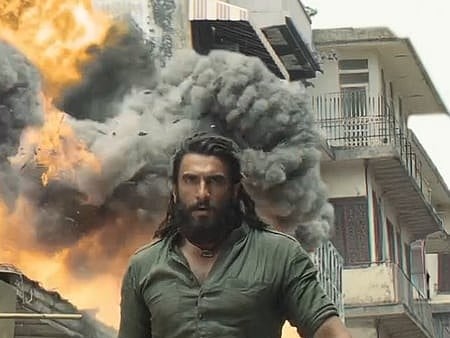
Ranveer Singh in ‘Dhurandhar’
Dubai: Dhurandhar is soaking up praise from critics and cash from the box office in equal measure.
Directed by Aditya Dhar, the film unfolds in Pakistan — but here’s the plot twist no one saw coming: not a single frame was shot there. Or in India, for that matter.
Instead, the makers went all out to recreate the gritty, vibrant neighbourhood of Lyari in a completely unexpected Asian country. From narrow lanes and weathered buildings to the lived-in cultural details, the film’s setting feels strikingly authentic on screen. Here’s how the team brought Lyari to life far from its real location.
Where was Lyari recreated for Dhurandhar?
Skipping both India and Pakistan, the production recreated Lyari on a massive custom-built set in Bangkok, Thailand. The town seen in the film isn’t a real location but a meticulously constructed six-acre set designed by production designer Saini S Johray.
On December 16, Johray shared a behind-the-scenes video—originally posted by YouTuber The Fact Boii—on Instagram, offering a glimpse into how the ambitious set was built and how filming unfolded.
Inside the making of the Lyari set
The Lyari set was brought to life with the help of more than 500 Indian and Thai artists, many of whom had previously worked on popular projects such as The Family Man and The Night Manager. While the original plan was to build the set in Mumbai, unpredictable weather conditions forced the team to rethink their approach.
Thailand ultimately emerged as the most practical option for such a large-scale build, allowing the filmmakers to execute their vision without compromise.
To ensure authenticity, the art department conducted extensive research—studying old Pakistani films, newspaper archives, headlines, and YouTube footage. Every visual detail was carefully considered, from wall textures and signage to window grills and street layouts, to mirror Lyari’s distinctive character.
Because a large portion of the crew was Thai, the team was especially cautious to eliminate anything that could hint at the set’s actual location. The result was a convincingly immersive version of Lyari that seamlessly translates to the big screen.
Why Thailand was the final choice
In a recent interview with The Hollywood Reporter, Johray explained that shooting in Mumbai during the monsoon season was simply not feasible.
“We needed a six-acre set, which no studio in Mumbai could accommodate, and the July rains made it impossible to build outdoors,” he said. “After scouting several countries, Thailand stood out as the ideal location for a larger-than-life set.”
He also revealed that the entire set was completed in just 20 days, a feat made possible by close collaboration with local talent. “We couldn’t bring 500 people from India, so we worked with around 300–400 Thai artists. In total, nearly 500 people worked day and night to complete the set on time,” he added.
With its attention to detail and ambitious scale, Dhurandhar’s recreated Lyari stands as one of the film’s most impressive achievements—proof that storytelling can transcend borders when craft and commitment come together.
Network Links
GN StoreAbout Gulf NewsTerms & ConditionsReach by GNSitemapContact usPrivacy PolicyGN FocusHave your sayWork with usAdvertise with usGulf News epaperPrinting Services
Download our app
© Al Nisr Publishing LLC 2026. All rights reserved.