The poster of Rani Mukerji in Madaani 3
‘From the time you give birth to baby girl, fear starts’: Rani Mukerji on Mardaani 3, motherhood and why evil has no gender
The Mardaani Bollywood franchise was born as a spillover rage after 2012 Nirbhaya tragedy
Last updated:
4 MIN READ
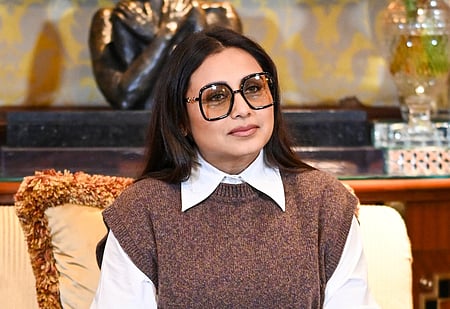
Rani Mukerji
Dubai: “From the time you give birth to a baby girl, the fear starts." National Award-winning actress Rani Mukerji and mother of a ten-year-old girl doesn’t sugarcoat it.
As a fellow mother, I tell her I live in Dubai largely because it feels safe for women and children. That sense of security, I say, is something every parent quietly hunts for. Does Mardaani 3 tap into that universal fear?
“Mother to mother, we literally have our hearts roaming outside our bodies,” she says.
“Once we have children—whether a girl child or a boy child—we just hope and pray they’re always safe. They have to go out into the world, make their mistakes, and the anxiety never really leaves.”
That anxiety is the emotional engine of the Mardaani franchise, which began in 2014 in the shadow of the 2012 Nirbhaya case. What started as a single film has now become a genre of its own: female-cop stories dealing head-on with crimes against women and children.
And the rage hasn’t faded.
The Mardaani franchise was born as a spillover rage after Nirbhaya tragedy, the brutal gangrape and murder of a young woman on a moving bus in Delhi. It remains a crime that shook India’s conscience and triggered nationwide protests about women’s safety. That collective anger is what still fuels Mukerji’s portrayal of Shivani Shivaji Roy more than a decade later.
“The rage has been there since the Nirbhaya case,” Mukerji says.
“It was born from what we all felt collectively as women and as a nation. And now in 2026, we are still talking about the same things.”
This time, Mardaani 3 introduces a twist that unsettles expectations — the antagonist is a woman who traffics young girls, mostly poor, by drugging them.
“Crimes don’t see gender,” Mukerji says firmly.
“Evil has no gender. It can be in anyone’s heart. It’s never about whether you’re a man or a woman. It’s always about who is the evil.”
I point out that the missing girls in the film come from underprivileged backgrounds — and ask whether class changes how society views crime against women. Mukerji smiles knowingly and deflects spoilers.
“You’ll get your answer in the film,” she says. Fair enough.
We talk about outrage — and how quickly it expires. As journalists, we know the pattern: anger trends for ten days, then vanishes under the next breaking story. I mention shows like Delhi Crime and ask whether there can ever be “too many” such narratives.
Mukerji disagrees. Strongly.
“That is exactly why Mardaani started this conversation,” she says.
Poster of Mardaani 3
“Before this, there weren’t many female cop stories dealing with these kinds of cases. Mardaani inspired more films and series. The more stories we tell, the more the chatter continues. And that chatter is necessary.”
For her, repetition is not fatigue, it is pressure.
“More films, more stories on the same topic will finally make the justice system relent and create fear in people who are even planning to commit such crimes.”
There is also something deeply cinematic about Mardaani: the moral satisfaction. The idea that good can still win.
“That’s what we want to give the audience,” Mukerji says. “Hope. That feeling of justice. Hope is what we live with every day.”
Watching her across three films as Shivani Shivaji Roy, I can’t help but notice one thing: she never looks broken down or weary. No grimy cop trope here. She is composed, well dressed, alert — and frankly, age-defying.
“I’m only inspiring women,” she says.
“Donning the role of a woman in uniform is a huge responsibility. I want to show them in the best way possible.”
Rani Mukerji in a still from Mardaani franchise
Was she worried about making the character too masculine?
“The thing is, strength has nothing to do with masculinity or femininity,” she replies.
“It’s about attitude and who you are. I’ve always seen strong women growing up. For me, being strong is a very natural trait of a woman.”
We move to cinema at large — and whether recent box-office successes have emboldened filmmakers to tell layered, complex stories.
“Every movie that does well empowers us,” she says.
“For me, the success of Mardaani 3 is important because it will empower me to do the next film.”
But she’s clear about one thing: labels must go.
“I hope people see Mardaani 3 as a film — not as female-led or male-led. The minute you label it, you defeat the purpose.”
And no, this franchise is not about male-bashing.
“It’s about good versus evil,” she says. “Good will always overpower evil.”
Our chat soon moved towards less grim topics: Dubai, food, and memory. I remind her of the last time we met at a women’s police station by the beach. She had just bought a SALT burger. (Yes, that detail has lived rent-free in my head.)
“I love being in Dubai,” she laughs. “My daughter loves it too. We come here three times a year. We’re all foodies, and the food scene here is cracking.”
Before signing off, she issues a command, not a request:
“Don’t just watch the film yourself. Take a hundred people with you.”
Don't Miss It!
Mardaani 3 is out in UAE cinemas on January 30
Network Links
GN StoreAbout Gulf NewsTerms & ConditionsReach by GNSitemapContact usPrivacy PolicyGN FocusHave your sayWork with usAdvertise with usGulf News epaperPrinting Services
Download our app
© Al Nisr Publishing LLC 2026. All rights reserved.