Park Hyung-sik and Park Bo-young star in Strong Girl Bong-soon, a K-Drama about a woman with superhuman strength falling in love with a CEO.
9 classic K-Dramas that defined the golden era of Korean television: Goblin to Alchemy of Souls
The older K-Dramas had a strong, biting flavour and were just so bingeable
Last updated:
6 MIN READ
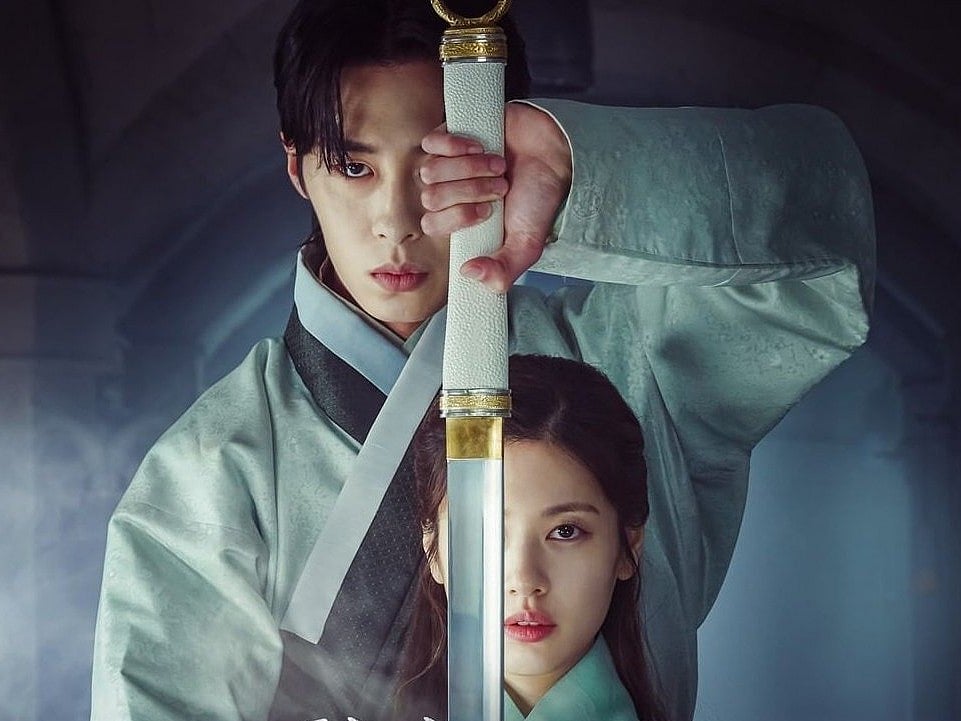
A still from Alchemy of Souls
There was a stretch of years when a Korean drama could stop a dinner table on three continents. You knew the OST before you knew the plot, you argued about second leads with friends and you couldn't stop watching. Those shows were sweeping, sincere, filled with a consuming romance and chemistry that carried the series through, even when everything else wavered. They set a standard that fans still measure every new release against. Here are the ones that defined the old flavour, and why so many viewers keep going back for it.
1) Goblin (2016)
If the golden era had a cathedral, it was Guardian: The Lonely and Great God. Gong Yoo plays a Goryeo general cursed to live for centuries with a sword through his chest, which only his destined bride can remove; Kim Go-eun is the bright, ghost-seeing schoolgirl who turns out to be her, and Lee Dong-wook steals scenes as an amnesiac Grim Reaper who becomes his bickering housemate.
Writer Kim Eun-sook and director Lee Eung-bok fused slapstick roommate comedy, centuries-spanning tragedy and a meditation on death, then shot it all in amber light, falling maple leaves and snow. The soundtrack became a reflex, its bromance as beloved as its romance, and its finale one of the highest-rated in Korean cable history. Goblin proved a k-drama could be a prestige object, cinematic and emotionally maximalist, and fans miss it because almost nothing since has dared to be this earnest at this scale.
2) Descendants of the Sun (2016)
A swaggering special-forces captain meets a principled, deeply unimpressed trauma surgeon, and then both are posted to a fictional war-torn country where earthquakes and militias keep interrupting their flirting. That was the whole pitch, and it turned Song Joong-ki and Song Hye-kyo into the most famous on-screen couple in Asia.
Fully pre-produced, a rarity at the time, and aired simultaneously in Korea and China, it became a pan-Asian event, with ratings in Korea climbing into the high 30s and its love songs drifting into wedding playlists. Its quieter second couple, a sergeant and a lieutenant kept apart by rank, gave the show its grown-up heartbreak. Descendants of the Sun wrote the template for the modern k-drama export, and fans miss its confidence: a belief that a love story alone could carry a blockbuster.
3) Reply 1988 (2015)
Reply 1988 was a portrait of five families sharing one alley in Seoul's Ssangmun-dong, the year the Olympics came to Korea. The children trade ramen and VHS tapes, the mothers pass side dishes over the wall, and the fathers communicate mostly in silence. At its centre is Deok-sun, a middle child who feels overlooked, and the question of which neighbourhood boy she will marry, a mystery that set off a fan war between Park Bo-gum's gentle Taek and Ryu Jun-yeol's devoted Jung-hwan that has never fully ended. Director Shin Won-ho let episodes run long and slow, trusting that a father who cannot say he is proud, or a mother who buys the wrong cake, could land like an earthquake. It made slice-of-life the main event, and fans miss its patience above all.
4) W: Two Worlds (2016)
A surgical resident, played by Han Hyo-joo, is pulled through her father's tablet into W, the hit webtoon he draws, where she saves the life of its hero, Lee Jong-suk's billionaire Kang Chul. Then Kang Chul begins to realise he is a character, and he wants to meet the man who decided his family had to die.
Writer Song Jae-jung turned that premise into a thriller about free will: panels that end mid-sentence, a villain with no face because no one ever drew one, a hero who escapes his story by finding the edge of the page. Its opening episodes are among the most gripping hours of the era, and viewers spent the summer of 2016 sketching diagrams of who was in which world. W proved a k-drama could take strange, brainy swings and still be a mainstream hit.
5) Strong Woman Do Bong-soon (2017)
Park Bo-young plays a tiny, soft-spoken woman who has inherited superhuman strength down the female line of her family, a gift she must only ever use for good or lose forever. Hired as a bodyguard by Park Hyung-sik's cocky, secretly lonely gaming CEO, she bends steel railings and flips gangsters while trying to win over the gentle police officer she has loved since school, played by Ji Soo.
Writer Baek Mi-kyung mixed screwball romance, superhero fantasy and crime thriller with gleeful abandon, and the leads' chemistry, all teasing and slow-dawning tenderness, made it one of JTBC's breakout hits. Above all it gave the era a heroine who was literally the strongest person in every room, and treated that as a reason for joy rather than apology. Fans still call it the purest comfort watch of the period.
6) What's Wrong with Secretary Kim (2018)
For nine years, Kim Mi-so has been the flawless secretary to Lee Young-joon, a vice-chairman so vain he speaks of himself in near-royal terms. When she announces she is quitting to finally live her own life, he panics, and the hunt to keep her becomes a courtship.
Park Seo-joon played the narcissist with such comic precision, and Park Min-young played Mi-so with such composure, that the show turned a familiar office-romance setup into appointment television. Adapted from a popular web novel and webtoon, it balanced polished workplace comedy with a buried childhood mystery that slowly reframes both leads. It is the era's office romance at its most glossy and assured, and the template a dozen later boss-and-employee dramas tried, and failed, to copy.
Son Ye-jin and Hyun Bin in 'Crash Landing on You', the show that became an instant success.
7) Crash Landing on You (2019)
A love story as epic as this one, has not been since.
A South Korean heiress, played by Son Ye-jin, is swept by a freak paragliding accident across the DMZ and lands, quite literally, on a North Korean army captain, played by Hyun Bin. He hides her in his village while plotting her escape, and the impossible border between them becomes the engine of the whole romance. Writer Park Ji-eun built a world that felt rich and specific: gossiping village wives, a lovable squad of soldiers hooked on South Korean dramas, and a second couple as tender as the first.
The show became the highest-rated drama in tvN's history at the time and a pandemic-era global comfort binge, and the leads later married in real life, which only deepened the legend.
8) Start-Up (2020)
Seo Dal-mi, played by Bae Suzy, dreams of becoming Korea's Steve Jobs. Nam Do-san, played by Nam Joo-hyuk, is a shy coding genius whose company is going nowhere. And Han Ji-pyeong, played by Kim Seon-ho, is the sharp, wounded investor who once wrote letters to Dal-mi as a teenager under Do-san's name.
Set inside a fictional Silicon Valley-style incubator called Sandbox, writer Park Hye-ryun's drama a tech-world underdog story, love triangle, and family saga, anchored by a tender grandmother whose bond with Ji-pyeong broke hearts. It also set off one of the fiercest "second lead syndrome" debates the fandom has ever seen. Start-Up captured the era's gift for wrapping career ambition, found family and romance into one hopeful package, and fans still quote its pep talks.
9) Alchemy of Souls (2022)
Technically it premiered in June 2022, just past the line, but Alchemy of Souls belongs here in spirit: it feels like the last great show made the old way. In the invented kingdom of Daeho, an elite assassin's soul is trapped inside the body of a frail young woman, played by Jung So-min, who becomes the secret martial-arts teacher of a rebellious nobleman's son, played by Lee Jae-wook.
From the Hong sisters, the writers behind Hotel del Luna, it delivered sprawling world-building, sword fights, magic, a full ensemble of scheming families and a slow-burn teacher-student romance that grew into one of the most devoted fandoms of its year. Running across two parts and thirty episodes, it had the old-school appetite for scale and sincerity, proof that the golden-era formula still works when someone commits to it.
Why we keep going back
The streaming boom brought k-dramas bigger budgets, shorter seasons and a sharper turn toward thrillers and knowing, understated romance. Much of it is commendable. But the shows on this list shared something harder to manufacture: total sincerity.
They believed in fate, in found family, in the idea that one look across a snowy street could carry sixteen hours of television, and they built unforgettable soundtracks, second leads and side characters around that belief. That is the old flavour fans are chasing every time they press play on a rewatch.
Network Links
GN StoreAbout Gulf NewsTerms & ConditionsReach by GNSitemapContact usPrivacy PolicyGN FocusHave your sayWork with usAdvertise with usGulf News epaperPrinting Services
Download our app
© Al Nisr Publishing LLC 2026. All rights reserved.