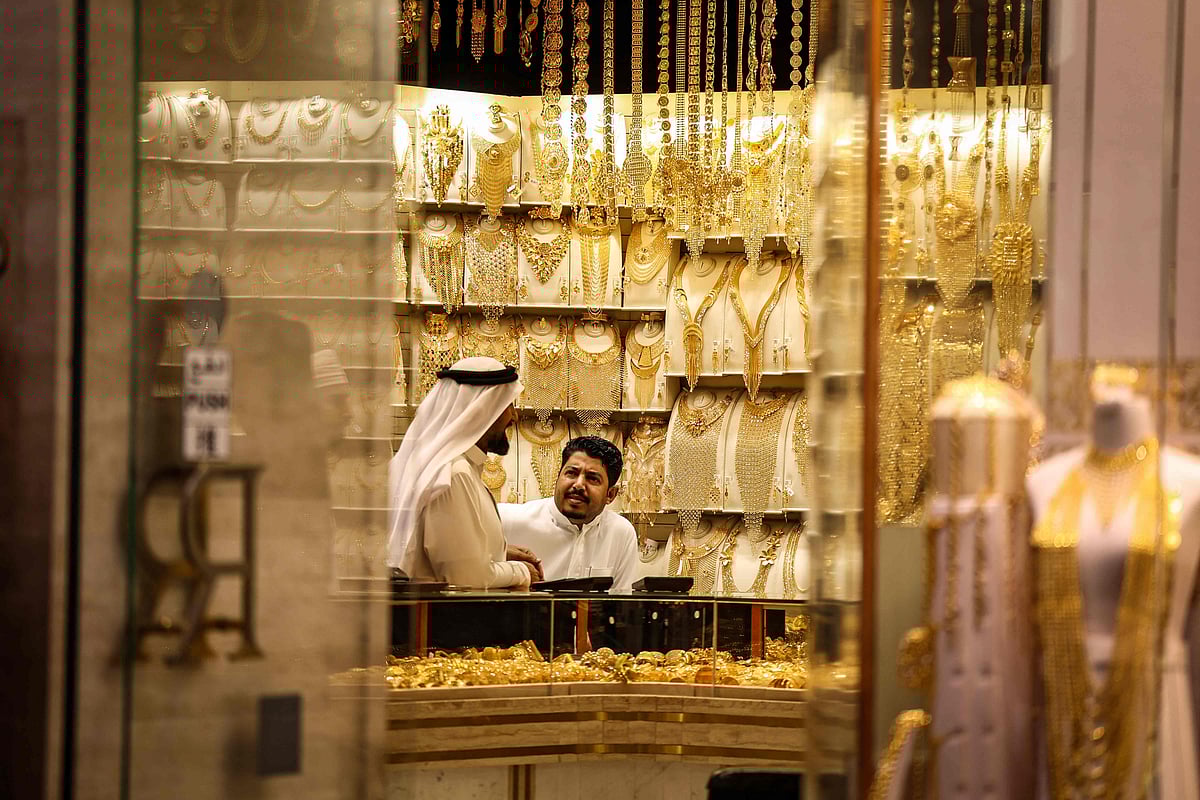
Dubai: Gold prices in the UAE moved higher again on Thursday morning, extending a strong start to September and adding to the cost facing residents planning jewellery purchases or buying the metal for investment. (Check latest UAE gold prices here, alongside prices in Saudi Arabia, Oman, Qatar, Bahrain, Kuwait, and India.)
The 24-karat variety stood at Dh532 per gram at 8.56 am on September 3, up from Dh528.25 on Wednesday, an increase of Dh3.75 in a day. The 22-karat variety climbed to Dh492.50 from Dh489.25, gaining Dh3.25.
Prices have risen steadily since the beginning of the month. The 24-karat rate has increased from Dh522 on September 1 to Dh528.25 on September 2 and Dh532 on September 3, taking the three-day gain to Dh10 per gram. The 22-karat variety moved from Dh483.25 to Dh489.25 and then Dh492.50 over the same period, while 21-karat gold rose from Dh463.50 to Dh472.25 and 18-karat increased from Dh397.25 to Dh404.75.
Gold rebounds above $4,400
The increase in UAE retail rates comes alongside a recovery in international gold prices after the precious metal fell to around $4,285 an ounce.
The rebound follows a correction from the nearly $4,700 peak reached in late August, when comments from Federal Reserve Chair Kevin Warsh at Jackson Hole led markets to increase expectations of higher US interest rates. Treasury yields and the dollar subsequently rose, putting pressure on gold.
Conditions have since turned more supportive, with the 10-year US Treasury yield retreating to around 4.78% after nearing 5%, while the dollar index moved down towards the 99.1 to 99.2 range.
Tran said the change in bond yields had been central to the recovery, with pressure on gold easing once yields and the dollar stopped rising. Lower prices also brought some buyers back into the market.
US jobs data adds support
Weaker US private-sector employment data provided another supportive factor, although the immediate gold price reaction was limited.
ADP data showed that the US private sector added 38,000 jobs in August, below the forecast of 48,000. Manufacturing lost 17,000 jobs, while professional and business services shed 16,000 positions.
Investors are now awaiting official nonfarm payroll data for a clearer indication of US labour market conditions.
New York Fed President John Williams also said there were not yet sufficiently clear signals to determine whether monetary policy needed to be tightened further, leaving the September decision dependent on incoming economic data.
Interest-rate risk remains significant, with markets pricing in around a 62% probability of another 25-basis-point Federal Reserve increase in September. Headline and core PCE inflation stood at 3.7% and 3.3% year-on-year respectively, remaining above the Fed's 2% target.
Middle East tensions pull gold both ways
Geopolitical uncertainty continues to influence gold, but the impact is not entirely in one direction.
The US-Iran conflict can increase safe-haven demand for gold, while higher oil prices resulting from regional tensions could push inflation expectations higher and keep US interest rates elevated.
“The current recovery therefore reflects a combination of dip-buying demand, easing yields, a slightly weaker dollar and hedging against geopolitical uncertainty,” Tran said.
The immediate direction of gold will depend heavily on upcoming US employment and inflation figures, together with signals from the Federal Reserve.
Tran said lower Treasury yields and a weaker dollar were creating favourable conditions for gold, although further evidence would be needed to show that inflation pressures were easing and the US labour market was continuing to weaken.
Longer-term demand remains intact
Central-bank buying and investment demand continue to provide support beyond the latest price moves.
Central banks purchased a net 289 tonnes of gold during the second quarter, while global gold exchange-traded funds attracted another $3 billion in July after two consecutive months of outflows.
“Over the medium term, I remain relatively positive on gold. Demand from central banks, investment flows and concerns over U.S. public debt continue to provide meaningful support,” Tran said.
The rebound from around $4,283 to $4,285 has eased some of the recent selling pressure, while the return above $4,400 has improved gold's short-term position.
Tran said the move was still insufficient to confirm a sustainable uptrend, with US employment, inflation and interest-rate expectations likely to remain key drivers of prices in the coming period.

Sign up for the Daily Briefing
Get the latest news and updates straight to your inbox
Network Links
GN StoreDownload our app
© Al Nisr Publishing LLC 2026. All rights reserved.