Dubai gold jumps Dh29 in six days, 10g now costs over Dh5,100
A 10g purchase now costs about Dh5,163, excluding making charges and taxes
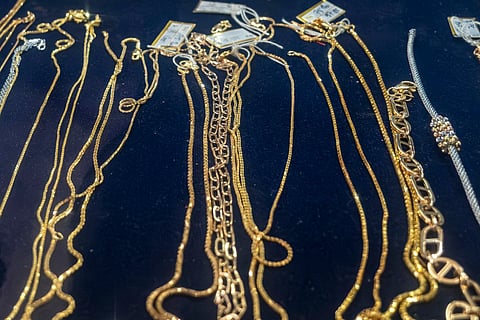
Dubai: Gold prices moved higher again on Thursday afternoon, taking the local 24-karat rate to Dh516.25 per gram and extending a rapid increase that has added Dh29 since the beginning of August. (Check latest UAE gold prices here, alongside prices in Saudi Arabia, Oman, Qatar, Bahrain, Kuwait, and India.)
The 24K rate stood at Dh516.25 at 3.05 pm, up Dh2.25 from Dh514 on Wednesday, while 22K gold increased by Dh2 to Dh478 per gram from Dh476.
Get updated faster and for FREE: Download the Gulf News app now - simply click here.
The 21K variety rose to Dh458.25 from Dh456.25, while 18K gold climbed to Dh392.75 from Dh391.25.
Gold climbs nearly 6% this month
Dubai’s 24K price began August at Dh487.25 and remained at the same level on August 2 before easing to Dh485.50 on August 3.
Prices then rose to Dh492.25 on August 4 and jumped to Dh514 on August 5, before reaching Dh516.25 on Thursday afternoon.
The latest rate represents an increase of Dh29 per gram, or almost 6%, since August 1. A buyer purchasing 10 grams of 24K gold would now pay Dh290 more than at the beginning of the month, excluding making charges and taxes.
The 22K rate has followed a similar path, rising from Dh451.25 on August 1 to Dh478 on Thursday, an increase of Dh26.75 per gram.
Global bullion approaches $4,300
International gold prices rose as much as 1.4% and briefly moved above $4,300 an ounce before giving back part of the advance.
The move followed a 4.1% increase during the previous session, the largest single-day gain since February 3.
Bullion found support from signs of progress towards restoring some shipping activity through the Strait of Hormuz, which eased concerns that high energy costs could force the US Federal Reserve to raise interest rates more aggressively.
The fact that gold is showing strength despite improving geopolitical expectations tells me that the primary driver of the current move has become increasingly economic and monetary rather than simply defensive demand caused by political risksRania Gule, Senior Market Analyst at XS.com
Iran said it had reached an agreement with Oman on a proposed temporary shipping route through the strait. The route could remain active for between two and four months, although Iranian Deputy Foreign Minister Kazem Gharibabadi said the arrangement did not amount to a full reopening.
Oil prices remained lower following the development, reducing some of the inflation concerns linked to the disruption of regional energy supplies.
Markets are now pricing in one US interest-rate increase by the end of the year, compared with expectations for two increases last week. Reduced expectations for monetary tightening tend to support gold because the metal does not pay interest.
Rania Gule, Senior Market Analyst at XS.com in the MENA region, said weaker US employment indicators, a softer dollar and lower Treasury yields had become important drivers of the rally.
Private payroll figures from ADP came in below expectations, while the employment component of the US services index fell to 47.4 from 51.2, indicating contraction in services-sector employment.
The wider ISM Services Index, however, increased to 54.1 in July, while prices paid by businesses remained elevated, leaving the Federal Reserve to weigh a slowing labour market against continued inflation.
Fed Governor Lisa Cook said she remained prepared to support higher interest rates if inflation failed to ease, despite backing the decision to leave rates unchanged at the central bank’s July meeting.
Buyers face risk of a short-term pullback
Gold has declined by nearly a fifth since the US-Iran war began in late February, when higher energy prices increased inflation concerns and strengthened expectations that US interest rates would remain elevated.
The latest recovery has brought prices back towards $4,300, although the speed of the increase could lead to profit-taking after gains of more than 4% in a single session.
“Therefore, my broader outlook for gold remains positive, but I would not favor chasing the price after such a strong surge. Instead, I believe that any orderly pullback would be healthier for the bullish trend, allowing the market to relieve overbought conditions and rebuild momentum from more balanced levels,” Gule said.
US jobless claims and Friday’s non-farm payrolls report will provide the next indications of whether the labour market is continuing to lose momentum.
Weaker employment figures could place further pressure on the dollar and Treasury yields, while stronger data could revive expectations for higher interest rates and trigger a correction in gold prices.
- With inputs from Bloomberg.