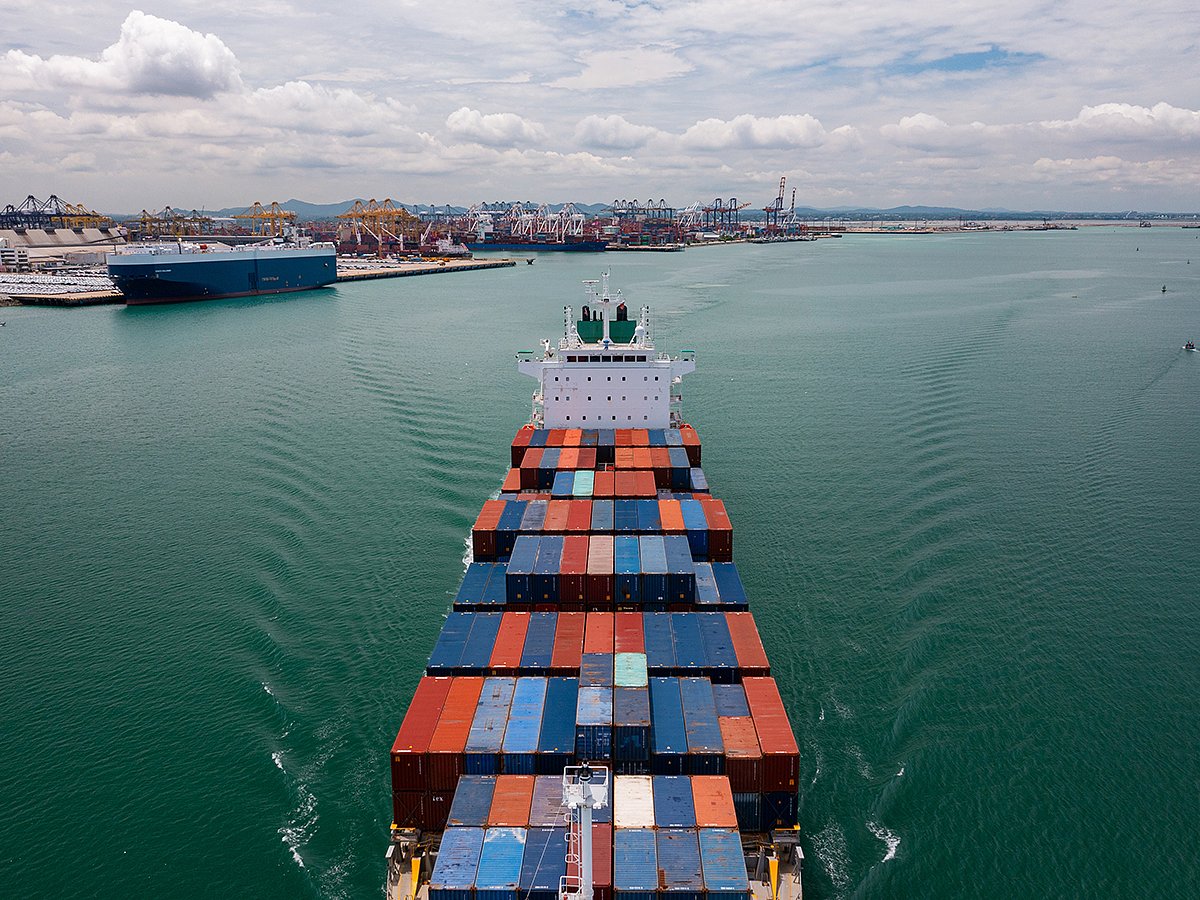
Dubai: A disruption thousands of kilometres away is beginning to show up where it matters most to consumers, at the checkout counter, where everyday essentials, electronics and even construction materials face rising costs linked to shipping risks across the Gulf.
Logistics experts tracking vessel movements say the pressure is building through a familiar chain reaction. Insurance premiums spike first, routes become uncertain, transit times stretch, and freight costs climb. What begins at sea eventually lands in retail pricing.
“Shipping companies continuously assess risks in coordination with maritime authorities and insurers,” said Sheikh Haris, CEO of Gallop Shipping in Dubai. “Any disruption around such chokepoints naturally affects operations. Transit times can lengthen and freight rates tend to rise due to higher insurance costs, additional security measures, and possible congestion at ports.”
Stay updated: Get the latest faster by downloading the Gulf News app - it's completely free. Click here for Apple or here for Android. You can also find it on the Huawei AppGallery.
The Strait of Hormuz remains central to this equation, acting as the primary gateway into the Gulf’s import-driven economy.
Rerouting costs time and money
Shipping lines are already adjusting operations. Some vessels are slowing down or modifying schedules, while others are taking longer routes to avoid high-risk zones.
Dr Sathya Menon, Chairman and Managing Director of Blue Ocean Corporation, said rerouting is no small shift. “In some cases, vessels are being redirected via longer routes such as around the Cape of Good Hope, which can significantly extend transit times,” he said, adding that delays of up to 20 to 25 days are being recorded on certain routes.
Such changes reduce the number of voyages ships can complete in a year, tightening capacity and pushing freight rates higher. Congestion at alternative ports adds another layer of cost.
Insurance becomes the biggest pressure point
“The war-risk insurance is one of the first cost elements that reacts to geopolitical tensions,” said Sheikh Haris. “These premiums can increase significantly during conflict periods, sometimes several times higher than normal levels.”
Data from the shipping sector shows how steep that increase has been. Premiums that typically range between 0.2% and 0.5% of a vessel’s value have jumped to as high as 3% in current conditions, according to Menon. In extreme cases, insurers have raised rates by more than 1000%.
For large tankers valued at $200 million to $300 million, that translates into millions of dollars per voyage. These costs do not stay within the industry. They are passed through supply chains in the form of war-risk surcharges, sometimes adding between $1,500 and $4,000 per container.
Costs set to pass through to consumers
Rising shipping costs are already beginning to move through global supply chains, with industry leaders warning that the impact will ultimately reach consumers. Vincent Clerc, chief executive of Maersk, said transport cost increases linked to the conflict are passed through automatically via fuel and logistics pricing mechanisms, meaning higher freight charges will be reflected in the prices paid by shoppers.
He noted that fuel-driven cost increases alone are adding around $200 per container, translating into freight hikes of roughly 15% to 20% depending on routes and cargo, reinforcing expectations that everyday goods from food to electronics will gradually become more expensive.
Gulf supply chains hold, but pressure builds
Despite the strain, the region’s logistics backbone remains intact. Years of investment in ports, inventory systems and sourcing strategies are cushioning the immediate impact.
Ports such as Jebel Ali continue to operate as major hubs, while east coast facilities offer some operational flexibility. Yet the scale of the Strait of Hormuz cannot be easily replaced.
“The Strait of Hormuz is one of the world’s most critical maritime corridors,” said Sheikh Haris. “The Strait of Hormuz is more than a shipping lane — it is the gateway of the Gulf economy.”
Menon echoed that view, noting that while infrastructure investments help absorb short-term shocks, prolonged disruption would still drive up costs and tighten supply conditions.
First signs of inflation will be gradual
Consumers are unlikely to see empty shelves, at least in the near term. Price increases tend to appear gradually, driven by rising logistics and energy costs.
“If disruptions persist for several weeks, the first sectors likely to feel the impact would typically be fast-moving consumer goods, food imports, and retail products that depend on consistent shipping cycles,” said Sheikh Haris.
Menon pointed to a broader list of sectors already exposed to cost pressures, including fuel, petrochemicals, textiles and electronics. Oil prices moving above $100 per barrel are feeding into production and transport costs across industries.
Also Read
From fuel to groceries: How Hormuz tensions could affect UAE householdsOil shipping, insurance costs spike as Hormuz tensions test UAE trade routesTanker traffic collapses in Strait of Hormuz, spiking insurance, fertilizer costs As Iran war rages on, high shipping costs will hit shoppers worldwide, Maersk chief warnsFood imports remain particularly sensitive given the region’s reliance on overseas supply, while electronics and consumer goods feel the impact quickly due to their dependence on container shipping from Asia.
Logistics industry focuses on continuity
Shipping industry experts insist the industry’s role is to keep cargo moving, even under strain.
“In logistics, our job is not to explain disruptions to customers. It is to find solutions,” said Sheikh Haris. “Logistics is not just the movement of cargo. It is the movement of economies. And in this industry, we don’t panic; we plan.”
That planning may soften the immediate blow, but the direction is clear. Higher insurance, longer routes and rising fuel costs are feeding into freight rates, and those costs are steadily making their way into the price of everyday goods worldwide.

Sign up for the Daily Briefing
Get the latest news and updates straight to your inbox
Network Links
GN StoreDownload our app
© Al Nisr Publishing LLC 2026. All rights reserved.