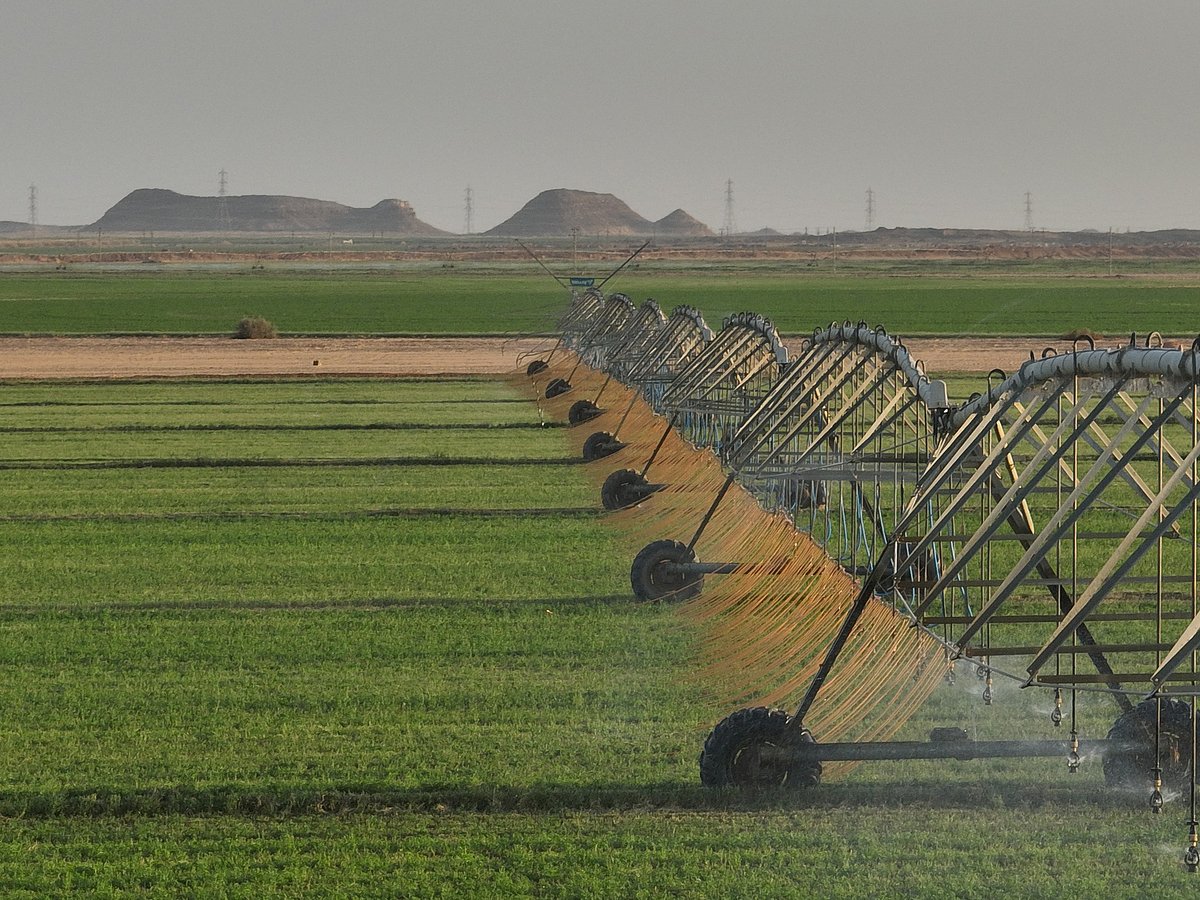
Dubai: When regional conflict put pressure on global shipping routes, Al Dahra rerouted more than 5,500 containers, secured new food supplies and raised grain stocks to keep essential commodities moving into the UAE.
The UAE-grown agribusiness, founded 30 years ago in Al Ain by Sheikh Hamdan bin Zayed Al Nahyan, coordinated nearly 300 global shipments across 27 ports and four continents during a six-week period of disruption.
Get updated faster and for FREE: Download the Gulf News app now - simply click here.
The company also secured more than 70,000 tonnes of food from new origins and increased grain stock levels by 185%. Supplies included rice, grains, forage and dairy, while feed support for dairy customers, livestock farmers and grain production remained operational.
Arnoud van den Berg, Group CEO of Al Dahra, told Gulf News in an exclusive interview that the first warning signs came through longer shipping times and higher freight rates.
“The earliest indicators we tracked were extended transit times on key routes and a sharp rise in container freight rates, which prompted us to accelerate already-established contingency protocols rather than design new ones from scratch. What changed was the cadence and intensity, not the framework,” he said.
Supply chains came under pressure
Food supply chains have faced mounting strain in recent months as shipping routes, freight costs and delivery schedules were hit by regional instability.
Van den Berg said Al Dahra’s response was built around daily coordination between sourcing, planning, sales and logistics teams across regions and time zones.
Also Read
UAE food giant Agthia reveals how it handled supply chain pressure to deliver Q1-2026 profits UAE food supplies secure as local farms step up, Ghitha CEO saysCargo delays, rising costs: How UAE is managing shipping disruptionAl Ghurair says crisis is the wrong time to sell assetsUAE tomato farm cuts import risk with 150,000kg local supply push“As global shipping patterns began to shift, our Sourcing & Planning, Sales, and Logistics teams were already in close daily coordination across regions and time zones, monitoring corridor performance and supplier flows in real time.”
The main challenge was not a single delayed shipment, but keeping a large supply network aligned while routes changed and transit times stretched.
“The challenge is rarely any single shipment. It is the choreography that keeps thousands of moving parts arriving in the right sequence to support consistent delivery to every market we serve,” he said.
Rerouting became critical
Al Dahra used a diversified network of suppliers and shipping routes across North America, South America, Europe and Africa to adjust delivery plans.
Van den Berg said the company had drawn lessons from previous shocks, including Covid and the Red Sea crisis.
“Speed at that scale is the outcome of years of preparation, lessons learned from other scenarios, like Covid, or Red Sea Crisis. Diversification must be designed long before it is needed; if it is assembled in response to events, it is already too late.”
He said quality standards were maintained across all origins, even as procurement moved to new sources.
Farmers needed steady feed supply
The disruption also tested local supply lines for farmers, particularly those dependent on feed and forage.
Al Dahra said it continued supporting more than 18,000 local farmers during the period, despite longer transit times and global logistics disruption.
“Supporting local farmers is a structural role we play within the UAE’s agricultural ecosystem, working within the country’s government, broader agricultural framework, and coordination mechanisms to ensure farmers continue to receive reliable support. The objective is consistency, ensuring that inputs such as feed and forage remain reliable regardless of external conditions,” van den Berg said.
He said recent months showed that food security depends on more than holding stock.
“What recent months have reinforced is that supply stability is increasingly about integration: sourcing, storage, logistics, finance, and digital visibility working as one connected system, rather than any single lever.”
Technology becomes part of food security
Al Dahra is investing in AI, digital farm management and precision agriculture as food producers look for ways to increase output without using more land, water or inputs.
Van den Berg said AI could help improve planting decisions and lift yields.
“The impact at farm level is significant. AI models that help optimise planting windows, for example, can shift yields by as much as 10 percent. That is a 10% increase in food with no increase in footprint, no additional land, no additional water, no additional inputs.”
He said the company is using precision irrigation, satellite and sensor data, AI-driven decision tools and farm management platforms to improve visibility across operations.
Long-term planning is the lesson
Van den Berg said the main lesson from recent disruption is that companies cannot build resilience after a crisis has started.
“The clearest lesson is that resilience cannot be added after disruption begins, designed in advance, capitalised in advance, and governed as part of how a business is run.”
He said partnerships, technology and long-term capital are becoming central to food supply stability.
“First, partnerships matter, geographies with strong diplomatic ties and robust supply chains will be the foundation of dependable, long-term operations.
Second, technology and regenerative practices are no longer parallel to commercial performance; they are becoming central to it, improving yields, lowering inputs, and shaping long-term competitiveness.
And third, this remains a long-term industry. Building scale, productivity, and resilient operations takes time, significant capital access, and sustained patience, but the returns – both financial and structural – are substantial.”
Al Dahra began as a single farm in Al Ain and now operates across more than 40 markets. Its next target is to build what van den Berg described as the world’s largest irrigated farming platform by 2030.
Sign up for the Daily Briefing
Get the latest news and updates straight to your inbox
Network Links
GN StoreDownload our app
© Al Nisr Publishing LLC 2026. All rights reserved.