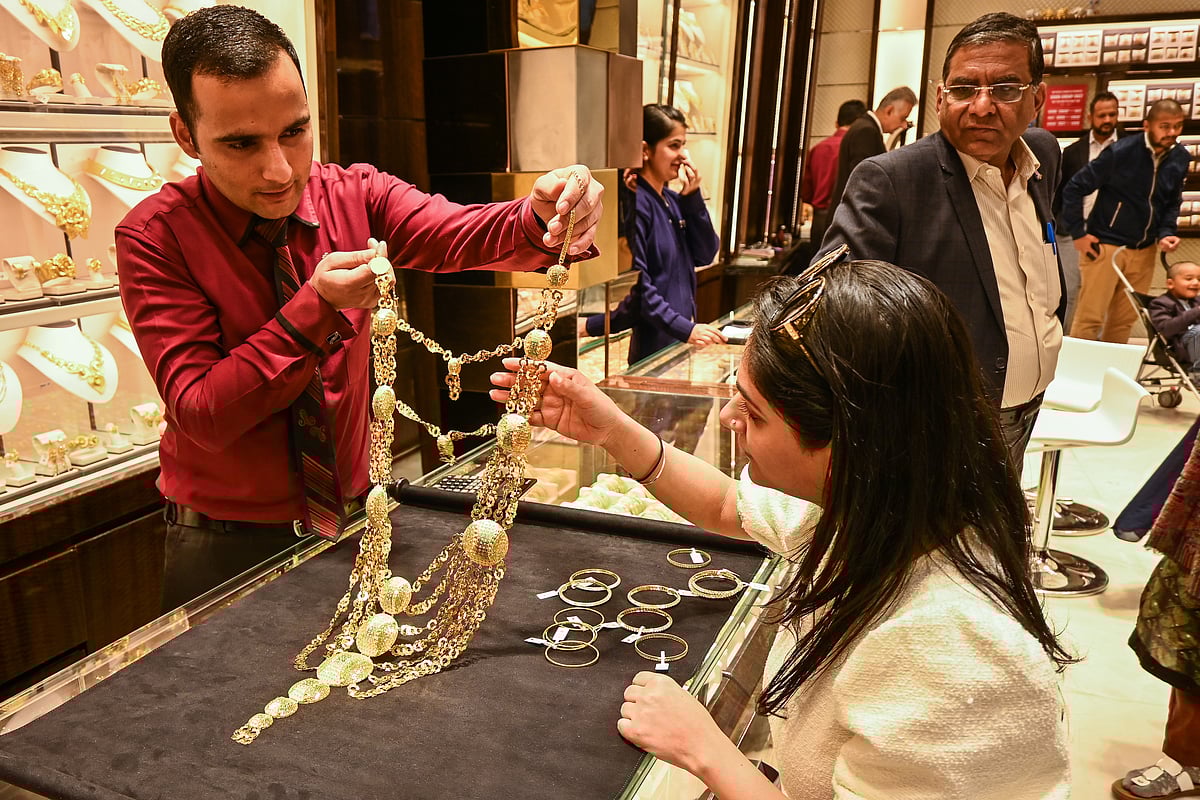
The 24-karat rate stood at Dh487.50 per gram at 9.10 am, down Dh3.50 from Dh491 on Monday. The 22-karat variety dropped by Dh3.25 to Dh451.50 from Dh454.75.
Get updated faster and for FREE: Download the Gulf News app now - simply click here.
Tuesday’s decline placed both varieties at the same levels recorded on July 23, following several days of gains during the final week of the month.
Prices retreat from July peak
Dubai gold rates have moved through a wide range during July, with the 24-karat price beginning the month at Dh489.75 before climbing to Dh503 on July 4 and July 5.
Prices then fell to a monthly low of Dh481.50 on July 16 and July 17, before recovering and crossing the Dh500 mark again on July 22. The 24-karat rate reached Dh500.75 that day, its highest level since the first week of July.
Tuesday’s price was Dh13.25 below the July 22 level and Dh15.50 lower than the monthly peak, although it remained Dh6 above the lowest rate recorded this month.
The 22-karat variety followed a similar path, rising from Dh453.50 on July 1 to a monthly high of Dh466 on July 4 and July 5. It later dropped to Dh446 on July 16 and July 17 before rebounding to Dh463.75 on July 22.
Also Read
Dubai gold rises Dh1 but buyers still get one of July’s lowest ratesDubai gold prices fall after midweek surge, giving shoppers some reliefDubai gold prices retreat from Dh500 mark after steep midweek jumpGold holds above $4,000
International gold declined ahead of the Federal Reserve’s interest-rate decision on Wednesday, with bullion falling by as much as 0.8% to trade near $4,040 an ounce.
“Gold continues to consolidate within 5% range this month as US tech come under some pressure and US Treasury yields grind higher, leaving the yellow metal caught between competing macro stories,” said Ahmad Assiri, Research Strategist at Pepperston.
Higher Treasury yields can reduce demand for gold because the metal does not pay interest, while a stronger US dollar can make bullion more expensive for buyers using other currencies.
Gold has nevertheless remained around the $4,000 support level since late June, helped by investors buying after price declines. Bullion-backed exchange-traded funds increased their holdings for five consecutive days, marking the longest run of additions since May.
“Price action continues to suggest that gold is building a trading base above the 4,000 level, an encouraging sign given the higher yields,” Assiri said.
Fed decision takes centre stage
Markets face an unusually uncertain Federal Reserve decision, with policymakers weighing softer-than-expected US inflation data from June against the recent rise in oil prices.
Interest-rate swaps indicate around a 40% probability of a quarter-percentage-point increase this week. A rate increase, or guidance indicating that borrowing costs could remain elevated, could support Treasury yields and the US dollar while weighing on gold.
“Traders focus now shifts squarely to this week's FOMC meeting, which could prove pivotal for the next leg in gold,” Assiri said.
A more hawkish policy message that places greater emphasis on inflation risks could add pressure to bullion, particularly if markets increase their expectations for higher interest rates.
Oil prices remain a risk
Developments in the Middle East continue to influence gold, oil and inflation expectations after the latest pause in hostilities between the US and Iran.
US President Donald Trump said on Monday that both countries had resumed talks to end the five-month conflict, with strikes paused in recent days. He said there was a good chance of reaching an agreement, while warning that fighting could resume if negotiations failed.
“Beyond monetary policy, geopolitics is again an important driver,” Assiri said.
Oil prices above $80 could complicate the inflation outlook by increasing energy and transport costs, even if negotiations reduce the immediate risk of further escalation.
- With inputs from Bloomberg.

Sign up for the Daily Briefing
Get the latest news and updates straight to your inbox
Network Links
GN StoreDownload our app
© Al Nisr Publishing LLC 2026. All rights reserved.