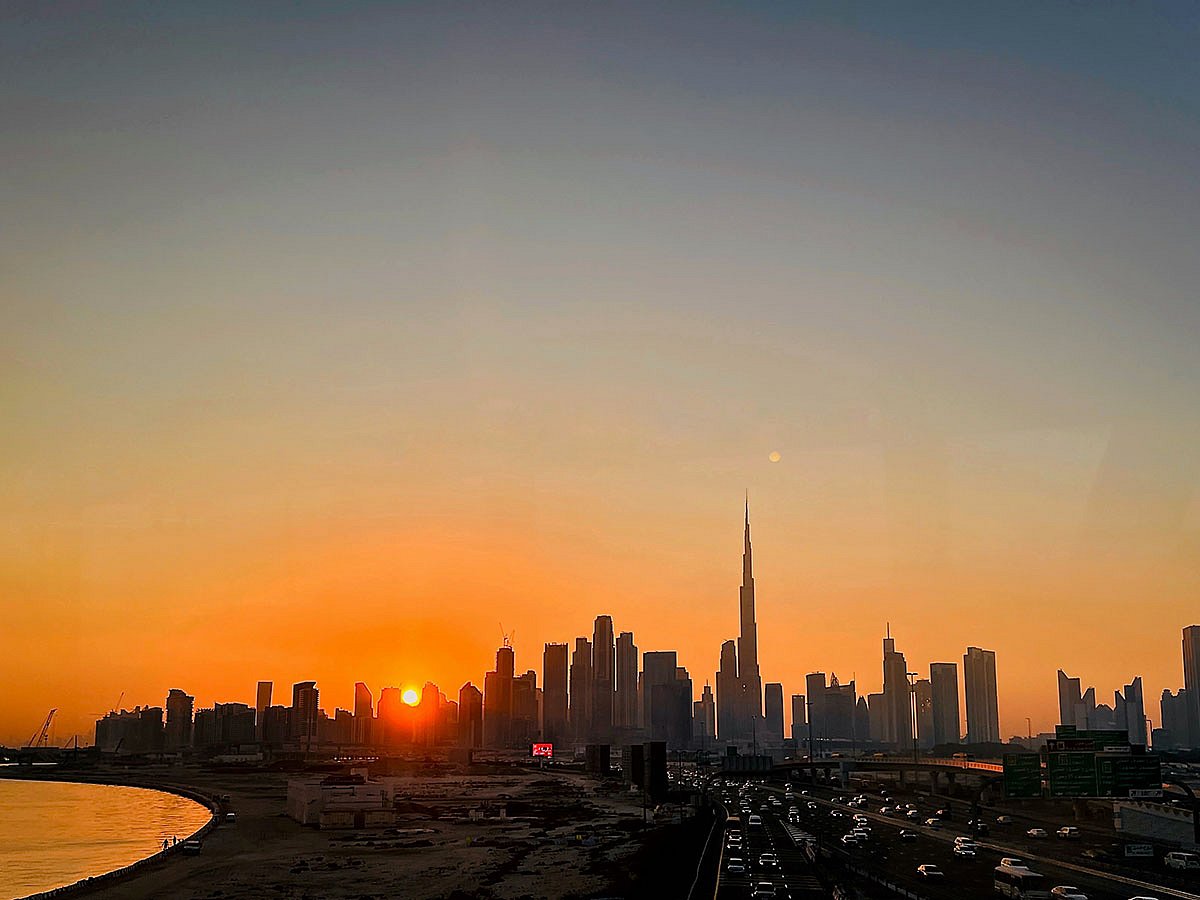
Dubai: The UAE property market heads into 2026 from a position of strength, but the forces shaping demand are changing. The next phase will not be defined by headline launches or speculative momentum. Instead, it will be driven by where long-term capital is flowing, how people move around cities, and which sectors continue to attract jobs and residents.
More than Dh143 billion in construction contracts awarded in early 2025 offered an early signal of that shift. The bulk of spending is tied to energy, infrastructure and digital capacity, and those investments are increasingly feeding into housing demand, commercial absorption and land values rather than sitting apart from them.
According to Porush Jhunjhunwala, chief executive of Banke International Properties, this marks a move away from isolated real estate cycles toward infrastructure-led growth. “The strongest property opportunities are emerging where multiple strategies intersect,” he said. “Energy, transport and digital investment are creating clusters of demand, not one-off locations.”
Energy investment reshapes where people live
Clean energy is now one of the quiet drivers of property demand. The UAE Energy Strategy 2050 targets lifting clean energy’s share of the national mix toward 50%, backed by projected investments of up to Dh600 billion by mid-century. That capital is not only building power generation capacity but also creating supporting ecosystems.
Renewable parks, hydrogen projects and transmission infrastructure require workforces, logistics support and nearby housing. Over time, this creates mixed-use demand in areas that previously sat outside traditional residential or commercial zones. Dubai’s clean energy roadmap, which aims for 75% renewable electricity by 2050, reinforces this shift locally.
Rather than pushing prices up everywhere, this investment is concentrating value in specific corridors, especially where infrastructure and employment growth coincide.
Mobility and digital infrastructure tighten land values
Transport remains another critical lever. Metro expansions, road upgrades and freight corridors tend to pull density toward stations and hubs, supporting long-term land scarcity and value retention. As connectivity improves, areas once considered peripheral are being re-priced as viable residential and business locations.
Alongside this, the UAE’s push to position itself as a global technology and artificial intelligence hub is creating demand for data centres, innovation districts and technology-linked industrial space. These assets bring longer leases and higher-quality tenants, changing the composition of commercial property demand.
Jhunjhunwala said investors should focus less on individual sectors and more on overlap. “The real value is in locations where people, capital and jobs arrive together,” he said.
Why Dubai’s cost advantage still matters
Dubai remains one of the most cost-efficient construction markets in the region, with average build costs well below global peers. While labour and material costs are expected to rise modestly through 2026, industry participants do not expect that advantage to disappear.
Scale, integrated logistics and predictable regulation continue to support competitive delivery, particularly for mid-market residential and logistics projects. Where margins are narrowing is at the premium end, as sustainability standards and smart-building requirements raise upfront costs.
The trade-off, developers say, is stronger tenant demand and longer-term resilience for assets that meet future efficiency and environmental benchmarks.
Digital construction reduces risk rather than cost
Technology is also reshaping how projects are procured and delivered. Building Information Modelling, AI-assisted planning, and real-time site monitoring are shifting tender decisions away from lowest price toward execution certainty.
That shift matters for investors. Fewer delays and lower rework rates translate directly into more predictable returns. In the UAE, digital capability is increasingly becoming a baseline requirement for large projects rather than a differentiator.
Non-oil growth supports mixed-use demand
The UAE’s non-oil economy now accounts for more than three-quarters of GDP, a structural change that is feeding directly into real estate demand. Ajay Rajendran, chairman and founder of Meraki Group, said this diversification is particularly supporting mixed-use developments.
Financial services hubs, tourism growth and trade continue to attract professionals and entrepreneurs who are more likely to choose longer-term housing within integrated communities. Multinational firms establishing regional headquarters are reinforcing that trend, supporting steady demand for residential, office and lifestyle assets within the same developments.
Infrastructure creates new value corridors
Transport investment continues to act as a catalyst for price appreciation. Projects such as the Dubai Metro Blue Line and major road links are already influencing investor interest in surrounding districts, well ahead of completion.
Sunrise Capital founder and chief executive Yogesh Bulchandani said infrastructure is changing how investors assess future hotspots. “Connectivity is no longer a bonus, it is the baseline,” he said. “Areas linked to metro lines and national rail are seeing earlier demand because buyers are pricing in long-term accessibility.”
Bulchandani added that Etihad Rail, which will eventually connect all seven emirates, is already reshaping interest in communities near logistics and transport nodes, creating new residential and commercial clusters.
Also Read
Dubai property market closes 2025 with record Dh682.5 billion in salesBuying, renting or investing? What 2026 looks like for Dubai homesUAE residents eager to buy homes even as Dubai property values hit new highsAbu Dhabi to deliver 8,000 new homes by year-end, with 12,800 scheduled for 2026Cost pressure and the skills challenge
Rising labour and material costs remain a risk, but developers are responding with earlier design optimisation, modular construction and strategic procurement. The bigger challenge, industry leaders say, is a tightening pool of skilled contractors.
Upskilling and digital training are becoming essential to maintaining delivery timelines. Developers that integrate construction, operations and facilities management early are seeing fewer handover issues and stronger long-term asset performance.
What to watch in 2026
Higher oil output is strengthening public finances at the same time that smart-city and digital investment are accelerating. Together, those forces are reshaping commercial real estate yields.
Assets that are well-connected, technologically enabled and sustainability-ready are seeing stronger tenant demand and better pricing power. Older stock faces increasing pressure to invest or risk obsolescence.
Bulchandani expects 2026 to be defined by discipline rather than exuberance. “We are moving into a market where quality and alignment with real demand will decide outcomes,” he said. “Prime assets will outperform, while speculative supply will be tested.”
The next phase of the UAE property market will reward those who follow infrastructure, employment and policy rather than momentum alone.

Sign up for the Daily Briefing
Get the latest news and updates straight to your inbox
Network Links
GN StoreDownload our app
© Al Nisr Publishing LLC 2026. All rights reserved.