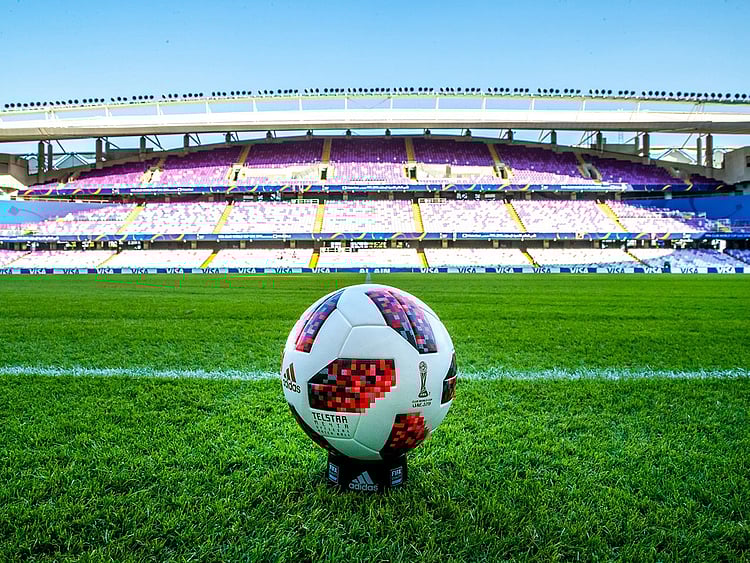
A general view of the inside of the stadium ahead of the FIFA World Cup 2026 Group D match between USA and Paraguay at Los Angeles Stadium on June 11, 2026 in Los Angeles, California.
Dubai: The 2026 FIFA World Cup is set to give the Arab world its biggest stage yet, with a record eight teams from the region qualifying for the tournament across the US, Canada and Mexico.
World Cup 2026 wall chart: Download it free with fixtures and full schedule
Saudi Arabia, Qatar, Jordan, Morocco, Tunisia, Egypt, Algeria and Iraq are on the team sheet this year, doubling the previous Arab record set in 2018. Jordan will make its first World Cup appearance, while Iraq returns after a 40-year absence.
Get updated faster and for FREE: Download the Gulf News app now - simply click here.
The expanded tournament, which brings together 48 teams for the first time, is expected to draw 6.5 million attendees and add up to $40.9 billion to global GDP, according to organiser estimates based on an Oxford Economics study. The final impact, however, may prove more modest once ticket costs, travel expenses, hotel pricing and host-city pressures are taken into account.
Josh Gilbert, Lead Analyst, Middle East at eToro, said the bigger story for Arab economies is the exposure that comes with football’s largest global event.
“For the countries involved, the prize isn’t necessarily the tournament itself, but the attention it brings. A strong run in the tournament puts a country in front of a global audience, generating exposure that no tourism budget can replicate,” Gilbert said.
Tourism gains could outlast the tournament
Morocco’s 2022 campaign remains the clearest regional case study. The country reached the semi-finals in Qatar and then welcomed 14.5 million visitors in 2023, up 34% from the previous year.
Also Read
A guide to the Arab teams' World Cup 2026 base campsChill, relax, the supersized Fifa World Cup of chaos is upon us and I'm totally here for itOff-field issues dog World Cup, as one-month countdown beginsFIFA raises top ticket price for World Cup final to $10,990 during glitch-hampered sales reopeningFinal ticket sales phase begins for FIFA World CupFootball was not the only reason for that jump, but Gilbert said the tournament helped keep Morocco in the global conversation and supported tourism demand well after the final whistle.
The same effect could now work across a much wider Arab line-up, especially if one or more teams manages a deep run in the tournament. Tourism boards, airlines, hotels, restaurants, retailers and consumer brands stand to gain from the visibility that comes with World Cup momentum.
“World Cup fever is hard to ignore, and it extends well beyond the host cities,” Gilbert said.
That is relevant for the UAE and the wider Gulf, where tourism and hospitality have already been expanding. The GCC attracted 72.2 million inbound tourists in 2024, up 51.5% from 2019 levels, while UAE hotel establishments welcomed a record 32.34 million guests in 2025.
The UAE impact will come through spending channels
The UAE is not hosting matches, but the World Cup economy is expected to flow through local spending channels.
Fans are likely to spend on flights, hotel stays, watch parties, sports bars, restaurants, food delivery, merchandise, advertising, payments and streaming subscriptions. Broadcasters, digital platforms, payment providers and consumer brands are also expected to benefit from higher engagement during the tournament.
Saudi Arabia has led regional football investment in recent years, while Qatar, the UAE and Morocco have used sport as part of wider diversification plans built around tourism, global visibility and consumer-sector growth.
“The World Cup will not transform regional economies on its own, but it is a tailwind for sectors that were already moving in the right direction and with more Arab teams involved than ever before, MENA has a bigger stage,” Gilbert said.
Bigger event, but limited macro impact
Economists remain cautious about the headline numbers attached to mega-events.
Dorian Anglada, Investment Analyst at Saxo, said the World Cup’s economic impact is real, but concentrated and temporary. He said the gains are mainly local, sector-specific and limited to the duration of the event.
According to Saxo’s analysis, the tournament could generate around $17 billion in additional GDP for the US, which would amount to less than 0.1% of the country’s GDP. Mexico may see a more visible relative boost, with expected economic benefits of around $3 billion, while Canada’s projected gains of about CAD3.8 billion must be measured against public hosting costs.
Anglada said a large share of the World Cup economy reflects “redistribution rather than wealth creation,” with spending often shifted from one activity or location to another.
The 2026 edition may still carry lower risk than some previous tournaments because the US, Canada and Mexico already have most of the required stadium infrastructure in place. That reduces the chance of expensive venues becoming underused after the event, a recurring problem in past host nations.
Host cities still face the bill
The World Cup’s economics differ depending on who is counting the money.
FIFA benefits from centralised revenue streams such as broadcasting rights, sponsorship, licensing, ticketing and hospitality. Host cities, meanwhile, deal with costs tied to security, transport, crowd control, emergency services, sanitation, street closures and stadium modifications.
The 2026 tournament has already shown those pressures. In the US, FEMA awarded $625 million in security funding to 11 host cities. In Canada, Toronto’s cost estimates rose to roughly $380 million. In Foxborough, Massachusetts, local officials raised concerns over public safety costs tied to matches at Gillette Stadium.
That split between global revenue and local cost is why economists often warn against treating the World Cup as a simple profit engine.
With eight Arab teams competing, the tournament gives MENA countries a rare concentration of global attention.
Morocco’s role as a 2030 co-host also gives the current cycle added weight, linking this year’s Arab representation with a longer regional push into the global sports economy.
The most immediate winners are likely to be hotels, airlines, restaurants, broadcasters, streaming platforms, merchandise sellers, payment firms and consumer brands. The serious impact will depend on whether the visibility created by the tournament turns into repeat visitors, stronger national brands and sustained investment beyond the final whistle.
Nivetha Dayanand is Assistant Business Editor at Gulf News, covering aviation, financial markets and commodities. A business and financial journalist with a strong interest in multimedia storytelling, she regularly takes complex financial and economic subjects beyond the written word, producing explainer videos that make them easier for a wider audience to understand. Nivetha has interviewed senior policymakers, business leaders and global financial figures both on and off camera. Her past guests include UAE Minister of Economy and Tourism Abdulla bin Touq Al Marri, Khaled bin Alwaleed Al Saud, a member of the House of Saud and the founder and CEO of KBW Ventures, Jihad Azour, Director of the Middle East and Central Asia Department at the International Monetary Fund and Indian ministers Hardeep Singh Puri and N. Chandrababu Naidu. She has also hosted and moderated panels, conferences and awards shows, bringing her newsroom experience to live conversations on business, finance and the economy. An Erasmus Mundus journalism alum, Nivetha is drawn to stories that affect people directly and to reporting that gives a platform to voices that might otherwise go unheard. She was among the first journalists to speak to Petrofac employees in the UAE about unpaid salaries, broke the news of the planned demolition of Dubai’s well-known “Toyota Building”, and helped set the record straight on widely circulated claims that a giant replica of the Moon was coming to Dubai. More recently, her exclusive interview with EDGE Group CEO Hamad Al Marar revealed how the UAE-based defence group deployed its systems along the country’s shore border and established a geofence around the UAE within 48 hours of the February 28 escalation. Prior to joining Gulf News, Nivetha worked at ITP Media, where she helped launch Finance Middle East, a new publication covering the region’s financial sector. Her role spanned reporting and editing, video production, interviews and events. Across print, digital, and video, she focuses on finding the people behind business stories and explaining why those stories matter to the audience reading or watching them.
Sign up for the Daily Briefing
Get the latest news and updates straight to your inbox
Network Links
GN StoreAbout Gulf NewsTerms & ConditionsReach by GNSitemapContact usPrivacy PolicyGN FocusHave your sayWork with usAdvertise with usGulf News epaperPrinting Services
Download our app
© Al Nisr Publishing LLC 2026. All rights reserved.