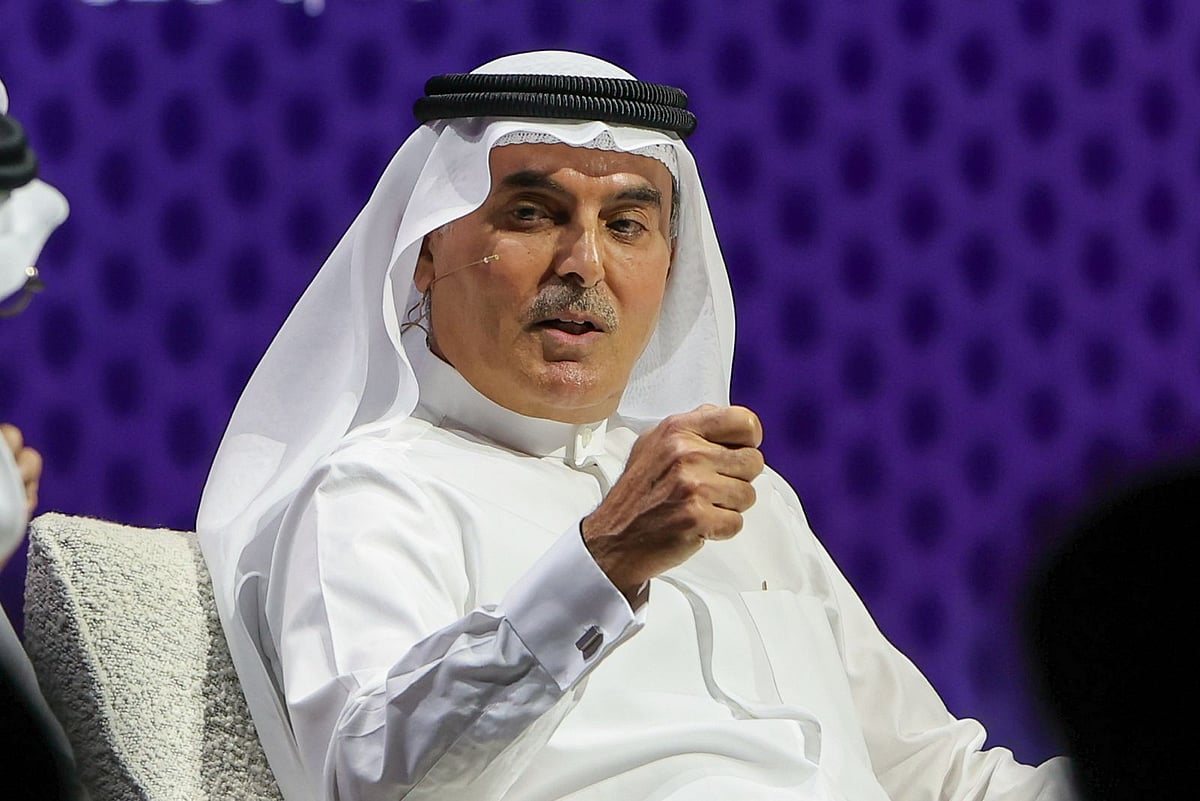
Abu Dhabi: Abdulaziz Al Ghurair, Chairman of Abdulla Al Ghurair Group, warned business owners and investors against selling assets during a crisis, saying panic decisions can destroy long-term value at the exact moment when opportunities begin to appear.
Get updated faster and for FREE: Download the Gulf News app now - simply click here.
Speaking at the Make it in the Emirates summit in Abu Dhabi, Al Ghurair said crises often push people to sell buildings, shares or businesses because they lose confidence, but that response can become one of the most damaging mistakes a business owner makes.
“In crisis, people can lose control, and many people think about selling, selling the building or their shares, and I think this is one of the biggest mistake people can make,” Al Ghurair said.
He said difficult periods also create openings for entrepreneurs and investors who are willing to take calculated risks while others are retreating.
“In crisis, there are opportunities, even beginners can seize those opportunity to invest,” he said. “Many people, I asked them, How did you start your business? They said, I started during a crisis. During the crisis, I took the risk and I did this business.”
Do not sell in panic
Al Ghurair’s advice to businesses was to avoid distress selling, speak with lenders, restructure payments where needed, and seek partners who can help them survive the pressure.
“This is why my advice. To people, please, during crisis, don’t sell. Be patient. Endure,” he said.
He said companies with factories, operating businesses or productive assets should first look for ways to stay alive through the disruption.
“If you have a factory, if you have a company, become partner with others. Tell them. Ask the bank to reduce the installment,” Al Ghurair said.
He added that lenders, partners and stakeholders usually have an interest in helping viable businesses recover, because the wider ecosystem benefits when companies return to normal operations.
“Everyone will help you, because everyone has interest, because they want you to come back to them again,” he said. “Selling during crisis is very risky and it’s impactful on humans.”
Fast decisions matter
Al Ghurair said companies cannot plan for every type of crisis, because each shock brings its own form of disruption. The real test is whether a business can make quick decisions when its original plans no longer apply.
“You cannot plan for a crisis. You can plan for a certain crisis. But something different could happen,” he said.
He pointed to the food sector during the Russia-Ukraine war, when supply routes were hit by a disruption few companies had fully anticipated.
“In the food sector where we work, there was the Russian Ukrainian war. 70% of our supplies came from Ukraine, and this disrupted our supplies,” Al Ghurair said.
He said the group used to import 8 million tonnes of wheat, equal to four times the UAE’s consumption, showing the scale of supply flows that had to be managed when the crisis unfolded.
“We never planned for this. We never planned for Jebel Ali to shut down,” he said. “But however, companies are required to have the capability and resilience in decision making when there is a different crisis.”
Family businesses move quickly
Al Ghurair said family businesses play a major role in the UAE economy and can move quickly when crises create urgent needs or sudden openings.
He said family businesses employ almost 80% of the workforce in the UAE and account for 60% of GDP, making their ability to respond quickly important to national resilience.
“Family businesses play a great role in the economy,” he said.
Al Ghurair said the private sector’s advantage during a crisis is that decision makers are closer to the business and can act faster when supplies, customers or operating conditions change.
“What distinguishes the private sector is the resilience and the fast decision making process and the agility,” he said.
He said that speed can be decisive when goods need to be bought immediately or when a short window opens in the market.
“When a crisis occurs, there’s a decision maker that can take a decision quickly,” he said. “The private sector can sense opportunities.”
Food security came first
Al Ghurair said the group placed its food capacity at the disposal of the authorities during the recent crisis, after officials contacted the company to assess its capability and storage capacity.
“Because we have large factories and large storages and silos, we told them that we put everything we have under their disposal,” he said.
He said national priorities came ahead of commercial considerations during that period.
Also Read
How is food reaching you despite regional tensions? DP World CEO explainsHow Dubai kept fresh food flowing: Fast logistics, ports, and policy moves ensure steady suppliesWhat happens next for your deliveries? Carriers reassess routes and insurance“We saw that national priorities and interests are more important than any profitable businesses,” Al Ghurair said.
The company opened its silos and storage facilities for wheat, flour, feed, oils and other products it manufactures and exports. Al Ghurair said the group exports 88,000 containers annually from Jebel Ali, making it one of the largest exporters by container volume.
“This capacity was all provided to the authorities for the national priorities,” he said.
The group also helped move wheat across the region when Gulf countries required exports. Wheat was offloaded in Fujairah, moved by 200 trucks to Jebel Ali, then loaded again onto ships for Qatar, Bahrain, Kuwait and Dammam.
“We did that in order to ensure that the UAE is leading, helping a country in the GCC,” Al Ghurair said.
Sign up for the Daily Briefing
Get the latest news and updates straight to your inbox
Network Links
GN StoreDownload our app
© Al Nisr Publishing LLC 2026. All rights reserved.