How Dubai kept fresh food flowing: Fast logistics, ports, and policy moves ensure steady supplies
Ports, logistics and policy moves keep fresh food supply stable across Dubai
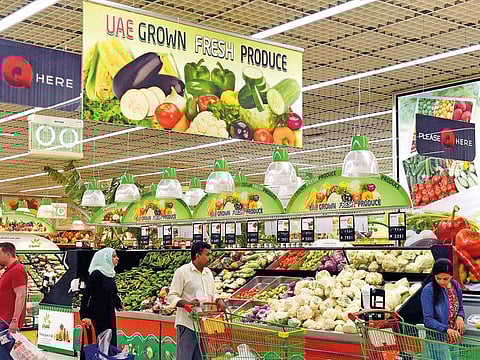
Dubai: The city has managed to maintain a steady flow of fresh food and perishable goods despite global shipping pressures, according to several traders.
Members of the Fruit and Vegetable Traders Business Group, under the Dubai Chamber of Commerce, say that strong infrastructure, efficient global logistics links, and swift government action have helped maintain stable supplies.
Close coordination with all relevant stakeholders, particularly through the business groups operating under the Dubai Chamber of Commerce, has helped reduce operational challenges.
It has also supported faster collaborative action to maintain the efficiency of the logistics ecosystem and the steady flow of goods across the local market. These factors, along with close coordination between the public and private sectors, have ensured demand is met without disruption.
Get updated faster and for FREE: Download the Gulf News app now - simply click here.
Smart sourcing and strong system
Traders say Dubai has improved its ability to diversify sourcing, use alternative shipping routes and boost transport and storage efficiency.
Close coordination through business groups has helped resolve challenges quickly and keep goods moving across the market.
Redha Al Mansouri, Chairman of the group and CEO of Fresh Fruits Company, said Dubai’s ability to keep fresh produce flowing shows the strength of its economic model.
He said the UAE’s ports and logistics hubs have provided flexible alternatives amid disruptions to global shipping routes.
“Under the guidance of the UAE leadership, Dubai Customs, DP World, and other port and logistics stakeholders implemented timely facilitation measures that enabled smooth cargo movement through alternative corridors into Jebel Ali and the free zones,” he said.
Al Mansouri added, “Overall, the UAE market continues to be well-supplied, and we are confident in the sector’s ability to maintain continuity, competitive pricing, and meet consumer demand reliably in both the short and long term.”
According to Al Mansouri, land transport efficiency was also strengthened through solutions adopted by the Roads and Transport Authority to facilitate the movement of food distribution trucks, helping to ensure perishable goods reached distribution centres and retail outlets on time.
Al Mansouri also said, “The government’s ongoing oversight of consumer pricing and commitment to market stability have reinforced confidence across the sector.”
Cold chain and stable supply
Dubai’s advanced cold chain and warehousing systems have supported the handling and distribution of perishable goods.
Al Mansouri said traders have adapted quickly, thanks to diversified sourcing and experience in handling supply chain disruptions.
He added that supply levels remain stable, with the sector able to meet local demand without interruption.
“In the near term… flexible routing, alternative entry points, and close coordination with logistics partners have ensured that the availability of fresh produce… remains consistent in terms of volume, quality, and price stability,” he said.
Fast movement of goods
Government action has played a key role in keeping goods moving.
Al Mansouri said measures to speed up customs clearance and reduce bottlenecks helped maintain shipping flows.
He added that land transport efficiency was improved through solutions by the Roads and Transport Authority, ensuring timely delivery of perishable goods.
Crisis response
Mohammed Nassar Al Rifai, CEO of the Nassar Al Refaee Trading Company (NRTC) Group, said Dubai has strengthened its position as a global model for crisis management.
He said there has been an adoption of faster shipping processes, flexible regulations and strong coordination across the sector. Al Rifai said maintaining the balance between supply and demand has been key to stability.
He added that diversified sourcing and strong supplier relationships have helped reduce risks.
Advanced trade
Abdelghani Abdullah, General Manager of IFFCO Group, pointed to Dubai’s strong logistics network and fast customs processes.
He said integration across sea, land and air transport has supported smooth trade flows and reinforced Dubai’s role as a major export hub. Abdullah said supply levels are stable and sufficient, supported by diversified imports and strong infrastructure.
He added that monitoring global freight costs and seasonal cycles remains important to maintain price and quality stability.
Global links
Ammar Bakri, CEO of Al Bakrawe Holding, said efficient ports and airports have enabled fast movement of goods.
Diversified sourcing has reduced reliance on any one market, strengthening resilience.
“Al Bakrawe has also contributed to logistics services, where we relied on land transportation using our own trucks to secure the supply of onions, tomatoes, cucumbers, and potatoes,” he said.
Bakri said supply levels remain stable and are expected to continue, supported by government strategies and international partnerships.
Proactive model
Ali Arjomandi, CEO of Marhaba MTA General Trading, said Dubai’s position as a regional food trade hub is built on a fully integrated system.
This includes strong logistics, diversified sourcing and close coordination between government and private sector.
He said the proactive approach has helped prevent disruption and maintain stable supply across the market.


