As of 3.15pm GMT on Friday, June 12, 2026.
Why oil is failing: Crude benchmarks slide below $90 as traders reassess Hormuz, supply risks
Crude benchmarks retreat as Hormuz fears ease and traders unwind risk bets
Last updated:
3 MIN READ
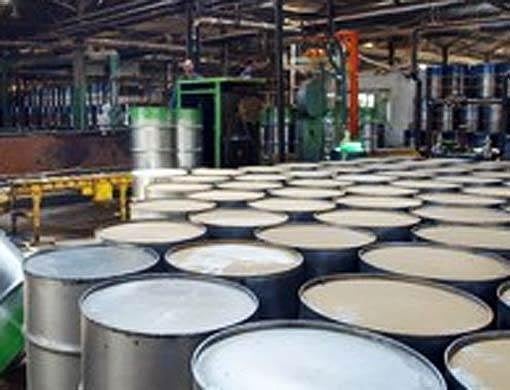
Brent crude futures, the international benchmark for oil prices, were at $87.70 per barrel at 3.15pm GMT on Friday (June 12, 2026) down nearly 3% drop.
Gulf News File
Global crude oil benchmarks fell sharply Friday, with Brent, WTI, and Murban crude all dropping below key psychological levels as traders unwound war-risk premiums that had pushed prices higher earlier in the week.
According to market data, West Texas Intermediate (WTI) fell to $84.99 per barrel, down 3.10%, while Brent crude declined to $87.70 per barrel, down 2.97%.
Murban crude, a benchmark for Middle Eastern exports to Asia, slid 3.74% to $83.99 per barrel.
The decline marks a significant reversal from recent fears that escalating tensions involving Iran, the United States, and the Strait of Hormuz could disrupt global oil supplies.
Why oil is falling
Analysts point to several factors behind the price retreat:
No immediate supply disruption
The largest driver of the recent oil rally was fear that Iran could interfere with shipping through the Strait of Hormuz, through which roughly one-fifth of the world's oil supply passes.
However, despite heightened military tensions, oil tankers continue moving through the waterway, and there has been no confirmed large-scale interruption of exports from major Gulf producers such as Saudi Arabia, the UAE, Kuwait, Iraq, or Qatar.
Markets often react not to actual shortages but to expectations of shortages. As traders conclude that worst-case scenarios are not materializing, the geopolitical premium embedded in oil prices is being removed.
OPEC+ spare capacity remains large
Saudi Arabia and several Gulf producers maintain substantial spare production capacity.
Investors increasingly believe that even if a portion of Iranian exports were disrupted, other producers could offset much of the lost supply.
This perception reduces panic buying in futures markets.
Demand concerns return
As geopolitical fears fade, traders are again focusing on slower global economic growth.
Concerns remain about:
Slowing manufacturing activity in Europe.
Uneven recovery in China.
High interest rates in many economies.
Softening freight and industrial fuel demand.
A weaker demand outlook naturally weighs on crude prices.
Profit-taking after a sharp rally
Many hedge funds and commodity traders accumulated long positions during the recent Middle East crisis.
Once prices failed to break sustainably above $90–95 per barrel, investors began locking in gains, accelerating the downward move.
Why the $90 level matters
The $90 threshold is more psychological than fundamental.
Historically:
Above $90, governments become more concerned about inflation.
Airlines, shipping companies, and manufacturers face higher fuel costs.
Central banks may hesitate to cut interest rates.
Consumer spending can weaken due to higher gasoline prices.
A move back below $90 and even below $80 reduces inflation concerns and is generally welcomed by stock markets.
How market views oil supply shock
Oil's drop below $90 reflects a market increasingly convinced that the Middle East crisis, while serious, has not yet translated into a physical supply shock.
Traders are shifting their attention from geopolitical fears back to fundamentals: adequate supply, slowing demand growth, and the absence of disruptions in the Strait of Hormuz.
For now, crude prices are signaling caution rather than panic.
The next major move will depend less on rhetoric and more on whether actual barrels of oil stop reaching global markets.
What happens next?
Market participants are now watching three key scenarios.
De-escalation continues
This is the most bearish for oil. If tensions cool further and shipping through Hormuz remains uninterrupted:
Brent could fall toward $80–85.
WTI could retreat toward $75–82.
Inflation pressures would ease globally.
Under this scenario, traders would increasingly focus on economic growth rather than geopolitical risk.
Hormuz disruption
This is bullish for crude oil prices. The biggest upside risk remains any disruption to shipping through the Strait of Hormuz.
A significant interruption could rapidly push:
Brent above $100
WTI toward $95–105
Middle Eastern grades such as Murban substantially higher.
Prolonged standoff
This is a "neutral” position: If military tensions persist but neither side escalates significantly:
Brent may trade in an $85–95 range.
WTI may remain between $80–90.
This would leave a modest risk premium in the market without triggering major supply concerns.
In an extreme case involving prolonged closure of the waterway, prices could spike far beyond those levels, although such an outcome remains unlikely because it would damage not only global consumers but also Gulf producers and Iran itself.
Network Links
GN StoreAbout Gulf NewsTerms & ConditionsReach by GNSitemapContact usPrivacy PolicyGN FocusHave your sayWork with usAdvertise with usGulf News epaperPrinting Services
Download our app
© Al Nisr Publishing LLC 2026. All rights reserved.