Sharjah to add large-scale solar power under new BEEAH–Masdar deal
New partnership targets solar capacity to meet rising power demand and net-zero goals
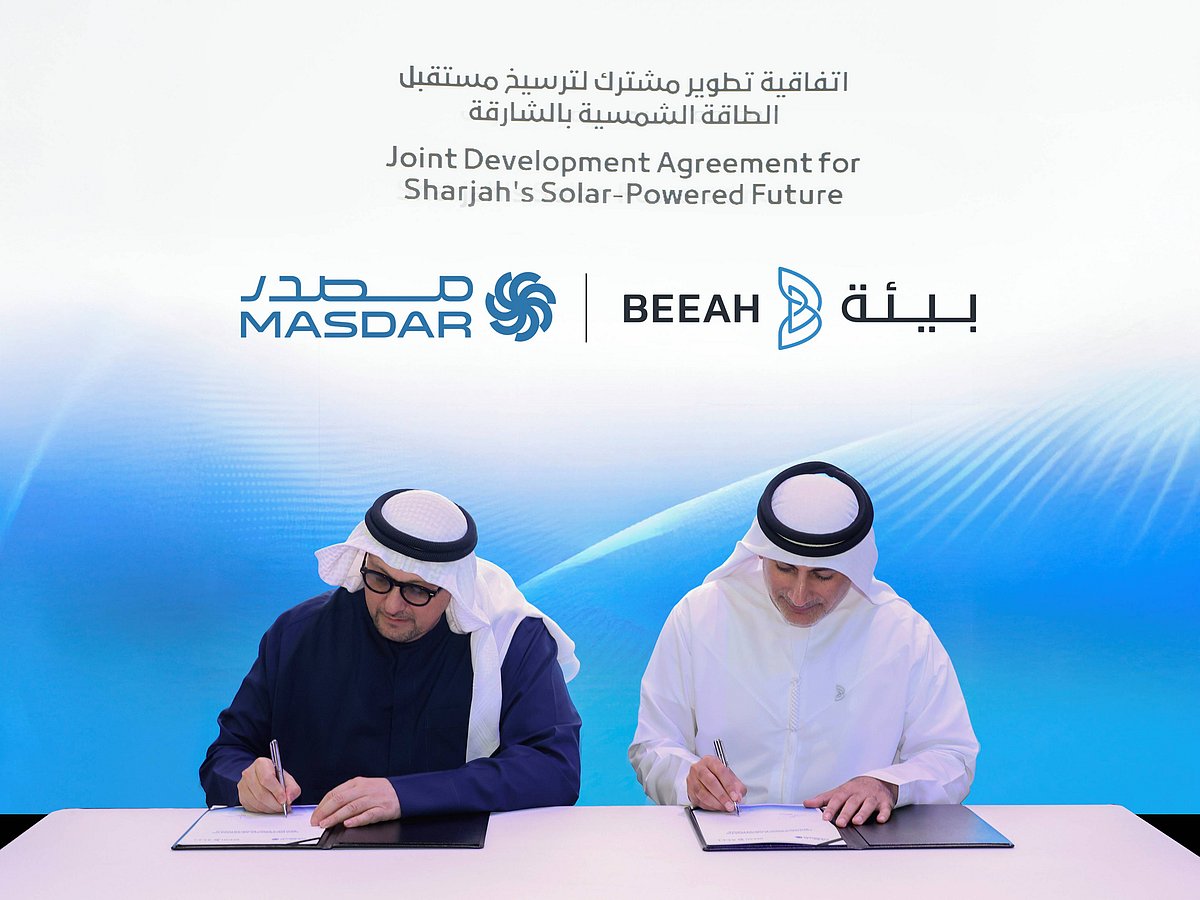
Dubai: Sharjah is moving to scale up solar power capacity. A new joint development agreement between BEEAH and Masdar outlines a pipeline of utility-scale solar projects across the emirate, adding momentum to the UAE’s clean energy buildout.
The agreement, signed during Abu Dhabi Sustainability Week at the World Future Energy Summit, creates a structured framework to identify, assess and develop large solar photovoltaic projects in Sharjah. It reflects a shift from pilot initiatives to larger, grid-connected assets designed to supply reliable, low-carbon power at scale.
Building capacity to meet demand
Under the agreement, BEEAH and Masdar will work jointly across the full project lifecycle, from site screening and feasibility studies to construction, operation and maintenance. The scope includes grid impact assessments, solar resource analysis and site studies, with flexibility to explore hybrid solutions such as battery energy storage systems to support grid stability.
“Sharjah’s rising energy requirements are driving the deployment of more diversified, resilient renewables infrastructure across the emirate,” said Khaled Al Huraimel, Group CEO and Vice Chairman of BEEAH. He added that the agreement builds on BEEAH’s experience in delivering clean electricity through its waste-to-energy operations, allowing the emirate to meet demand while accelerating decarbonisation.
Expanding a long-standing partnership
The deal deepens an established collaboration between the two organisations. Their most prominent joint effort to date has been the Emirates Waste to Energy Company, formed in 2017 to deliver the Middle East’s first commercial-scale waste-to-energy plant. That project has become a reference point for circular economy infrastructure in the region.
“Sharjah has strong potential for solar energy development, and its visionary leadership is driving the deployment of high-quality, commercially viable projects,” said Mohamed Jameel Al Ramahi, CEO of Masdar. He noted that Masdar’s role will be to support Sharjah’s energy transition through projects that can be scaled and replicated.
Solar beyond pilot projects
The joint development agreement signals a move toward larger, utility-scale assets rather than rooftop or demonstration projects. Sharjah’s geography and land availability provide scope for solar installations that can contribute meaningfully to the grid, especially when paired with storage to manage intermittency.
BEEAH’s wider energy strategy includes repurposing closed landfills for solar generation and capturing landfill gas for power. Its headquarters already operates with on-site solar capacity and holds LEED Platinum certification, reinforcing the company’s focus on integrating clean energy into core operations.

Sign up for the Daily Briefing
Get the latest news and updates straight to your inbox
Network Links
GN StoreDownload our app
© Al Nisr Publishing LLC 2026. All rights reserved.