Dubai: Mohamed Alabbar calls Emaar’s IPO his ‘stupidest idea’ but says it made the company tougher
The CEO reveals one of his biggest failures and says meetings are a waste of time
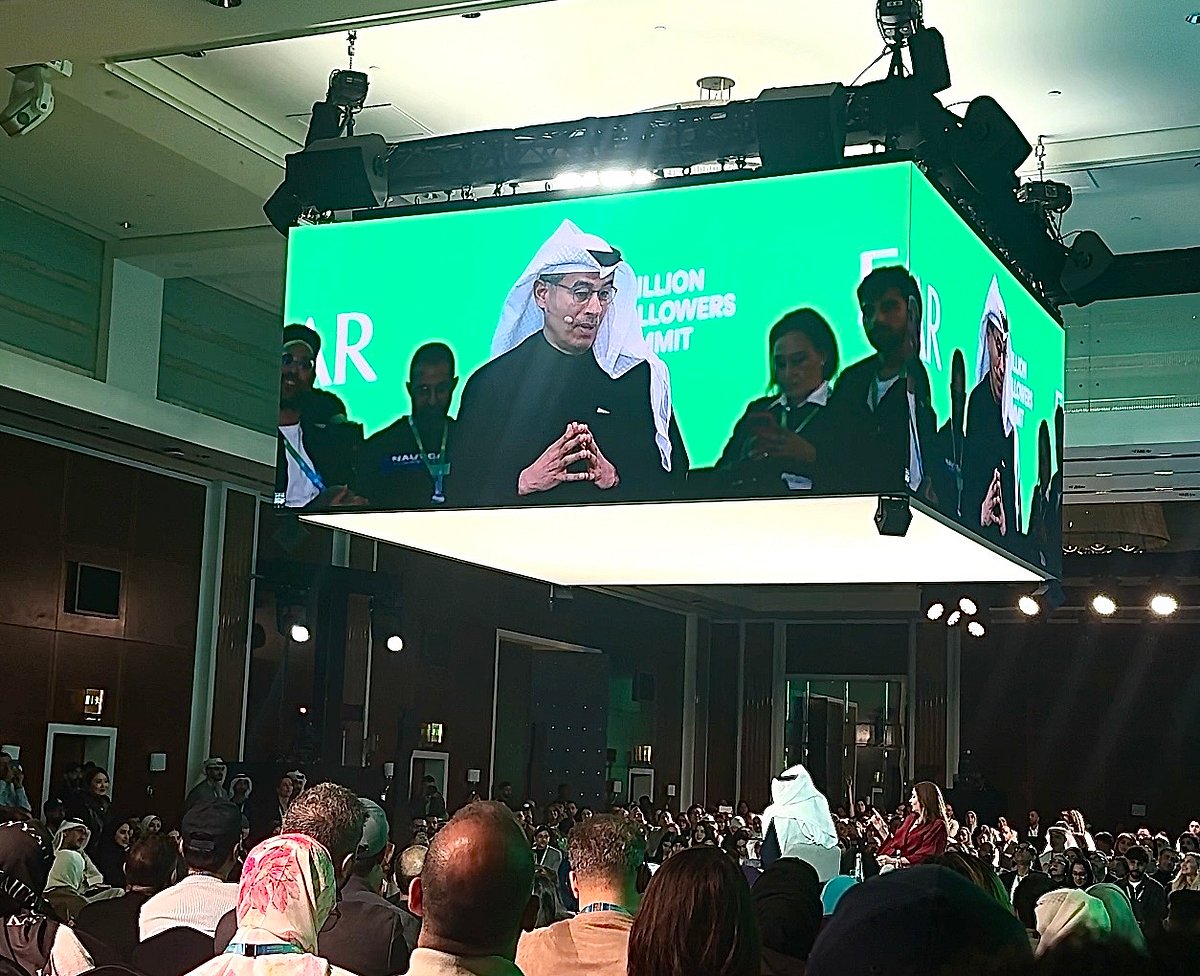
Dubai: For a developer behind the world’s tallest tower and some of Dubai's most recognisable landmarks, Mohamed Alabbar does not mince his words when reflecting on one of Emaar’s most consequential decisions.
“The stupidest idea we ever did was to go public,” the Emaar founder told a packed audience at Dubai’s 1 Billion Followers Summit.
It is a striking admission from the man who built Emaar into a global property giant. More than two decades after the company listed as a public joint-stock firm on the Dubai Financial Market, Alabbar said the heightened scrutiny and pressure on its performance had become a double-edged sword, challenging at times but ultimately making the company stronger.
‘It feels like stripping naked every 90 days’
Since its listing, Emaar has been required to publish its financial results every quarter, a rhythm Alabbar likened to public exposure.
“It feels I have to strip naked in front of the public where they can see my weight, how much I’ve eaten, how much I spend,” he said. “Are you happy with the result? Okay, let’s go on.”
Yet for all the discomfort, Alabbar argues that public markets imposed a discipline Emaar could not have achieved otherwise.
“But the good thing? It differentiates between the men and the boys,” he said, invoking a popular Arabic expression to describe what he called a market with “no mercy”.
‘Shareholders don’t care about excuses’
According to Alabbar, being listed means there is little tolerance for explanations, only results.
“Shareholders just want their profits to go up,” he said. “They don’t care about the reason why it’s not doing well. They don’t care if it’s a Covid problem or a US problem.”
That unforgiving environment, he said, forced Emaar to become leaner, more resilient and far more disciplined even during periods of rapid growth.
“It’s a struggle but a lot of fun,” Alabbar added. “Because when it flies, it really flies. So now Emaar is in flying mode.”
Cost-cutting, even at the office canteen
Despite strong performance, Alabbar insists the company remains in constant cost-cutting mode including some almost symbolic measures.
“We still cut,” he said. “That means less people, less marketing people.” Last year, Alabbar revealed he had let go of Emaar’s entire marketing team. Even his own office was not spared.
“I have even cut the type of tea in my office,” he said. “Before we had two teas, now just one.”
‘Meetings are garbage’
Perhaps most radical is his approach to corporate meetings or rather, the lack of them. “No meetings, nothing,” Alabbar said. “In the whole of September, the whole company had no meetings. No Microsoft Teams, no Zoom, none of that. It is all garbage.”
If something is urgent, he prefers a direct call. “If you want something from me, just pick up the phone,” he said.
The approach appears to be paying off. Emaar Properties recorded Dh61 billion ($16.6 billion) in property sales in the first nine months of 2025, a 22 per cent increase year on year.
“Guess what? Profit is up, our sales are up, our productivity is up,” Alabbar said. “As we succeed, we also tighten our operations.”
Why the UAE remains Emaar’s biggest bet
When asked where Emaar’s next phase of growth lies, Alabbar did not hesitate. “The UAE,” he said.
“The UAE is aggressively growing. Our ecommerce business is booming, our property is on fire but we have to catch up. Instead of 50 buildings, we need to build 100 buildings.”
Beyond the UAE, he pointed to expansion opportunities in Eastern Europe, the Middle East, Indonesia and Bangkok.
Lessons learned from the US
The United States, however, remains a more cautious proposition. Emaar previously exited the market after heavy losses.
“We tried in 2005 but we ran away after losing $1.2 billion,” Alabbar said. “We learned it the hard way.”
Still, he believes the experience earned him trust. “My shareholders understood that if I lose $1.2 billion, I can make $70 billion afterwards,” he said, adding that he plans to establish a land-focused company in the US.
For Alabbar, any American expansion must be viewed through a long-term lens.
“If the US has a stable, healthy economy, it impacts the whole world,” he said. “So there we have to know what our plans are, depending on the situation.”
At the summit, Alabbar also weighed in on why Europe, particularly the UK is falling behind, why China is gaining ground, his optimism about Egypt, and how geopolitical conflicts are reshaping business sentiment in the region, including in Iran.
Network Links
GN StoreDownload our app
© Al Nisr Publishing LLC 2026. All rights reserved.