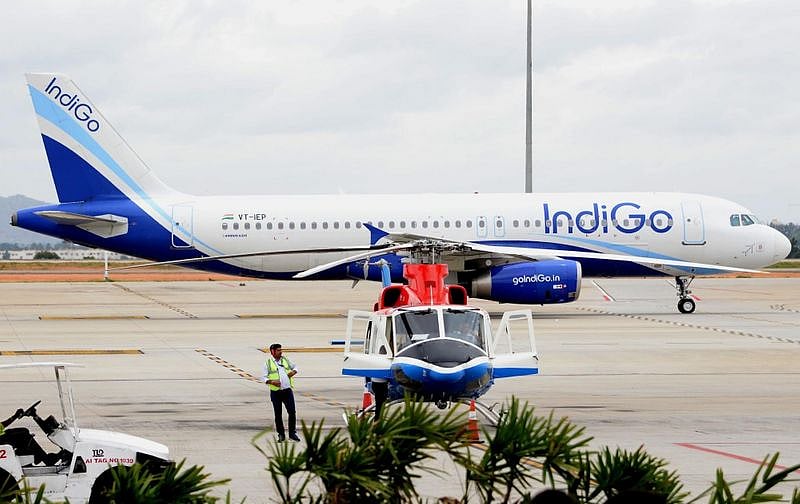
Dubai: India’s biggest carrier by market share, IndiGo, has confirmed to Gulf News that it is cancelling its only direct flight between Bhubaneswar and Dubai starting March this year. However, the airline has declined to comment further on the decision.
The move ends the sole non-stop air link between Odisha’s capital and the UAE, a route that community groups say has been a critical lifeline for more than 30,000 Odia residents living in the Gulf.
In a letter sent to Odisha’s Chief Minister and Deputy Chief Minister, the Odisha Samaj UAE, which represents the Odia community in the Emirates, urged state authorities to intervene to restore the service and increase frequencies.
According to the community, the Bhubaneswar–Dubai route has operated at consistently high demand since its launch two years ago, with flights frequently sold out months in advance, despite higher fares.
The group said the service supported not just family travel, but also tourism, trade and medical travel between Odisha and the Middle East.
With the flight’s cancellation, passengers will now be forced to rely on indirect connections via other Indian cities, adding cost, travel time and uncertainty — particularly for elderly passengers and families with children.
A wider squeeze on Indian expatriate travel
The Bhubaneswar decision is not an isolated case. Indian expatriates in the UAE are increasingly facing fewer direct flight options, as airlines struggle to add or even maintain services under existing bilateral restrictions.
Earlier, Air India also stopped direct services to Kochi and Hyderabad from the UAE, two routes with strong expatriate demand. Together, these cuts are narrowing travel choices for Indian workers, families and business travellers — even as passenger demand between India and the UAE continues to rise.
Industry executives have maintained for years that this is less about airline appetite and more about regulatory limits. Aviation execs from Emirates, Etihad, and flydubai have said that airlines find it harder to service this sector due to bilateral constraints.
The UAE has been urging India to revise the 2014 bilateral agreement, which caps seat entitlements at 66,504 per week for each side. Emirates has already exhausted its allocation and has repeatedly voiced frustration over not being allowed to add more flights.
What’s holding flights back?
At the heart of the issue is the India–UAE bilateral air services agreement — a government-to-government deal that sets the number of flights airlines from both countries can operate.
Even in the recent India-UAE trade agreements, including the landmark CEPA (Comprehensive Economic Partnership Agreement), aviation capacity was not addressed, leaving airlines constrained despite booming trade and population flows.
As a result, UAE carriers are unable to increase flights to India, even where demand is strongest, while Indian airlines are making selective cuts based on fleet availability and network priorities.
Community calls for intervention
In its letter, the Odisha Samaj UAE president, Amiya Kumar Mishra, asked the Odisha government to engage with Indian aviation authorities and IndiGo to ensure the continuation of the Bhubaneswar–Dubai service, and explore restoring the route with higher frequency, ideally daily.
The group stressed that Bhubaneswar’s direct Dubai link was built after years of effort and remains Odisha’s most significant international air connection.
Last month, IndiGo came under intense scrutiny after widespread flight cancellations and delays disrupted its network across India. The chaos was triggered by the full implementation of new DGCA rules on Flight Duty Time Limitations (crew rest norms), for which airlines had been given advance notice to prepare.
Regulators found that IndiGo had not hired enough crew or adjusted rosters adequately, forcing large-scale schedule cuts. The aviation watchdog stepped in with oversight measures, while the airline apologised and offered refunds and compensation.
Sign up for the Daily Briefing
Get the latest news and updates straight to your inbox
Network Links
GN StoreDownload our app
© Al Nisr Publishing LLC 2026. All rights reserved.