Who are Iran’s IRGC and why the EU has designated them a terrorist organisation?
Designation follows brutal suppression of mass protests and ramps up pressure on Iran
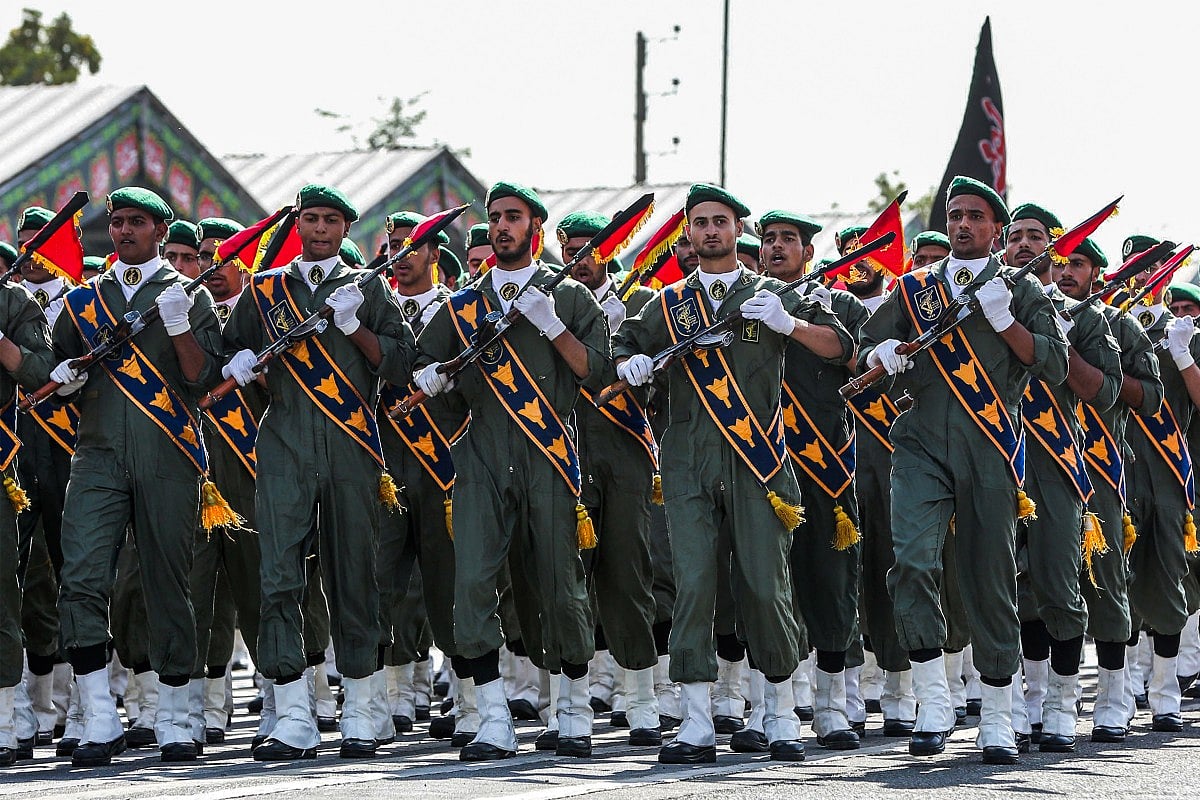
Dubai: The European Union on Thursday agreed to designate Iran’s Islamic Revolutionary Guard Corps (IRGC) a “terrorist organisation” over its role in a deadly crackdown on mass protests, sending a strong message of condemnation to Tehran.
“This was long overdue,” EU chief Ursula von der Leyen said in an online post.
“‘Terrorist’ is indeed how you call a regime that crushes its own people’s protests in blood.”
Though largely symbolic, the move has already drawn sharp warnings from Iran, which said it would have “destructive consequences.”
The 27-nation bloc also imposed visa bans and asset freezes on 21 Iranian officials and entities, including the interior minister, prosecutor general and regional IRGC commanders, over their involvement in the repression.
IRGC: 5 THINGS TO KNOW
Who they are: Iran’s Islamic Revolutionary Guard Corps (IRGC) was formed in 1979 to protect the Islamic Revolution and answers directly to supreme leader Ayatollah Ali Khamenei.
Why they matter now: The Guards are accused by rights groups and Western governments of steering the crackdown on Iran’s most serious protests in years.
More powerful than the army: The IRGC is better funded, trained and equipped than Iran’s regular military and operates land, naval and aerospace forces.
An economic empire: The Guards control or influence vast swathes of Iran’s economy, including energy, infrastructure, telecoms and finance, giving them enormous political leverage.
Global pressure growing: The US and Canada designated the IRGC a terrorist organisation in 2019 and 2024, respectively, Australia followed in 2025, and the European Union took similar action on January 29.
EU foreign policy chief Kaja Kallas said diplomatic channels would remain open despite the designation.
Iran’s military swiftly condemned the decision, accusing the EU of acting in obedience to the United States and Israel.
“The illogical and irresponsible action of the European Union is driven by hostility,” Iran’s General Staff said in a statement carried by state media.
Foreign Minister Abbas Araghchi called the move a “major strategic mistake,” warning Europe was “fanning the flames” as regional tensions rise.
What is the IRGC?
Founded in 1979 after Iran’s Islamic Revolution, the IRGC — known as the Pasdaran — was created to protect the clerical leadership and the ideological foundations of the Islamic Republic.
Unlike Iran’s regular army, it answers directly to Supreme Leader Ayatollah Ali Khamenei.
Analysts estimate the force has between 150,000 and 200,000 personnel, with land, naval and aerospace units.
Western experts say the Guards are better trained, funded and equipped than Iran’s conventional military and serve as Tehran’s main link to allied armed groups such as Hezbollah and militias in Iraq and Syria.
An economic powerhouse
Beyond its military role, the IRGC controls vast business interests across energy, infrastructure, telecommunications and finance.
Analysts describe it as an “empire within an empire,” with an annual budget estimated at $6–9 billion — about 40 per cent of Iran’s military spending.
Its economic reach has entrenched it as a dominant political force.
Central role in repression
The IRGC runs an extensive intelligence network that has repeatedly dismantled protest movements.
Street enforcement is often carried out by the Basij paramilitary force, whose membership is estimated at between 600,000 and 900,000.
Experts say the Guards played a leading role in suppressing the recent protests, which began over economic hardship and evolved into a broader anti-government movement.
The United States designated the IRGC a terrorist organisation in 2019, followed by Canada in 2024 and Australia last year.
Why it matters
Analysts say the IRGC has become the regime’s last line of defence as protests persist and international pressure grows.
Its uncompromising response underscores how central the force is to the survival of Iran’s leadership — and how far it may go to crush dissent.

Sign up for the Daily Briefing
Get the latest news and updates straight to your inbox
Network Links
GN StoreDownload our app
© Al Nisr Publishing LLC 2026. All rights reserved.