India-Pakistan U-19 Asia Cup final: Why keeping your nerve matters most
From 252 for eight to victory, India displayed remarkable resilience under pressure
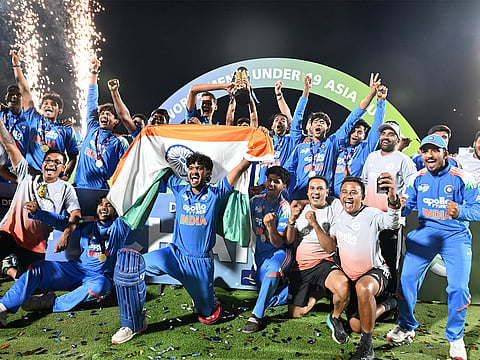
India's last-ball thriller against Pakistan underlines an enduring cricketing truth: runs may come easily on a flat surface, but winning under pressure requires something far more valuable than stroke-making.
Cricket has a funny way of reminding us that a good pitch does not necessarily produce a good contest between bat and ball. Sometimes, it simply creates a different kind of examination. When the surface is flat, the boundaries are inviting and the ball comes nicely onto the bat, the contest shifts from technical survival to mental endurance. India's dramatic victory over Pakistan in the Under-19 Asia Cup final was precisely that kind of examination.
In a remarkable high-scoring encounter, India chased down Pakistan's formidable 337 for nine, finishing at 339 for nine to secure a one-wicket victory off the final ball. It was not merely a contest of batting talent; it was a test of nerve, resilience and the ability to remain composed when the pressure was at its highest.
Pakistan had every reason to believe they had done enough. Their batting performance was built around substantial contributions, with Usman Khan scoring 107 and Abdul Qadir adding 80. On a surface that offered considerable assistance to batsmen, Pakistan capitalised on the conditions and posted a challenging total. Their innings demonstrated the value of aggressive intent, calculated risk-taking and the ability to maintain momentum.
But cricket is not played on paper, and a target of 338 can look very different when the scoreboard begins to exert psychological pressure.
India's response was equally aggressive. Lakshya Raichandani's 80 and Aaryavir Sehwag's 58 provided the foundation for the chase, while Manal Chauhan contributed 47. The Indian batting order appeared capable of matching Pakistan's scoring rate, but the match took a dramatic turn when wickets began to fall.
At 252 for eight, India's pursuit appeared to be slipping away. Pakistan had sensed an opportunity, and the pressure was firmly on the remaining Indian batsmen. This was the moment when the contest moved beyond the advantage of a batting-friendly pitch.
Manal Chauhan and Mohit Ulva then produced a crucial partnership, adding 57 runs to revive India's hopes. Mohit eventually remained unbeaten on 49 from just 26 deliveries, displaying the composure and attacking instinct required in a finish where every delivery mattered.
The final ball brought the decisive moment. Mohit found the boundary, completing an extraordinary one-wicket victory for India.
The result offers an interesting perspective on modern cricket. Aggressive batting has become an essential part of the game, particularly in limited-overs formats. Flat pitches, shorter boundaries and increasingly powerful bats have encouraged teams to pursue bigger totals. A score of 300-plus, once considered exceptional, is now increasingly treated as a competitive benchmark rather than an extraordinary achievement.
However, the ability to score freely should not be confused with the ability to handle pressure. Batting conditions can reduce the technical challenge posed by bowlers, but they cannot eliminate the psychological challenge of a difficult chase. When wickets fall, the required run rate climbs and the finishing line moves further away, a batter's temperament becomes as important as technique.
For Pakistan, the defeat will be difficult to digest. Scoring 337 in a final is a significant achievement, yet the inability to defend that total will raise questions about execution during the closing stages. For India, the victory will be remembered for the character shown when the match appeared almost beyond reach.
There is also a lesson here for young cricketers. Learning to attack is important, but learning when to absorb pressure, when to rotate the strike and when to take calculated risks is equally critical. Not every delivery needs to disappear over the boundary. Sometimes, the most valuable contribution is simply staying at the crease.
Ultimately, this final was a celebration of fearless batting, but also a reminder that cricket is never just about the pitch, the conditions or the scoreboard.
Pakistan demonstrated how to build a massive total. India demonstrated how to chase one when the odds appeared to be turning against them.
On a pitch where the batsmen enjoyed the conditions, India showed that the biggest advantage in cricket is still a cool head under pressure.


