Underground arsenal: Iran digs out missile bases buried by US-Israeli strikes
Analysis of satellite images suggests Tehran has reopened most tunnel entrances
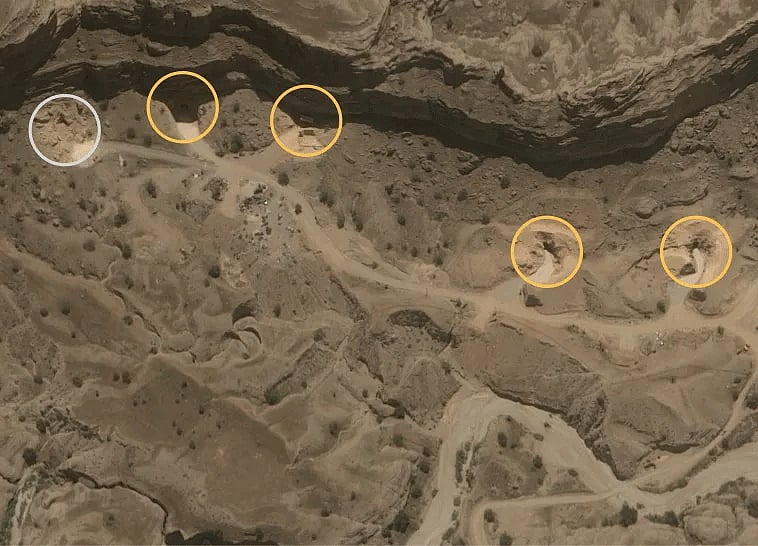
Dubai: Iran has restored access to most of the underground missile facilities targeted during the recent conflict with the United States and Israel, raising fresh questions about the long-term effectiveness of efforts to cripple Tehran’s missile arsenal, according to a CNN investigation based on satellite imagery.
The report found that Iran has reopened 50 of the 69 tunnel entrances struck by US and Israeli forces at 18 underground missile facilities since the conflict ended more than seven weeks ago.
During the war, Washington and Tel Aviv sought to restrict Iran’s missile operations by bombing tunnel entrances, roads and launch infrastructure linked to its network of underground missile bases. The strategy was designed to bury missile stockpiles and prevent launchers from accessing them.
However, satellite images reviewed by CNN show Iran using bulldozers, front-end loaders and dump trucks to clear debris, reopen tunnels and repair damaged roads.
Analysts say the findings highlight the limits of relying on strikes against tunnel entrances to neutralise Iran’s missile force.
WHAT SATELLITE REVIEW FOUND
Iran reopened 50 of 69 tunnel entrances hit during the war
Underground missile sites span 18 facilities
Experts estimate Iran still possesses around 1,000 missiles
Roads damaged by bombing have been repaired and, in some cases, repaved
Bulldozers and dump trucks were used to clear tunnel entrances
US intelligence believes Iran has restarted some military production activities
Analysts say Iran could resume missile launches if conflict resumes
“The US military is good at delivering tactical successes, and entombing and suppressing the Iranian missile force is a great example of that,” Sam Lair, a research associate at the James Martin Center for Nonproliferation Studies, told CNN.
“However, if that isn’t accompanied by a set of reasonable strategic war aims and an achievable theory of victory, it can end up being a strategic failure,” he added.
President Donald Trump had repeatedly cited Iran’s missile arsenal as one of the main reasons for military action. In a March post on Truth Social, Trump listed the degradation of Iran’s missile capabilities and launchers among the key objectives of the campaign.
1,000 missiles
Experts interviewed by CNN estimate that Iran may still possess around 1,000 missiles stored deep inside underground facilities. Because many of the sites are located beneath hundreds of metres of rock, analysts believe the stockpiles themselves likely suffered limited damage from strikes focused primarily on tunnel entrances.
“They were preparing for this kind of war for 20 years. They are very prepared,” Timur Kadyshev, a missile expert at the University of Hamburg’s Institute for Peace Research and Security Policy, told CNN.
The report also noted that Iran has repaired roads destroyed during the conflict and resumed efforts to restore missile bases that had been heavily damaged. At some locations, roads that were cratered by bombing have already been repaved.
The findings come as Iran and the United States continue negotiations following a tentative agreement to reopen the Strait of Hormuz. While diplomatic talks continue, analysts warn that Tehran could retain a significant missile capability if hostilities were to resume.
US intelligence assessments cited by CNN indicate Iran has already begun rebuilding key military capabilities, including restarting drone production and replacing missile launchers.
For some analysts, the recovery effort underscores a broader challenge: while advanced military strikes can inflict substantial damage, repairing that damage often requires little more than construction equipment and time.
“You’re using very sophisticated, very expensive weapons to do this kind of damage, and the recovery is very low tech — it’s just bulldozers,” Kadyshev told CNN.

Sign up for the Daily Briefing
Get the latest news and updates straight to your inbox
Network Links
GN StoreDownload our app
© Al Nisr Publishing LLC 2026. All rights reserved.