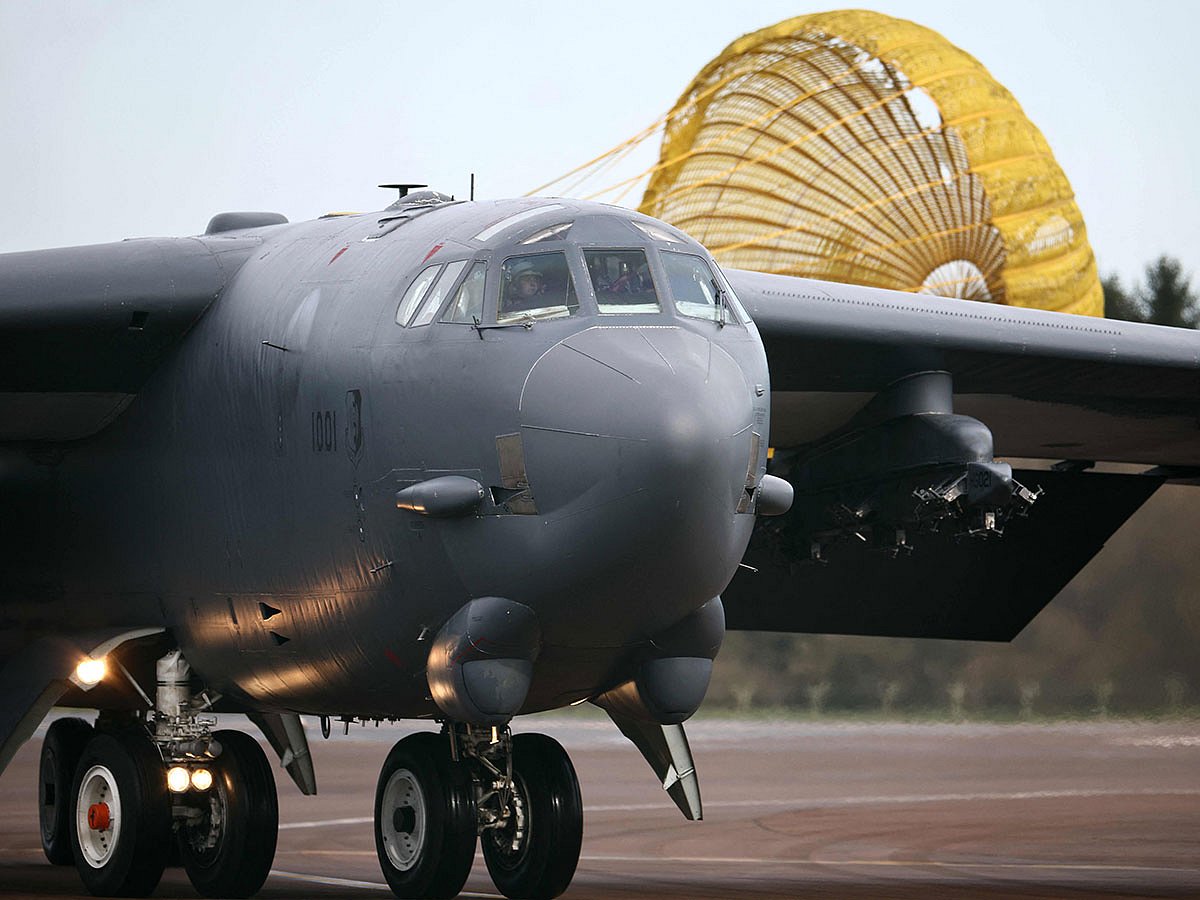
The United States is ramping up its military footprint in the Middle East, sending around 10,000 additional troops even as President Donald Trump says Washington will not launch new attacks on Iran “for now,” in a strategy that blends deterrence with restraint.
The deployment, as reported by The Wall Street Journal, follows weeks of US and Israeli strikes and escalating tensions in the Strait of Hormuz. Trump has also declared the war effectively “won,” despite a volatile and fast-moving situation on the ground.
The dual-track approach — building military pressure while pausing further escalation — underscores uncertainty over the next phase of the conflict, particularly as Iran continues to assert control over key shipping routes and signals its willingness to negotiate.
Get updated faster and for FREE: Download the Gulf News app now - simply click here.
Why is the US sending more troops to the region?
The troop deployment appears aimed at strengthening deterrence and preparing for potential escalation.
Two Marine Expeditionary Units (MEUs), backed by amphibious warships and landing craft, are being positioned for rapid-response operations, including possible ground missions.
The build-up also reflects concerns over the security of key waterways, including the Strait of Hormuz, and the need to protect shipping and regional allies.
How many troops are being deployed?
Reports, including by The Wall Street Journal, indicate roughly 10,000 additional US personnel are being sent to the region, including Marines, sailors and support units.
These forces significantly enhance Washington’s ability to carry out amphibious assaults, secure strategic assets, or respond to Iranian actions.
What did Trump say about attacks on Iran?
Trump has signalled a pause in further strikes, suggesting the US will not attack Iran “for now,” even as he declared that the war had been “won.”
At the same time, he has warned that Washington could escalate quickly if provoked, indicating that military options remain on the table.
Are attacks still ongoing?
While large-scale new US strikes appear to be on hold, the conflict is not over.
Earlier operations targeted multiple sites, including military infrastructure, and tensions remain high with ongoing threats and military posturing from both sides.
Israel’s defence minister said on Friday that Israeli attacks on Iran “will escalate and expand” after it launched a new wave of strikes on Tehran.
What is happening in the Strait of Hormuz?
The situation remains volatile.
Iran’s Revolutionary Guards said they had turned back three container ships attempting to transit the strait, warning that vessels linked to its “enemies” would not be allowed passage.
Energy intelligence firm Kpler said two container ships belonging to Chinese firm COSCO attempted to cross but turned back, marking the first such attempt by a major carrier since the conflict began.
At the same time, Trump said Iran had allowed 10 oil tankers to pass through as a “present” to signal seriousness about negotiations.
Why does Kharg Island matter in this conflict?
Kharg Island is central to the strategic calculations on both sides.
It handles roughly 90% of Iran’s crude oil exports and is considered the “nexus” of its oil supply infrastructure.
Control or disruption of Kharg could severely impact Iran’s economy and its ability to export oil.
Key facts about Kharg Island
Handles about 90% of Iran’s crude oil exports
Located off Iran’s coast in the Gulf
Storage capacity of around 30 million barrels
Estimated 18 million barrels currently stored
Key infrastructure includes deep-water jetties for supertankers
Considered the most vital hub in Iran’s oil system
Limited alternative export routes reduce Iran’s flexibility
Is the US planning a ground operation?
The deployment of amphibious forces has fuelled speculation about a possible operation targeting Kharg Island.
Such a move would be highly risky. Any assault would require navigating the Strait of Hormuz under threat from Iranian drones, missiles and naval mines.
Experts also question whether capturing the island would provide sufficient leverage to force Iran to reopen shipping routes.
What are the risks of escalation?
The risks remain significant:
Iranian retaliation against US naval assets
Disruption of global energy supplies
Civilian impact, particularly on Kharg Island’s population
Further strain on US military resources
Even a limited operation could trigger a wider regional conflict.
What is the broader strategy?
Washington appears to be combining military pressure with strategic restraint.
By reinforcing forces while holding back immediate strikes, the US may be seeking to push Iran toward negotiations without triggering full-scale escalation.
However, the situation remains fluid, and both sides retain the capability - and willingness - to escalate quickly.
- with inputs from AFP and AP

Sign up for the Daily Briefing
Get the latest news and updates straight to your inbox
Network Links
GN StoreDownload our app
© Al Nisr Publishing LLC 2026. All rights reserved.