Rubio sets Hormuz reopening and uranium talks as key conditions in Iran negotiations
US says sanctions relief will depend on nuclear concessions, not reopening strait alone
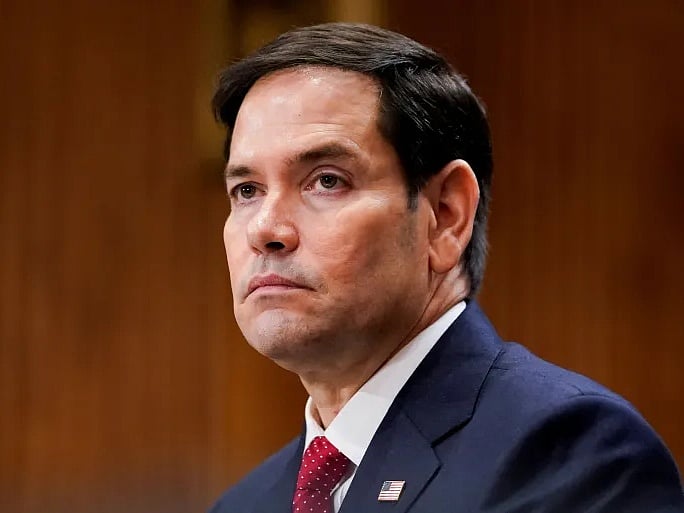
Dubai: US Secretary of State Marco Rubio said on Tuesday that reopening the Strait of Hormuz is the primary condition for any progress in talks with Iran, while insisting that Tehran must also agree to negotiations over its stockpile of highly enriched uranium before any sanctions relief can be considered.
Speaking to lawmakers in Washington, Rubio said Iran must make a clear commitment to reopening the strategically important waterway, which has become a focal point of tensions following the recent conflict between the United States, Israel and Iran.
Get updated faster and for FREE: Download the Gulf News app now - simply click here.
"The number one condition in talks with Iran is that Iran opens the Strait of Hormuz," Rubio said, adding that Tehran must also commit to "specific negotiations regarding the disposition of its highly enriched uranium".
His remarks came as the Trump administration confirmed it was engaged in discussions with Iran, with Rubio revealing that Tehran had shown a willingness to discuss aspects of its nuclear programme that it had previously refused to negotiate.
However, the secretary of state cautioned that the development did not guarantee a breakthrough in efforts to ease tensions. He stressed that the United States had not offered sanctions relief in exchange for reopening the Strait of Hormuz and that any easing of sanctions would depend on Iran meeting a series of conditions related to its nuclear activities.
Rubio expressed hope that negotiations could ultimately lead to the reopening of key maritime routes, but warned that Washington would maintain pressure if Iran sought to keep the strait closed.
"If Iran insists on closing the strait, we will effectively close it to Iran through a blockade," he said, arguing that the United States could not accept a situation in which Tehran was able to disrupt global shipping routes or impose costs on international maritime traffic.
The secretary of state also claimed that Iran's conventional military capabilities had been significantly weakened, saying the country had built up its missile arsenal in part to protect its nuclear programme. While noting that Iran still possessed a substantial number of drones, Rubio dismissed its remaining naval capabilities, describing them as largely limited to armed fast boats and saying much of its fleet was no longer operational.
He also suggested that decision-making within Iran had become increasingly fragmented, making negotiations more complicated and slowing the process of obtaining responses from Tehran.
Rubio's comments came during testimony before the Senate Foreign Relations Committee, where lawmakers questioned him on the Trump administration's foreign policy and the ongoing crisis involving Iran.
Network Links
GN StoreDownload our app
© Al Nisr Publishing LLC 2026. All rights reserved.