The blockade on Iranian ports had been “fully implemented” within 36 hours of its launch, according to the US Central Command (CentCom).
In a statement quoting US Navy Admiral Brad Cooper, CentCom head, the US military said they had halted all sea trade going in and out of Iran.
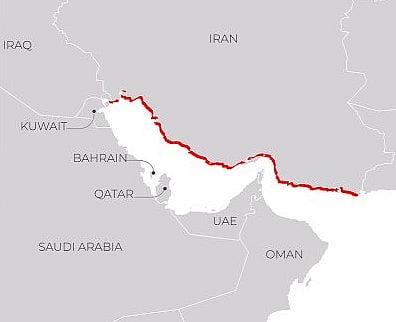
Centcom released an infographic detailing the naval blockade along Iran's southern coastline, marking a red line from near Kuwait through the Arabian Gulf and Gulf of Oman to Oman, effectively sealing off Iranian ports while preserving Strait of Hormuz transit.
The operation, launched following Iran's refusal to allow freedom of navigation in the Strait of Hormuz, bars all ships — regardless of flag—from entering or exiting Iranian waters, targeting the regime's oil exports that fund its military.
Compliance
In the first 24 hours, no vessels breached the line; six merchant ships heeded US warnings and turned back, demonstrating initial compliance, CentCom stated.
Blockade follows failed talks
Over 10,000 US sailors, Marines, and airmen support the mission with 100+ fighter and surveillance aircraft, plus 12+ warships including aircraft carriers, guided-missile destroyers, amphibious assault ships, unmanned vessels, and refueling tankers.
President Donald Trump's April 7 deadline for a ceasefire expired without Iranian concession on uranium stockpiles and unlocking the Hormuz Strait, escalating after failed talks.
Iran's blockade of the Strait — 20% of global oil — prompted Nato allies like the UK and France to pledge patrols, but the U.S. leads this selective port squeeze to avoid fully choking world trade.
Enforced impartially, the blockade pressures Tehran's economy without provoking escalation.
UN Resolution 2817 backs "freedom of navigation", but critics warn of oil spikes past $150/barrel. CENTCOM emphasizes non-Iranian port access remains open, balancing coercion with maritime rights in this high-stakes standoff.
Network Links
GN StoreDownload our app
© Al Nisr Publishing LLC 2026. All rights reserved.