Mystery of the golden tongues: 13 mummies reveal secrets of ancient Egypt
Ptolemaic burials shed light on beliefs about speech, immortality and afterlife
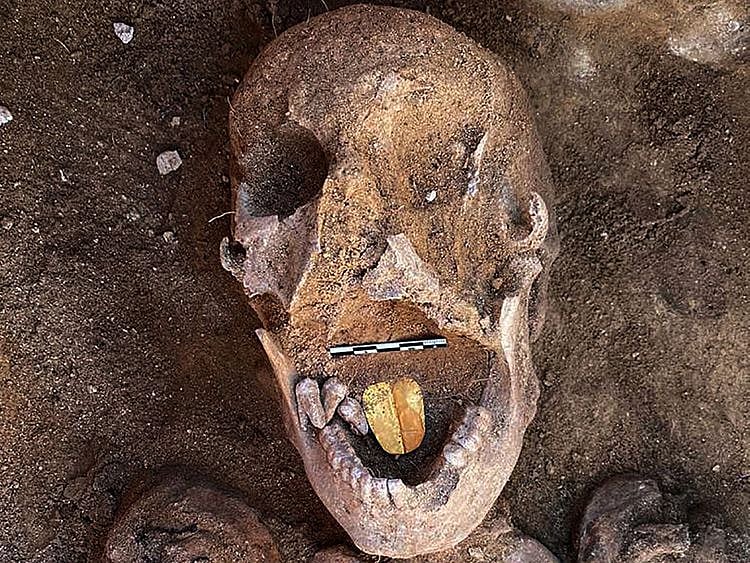
Dubai: Thirteen ancient Egyptian mummies were found with golden tongues placed inside their mouths at an archaeological site in Minya, an extraordinary discovery offering a glimpse into beliefs about death, speech and the afterlife more than 2,000 years ago.
The find at Oxyrhynchus, known locally as Al Bahnasa, has returned to attention following a recent report highlighting discoveries made during earlier excavations by an Egyptian Spanish archaeological mission.
Get updated faster and for FREE: Download the Gulf News app now - simply click here.
The mummies with golden tongues date to the Ptolemaic period, which lasted from around 304 BC to 30 BC.
Archaeologists believe the golden tongues may have been intended to enable the dead to speak in the afterlife. Gold held particular significance in ancient Egyptian beliefs because it did not tarnish and was associated with the gods and immortality.
Similar golden tongues have previously been uncovered at Al Bahnasa, suggesting the practice formed part of funerary traditions at the site rather than being an isolated occurrence.
The discoveries went far beyond the golden tongues.
Archaeologists also uncovered 29 amulets associated with ancient Egyptian religious beliefs, including scarabs and symbols linked to deities such as Horus, Thoth and Isis.
Gold foil coverings were also found on the fingers and toes of some of the dead, possibly intended to protect the body and ward off evil forces in the afterlife.
A heart scarab, an important element of ancient Egyptian funerary beliefs associated with the fate of the deceased after death, was discovered inside one mummy.
Elsewhere at the site, archaeologists uncovered a chamber containing remarkably preserved colourful wall paintings.
One scene depicts the tomb's owner, identified as Wen Nefer, alongside members of his family presenting offerings to ancient Egyptian gods. Another shows Anubis preparing a mummy, whose face is covered with a thin layer of gold, alongside representations of Osiris, Isis and Nephthys.
The mission said the combination of the tomb owner and his family with the gods in such scenes had not previously been documented at Al Bahnasa.
The site has yielded remains from several periods of Egyptian history, including the Ptolemaic and Roman eras, making it important for understanding changing religious and social practices.
Although the 13 golden tongued mummies are not a new discovery, renewed attention to the finds has highlighted how a small piece of gold placed inside the mouth of the dead more than two millennia ago can provide clues to ancient Egyptians' beliefs about speech, immortality and life beyond death.
Network Links
GN StoreDownload our app
© Al Nisr Publishing LLC 2026. All rights reserved.