US deploys Marines as Iran war shifts to Strait of Hormuz
Amphibious force to target Iranian boats and islands threatening global oil route
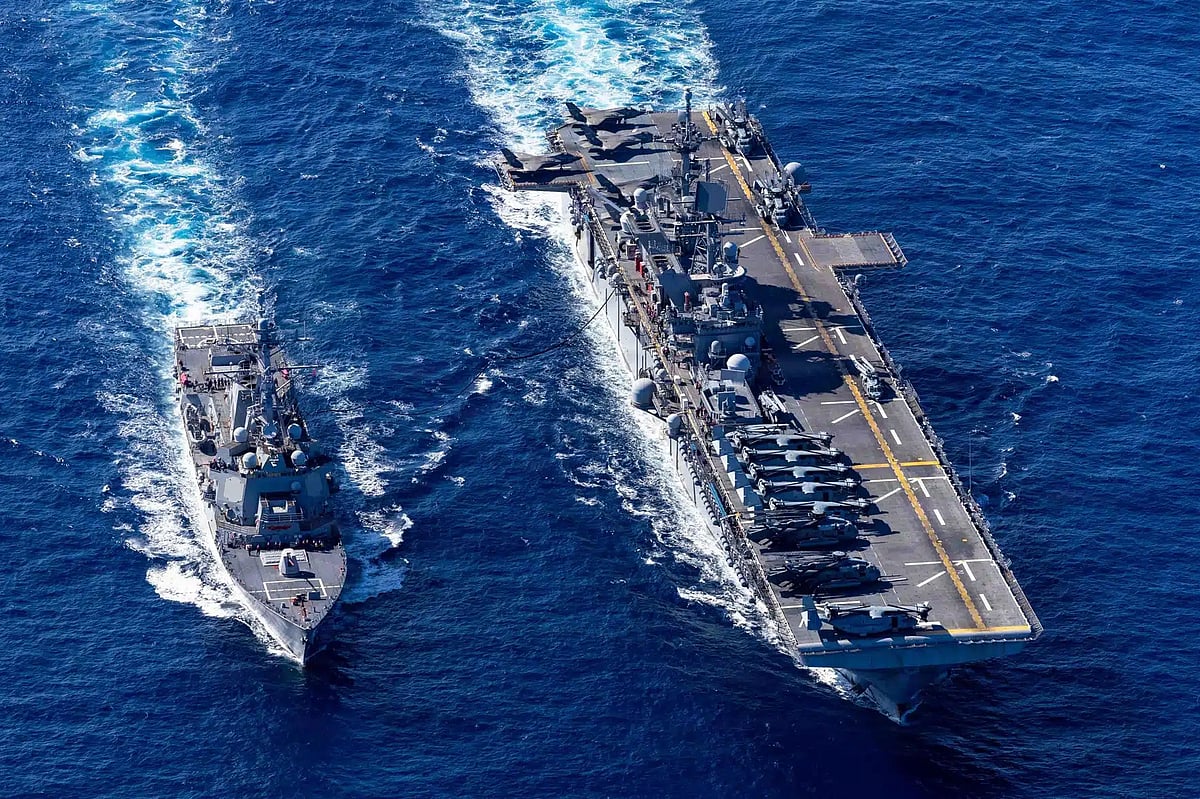
Dubai: The United States is deploying about 2,500 Marines to the Middle East as the war with Iran enters a new phase centred on the Strait of Hormuz, where attacks on shipping have disrupted one of the world’s most critical oil routes.
The Marines are expected to come from the 31st Marine Expeditionary Unit (MEU), normally based in Okinawa, Japan, according to US defence officials. The unit will deploy alongside amphibious warships including the assault ship USS Tripoli, forming part of a rapid-response force aimed at protecting shipping and countering Iranian attacks in the Gulf.
The deployment comes two weeks after the United States and Israel launched major strikes on Iran, triggering a widening conflict that has spilled across the region and severely disrupted maritime traffic through the narrow waterway linking the Arabian Gulf to the Arabian Sea.
The Strait of Hormuz is one of the world’s most strategic energy chokepoints, carrying roughly one-fifth of global oil supplies. Iranian missile, drone and small-boat attacks have forced many commercial ships to halt transit through the strait, sending global oil prices sharply higher.
What is a Marine Expeditionary Unit (MEU)?
A Marine Expeditionary Unit (MEU) is the US military’s primary rapid-response amphibious force, designed to deploy quickly during international crises.
Each MEU typically includes about 2,200–2,500 Marines and sailors and operates from a small group of amphibious warships.
Four main elements:
Command element - Headquarters that directs all operations.
Ground combat element - An infantry battalion supported by artillery, armoured vehicles and engineers.
Aviation combat element - Aircraft such as helicopters, MV-22 Ospreys and F-35B fighter jets capable of conducting strikes or troop transport.
Logistics combat element - Provides medical, maintenance, supply and transport support.
Because of their versatility and speed, Marine Expeditionary Units are often described by US commanders as “America’s 9-1-1 force.”
Countering Iran’s asymmetric tactics
US military planners are particularly concerned about Iran’s ability to wage asymmetric naval warfare in the area, according to The New York Times.
Rather than relying on large warships vulnerable to US airpower, Iranian forces are believed to be deploying fast boats capable of laying naval mines or launching attacks on passing vessels, often operating from islands close to the strait.
The arrival of a Marine Expeditionary Unit would give the Pentagon the ability to conduct rapid amphibious raids on those islands, targeting missile batteries, drone launch sites or mine-laying teams threatening shipping lanes.
The Marines could also help escort commercial tankers, support surveillance operations and deploy electronic warfare systems designed to disrupt drones targeting ships.
Amphibious force brings air and sea power
A Marine Expeditionary Unit typically deploys aboard an Amphibious Ready Group, a small fleet of warships capable of launching aircraft, landing forces ashore and supporting sustained operations.
The ships carry a mix of aircraft including MV-22 Osprey tilt-rotor transports, heavy-lift helicopters and F-35B fighter jets, giving commanders the ability to strike targets inland or respond rapidly to maritime threats.
Military officials, according to The Wall Street Journal, say the flexibility of the force makes it particularly suited to volatile crises such as the current Hormuz confrontation.
Escalation risks rise
The deployment reflects growing concern in Washington that Iran’s campaign against shipping could evolve into a wider regional conflict.
Since the war began, Iranian missile and drone attacks have struck targets across the Gulf region, while US and Israeli airstrikes have targeted Iranian military facilities and energy infrastructure.
President Donald Trump said the US military had recently carried out a major bombing raid on Kharg Island, Iran’s primary oil export hub, claiming military targets there had been “totally obliterated.”
Despite the intensifying campaign, Washington says it intends to reopen the Strait of Hormuz and restore commercial traffic through the waterway.
US officials say an international coalition may ultimately be needed to escort tankers and clear potential mines from the strait.
Strategic gaps elsewhere
While Marine Expeditionary Units are relatively small compared with the roughly 50,000 US troops already stationed in the Middle East, they are prized by military planners for their speed and versatility.
However, sending the Japan-based 31st MEU to the Middle East could leave a temporary gap in the Indo-Pacific region, where such units normally serve as a rapid-response force for crises involving Korea, Taiwan or regional humanitarian emergencies.
With the war against Iran expanding and shipping still largely disrupted, the deployment highlights how the conflict is increasingly reshaping US military priorities across multiple theatres.

Sign up for the Daily Briefing
Get the latest news and updates straight to your inbox
Network Links
GN StoreDownload our app
© Al Nisr Publishing LLC 2026. All rights reserved.