Half open, half closed: How a disputed Clause 5 is keeping Hormuz — and oil markets — in limbo
Strait traffic stalls as security doubts, war-risk premiums keep tankers away
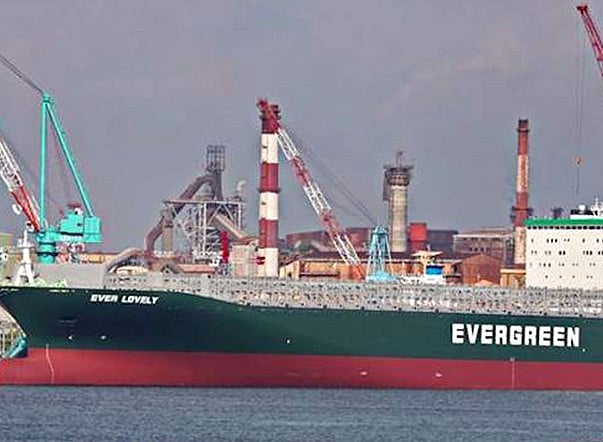
The Islamic Revolutionary Guard Corps (IRGC) targeted the container ship Ever Lovely on Thursday (June 25, 2026) after the crew allegedly failed to follow a shipping route designated by Tehran through the Strait of Hormuz.
The Singapore-flagged container vessel was struck near the Omani coast while exiting the strait. US officials blamed Iran's Islamic Revolutionary Guard Corps (IRGC) for the attack.
Iran maintains that ships transiting the strategic waterway should coordinate with Iranian maritime authorities and use approved routes.
Iranian officials argue that the vessel instead used an alternative corridor reportedly coordinated by the US and Oman, which Tehran says undermined its control over navigation in the area.
The IRGC has cited Clause 5 of what it describes as provisions in an "Islamabad Memorandum of Understanding" to justify its action, claiming the agreement gives it authority to oversee vessel movements through the Strait.
Clause 5 of the US-Iran Memorandum of Understanding (MoU) stipulates that Iran will use its best efforts to facilitate the free, charge-free safe passage of commercial vessels through the Strait of Hormuz for 60 days, while initiating dialogues with Oman to establish future maritime administration and services.
Under this specific provision:
Free Passage: Iran agrees to arrange safe passage for commercial ships traveling between the Arabian Gulf and the Sea of Oman free of charge for a duration of 60 days.
Traffic Restoration: Commercial traffic is to begin immediately. Due to the need for de-mining and removing military obstacles, the traffic is expected to be fully reinstated within 30 days of the MoU's signing.
Long-term Administration: Iran is tasked with conducting dialogue with Oman, alongside other regional states, to determine the future administration and maritime services in the Strait of Hormuz in accordance with applicable international law.
Legal basis
However, the legal basis for Iran's interpretation has not been independently verified. No broadly recognised international treaty grants Iran exclusive control over international navigation through the Strait of Hormuz.
The US rejects Iran's position, with Vice President JD Vance accusing Tehran of threatening freedom of navigation in one of the world's busiest maritime chokepoints.
US officials say commercial shipping has the right to transit the Strait under international law and have continued supporting alternative routing for vessels operating in the region.
Hormuz traffic remains subdued
While the Strait of Hormuz remains technically open, the flow of commercial shipping through one of the world's most important energy chokepoints remains well below normal.
The slowdown illustrates that reopening a strategic waterway is only part of restoring confidence.
Commercial shipowners must also determine whether the route is sufficiently safe before committing multi-million-dollar tankers and cargo vessels.
Insurers likewise continue to assess the risk of missile attacks, naval confrontations, mines or other threats before underwriting voyages through the Gulf.
As a result, energy analysts say uncertainty remains over how much crude oil is actually leaving Gulf export terminals, even though the strait itself has not been fully blocked.
IRAN'S LEVERAGE: Iran views Hormuz Strait as its strongest strategic leverage, having repeatedly threatened to close or restrict the Strait during periods of heightened tensions with the US and its allies. Because a significant share of global energy exports depends on Hormuz, Tehran views the waterway as one of its most powerful geopolitical bargaining chips. Even the threat of disruption can move oil markets without a single tanker being stopped.
Industry seeks clearer security arrangements
Shipping companies have repeatedly said they need greater operational clarity before normal traffic resumes.
Last week, Jakob Larsen, chief safety and security officer at BIMCO, the world's largest international shipping association, said the U.S.-Iran memorandum raised important unanswered questions.
Among them are designated safe transit routes, traffic separation measures, convoy sequencing, reporting procedures, naval escorts and emergency response protocols.
"The next step is for shipowners to be reassured that transiting the Strait of Hormuz is not only permitted but also safe," Larsen said.
Security conditions changing by the hour
Insurance executives say security conditions remain highly fluid.
"It's from day to day, hour to hour," Evan Greenberg, chief executive of shipping insurer Chubb Ltd., told Fox News on Sunday.
Greenberg described the Gulf as operating in what amounts to a "war zone environment," noting that only a limited navigation channel is currently being used.
"Only a narrow channel is really being used to transit, and so it limits the number of ships that can actually go in and out," he said.
According to Greenberg, naval forces continue working to expand available transit lanes, a step that could gradually allow more vessels to pass safely through the strait.
Oil market remains on edge
For oil markets, the uneven recovery underscores that the risk premium tied to Middle East tensions has not disappeared.
Many traders had hoped the recent diplomatic understanding between Washington and Tehran would quickly restore normal tanker movements and ease concerns over global crude supplies.
Instead, shipping activity has recovered only in fits and starts, reflecting continued caution among commercial operators.
Until insurers lower war-risk premiums, shipowners regain confidence and maritime authorities establish more predictable security procedures, analysts say any full normalisation of oil exports through the Strait of Hormuz is likely to take weeks rather than days.
For now, the world's most strategically important oil corridor remains open—but still operating under the shadow of conflict.
The attack followed repeated radio broadcasts from the IRGC Navy declaring the Strait of Hormuz "closed" and warning that commercial vessels should transit only through routes designated by Iran.
The broadcasts warned that ships failing to comply could face "consequences," prompting several merchant vessels to alter course or turn back.
Get updated faster and for FREE: Download the Gulf News app now - simply click here
Evacuation suspended
Following IRGC attack on the Singaporean vessel, the International Maritime Organisation (IMO) temporarily suspended its voluntary vessel movement and evacuation framework in the area, while the US and Iran have exchanged military strikes amid escalating tensions.
Shipowners, insurers and traders continue to weigh persistent security risks despite a US-Iran understanding aimed at reducing tensions.
US military says passage remains open
Hours after Iranian officials announced they were closing Hormuz, the US Central Command sought to reassure markets, saying commercial traffic continued through the waterway.
"Safe passage through the international waterway remained intact today as 55 merchant ships transited, moving large amounts of cargo and more than 17 million barrels of oil to global markets," CENTCOM said Saturday.
The statement suggested that maritime traffic had resumed under military protection following days of heightened tensions in the Gulf.
Shipping data tells a more cautious story
Commercial shipping data, however, paints a more complicated picture.
Maritime intelligence firm Windward reported Sunday that vessel movements through Hormuz slowed sharply within a day of Iran's announcement.
According to the company, only 12 commercial vessels transited the strait on Sunday, down from more than 21 on Saturday.
Windward also noted that European and neutral commercial vessels were largely absent, while five of eight inbound ships were operating in "dark mode" by limiting or disabling public vessel-tracking transmissions.
"The MOU-driven recovery that began June 18 has stalled within 24 hours of the announcement," the company said.
Instead of returning to normal commercial activity, Windward said current shipping patterns more closely resemble those seen during previous periods of heightened regional tensions, with traffic dominated by Iranian-linked, sanctioned or less transparent vessels.
Network Links
GN StoreDownload our app
© Al Nisr Publishing LLC 2026. All rights reserved.