Hormuz traffic hits post-war high, uncertainty persists
More vessels are crossing the waterway, but toll and security concerns linger
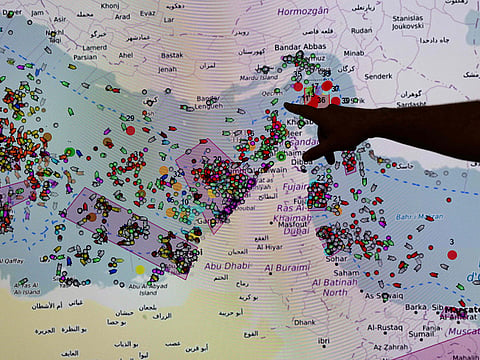
Dubai: Ship traffic through the Strait of Hormuz reached its highest level since the outbreak of the Iran war, with at least 35 commodity carriers transiting the strategic waterway on Monday, according to maritime tracking firm Kpler.
Maritime analytics firm Kpler said 35 commodity carriers transited the Strait of Hormuz on Monday, the highest daily level recorded since the outbreak of the Iran war in late February.
The figure represents nearly one-third of normal peacetime traffic through the strategic waterway, which typically handles about 120 vessel crossings a day. Kpler said the total could rise further as additional ship movements are detected.
The increase marks a notable improvement from the depressed traffic levels seen during much of the Iran war, which began in late February and severely disrupted shipping through the strategic waterway. Before the conflict, an average of 100 to 130 vessels crossed the strait daily.
Despite the pickup, shipping activity remains well below prewar levels and maritime analysts warn that uncertainty surrounding the future administration of the strait continues to deter many operators.
By the numbers
35 commodity carriers crossed Monday
Highest daily level since late February
About one-third of normal traffic
Peacetime average: More than 120 vessels daily
Strait handles about one-fifth of global oil and gas exports
More crossings may be recorded as tracking data updates
The Strait of Hormuz has emerged as one of the most contentious issues in ongoing negotiations between Washington and Tehran following last week’s ceasefire agreement. While the interim deal allows Iran to manage the waterway for now, discussions are expected to continue with Oman and other Gulf states on the future governance and maritime services of the strait.
Under the memorandum of understanding, Iran agreed not to impose tolls on vessels for 60 days and pledged to remove mines and other obstacles affecting navigation. However, Tehran has maintained that ships should continue registering with the newly established PGSA, which was created during the conflict.
Questions remain over tolls
Questions over tolls remain a major source of concern for shipowners and traders. Iran previously sought the right to collect transit fees as part of efforts to ease its control over the waterway. US President Donald Trump has also suggested Washington could impose charges on vessels for what he described as American security services in the region if negotiations fail to produce a final agreement.
Legal experts argue that charging vessels simply for transiting the strait would violate long-standing principles of international maritime law. The United Nations Convention on the Law of the Sea guarantees freedom of transit passage through international straits such as Hormuz, allowing ships to pass without obstruction.
Maritime law specialists note that fees can generally be charged only for specific services requested by vessels or at established ports, not for routine passage through an international waterway.
Security concerns also continue to affect shipping decisions. During the conflict, the region experienced extensive GPS spoofing, a form of electronic interference that causes ships to appear in incorrect locations on navigation systems. According to CNN, such disruptions have eased noticeably in recent days.
The main central shipping channel through Hormuz remains closed because of mines and other hazards, forcing vessels to use alternative northern and southern routes through Iranian and Omani waters. Analysts say many ships continue to exercise caution, with some following prescribed routes and others limiting the transmission of tracking signals.
Industry experts caution that even if a final US-Iran agreement is reached, it could take months for oil, gas and commodity flows through the strait to return to normal.
For now, traffic is moving again, but uncertainty over tolls, security arrangements and long-term control of the strategic waterway continues to cast a shadow over the recovery.
-- With AP inputs


