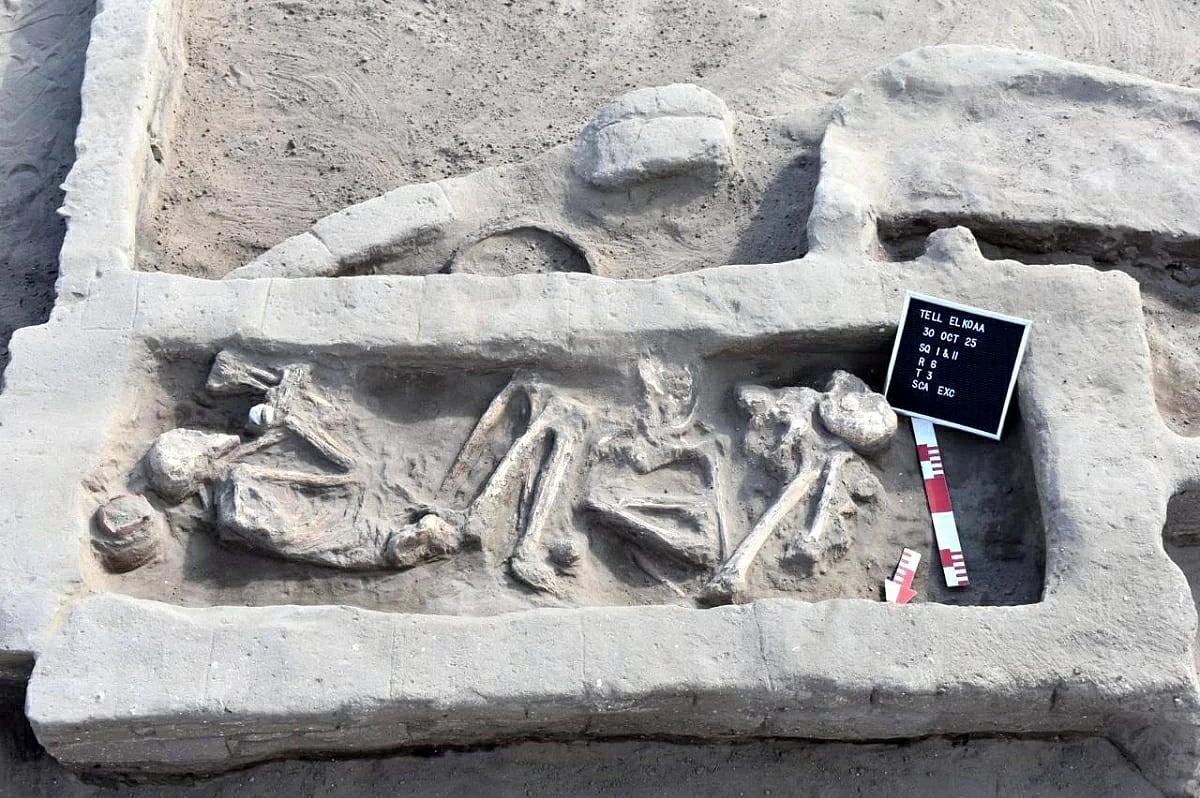
Dubai: Egyptian archaeologists have uncovered a Second Intermediate Period settlement comprising tombs, homes, storage facilities and industrial installations in the Tell El Koa archaeological site in Ismailia Governorate, offering fresh insights into life in the eastern Nile Delta during the Hyksos era.
The discovery, made by an Egyptian archaeological mission working at Tell El Koa in Wadi Tumilat, includes 10 mudbrick tombs dating to Egypt's 15th Dynasty, alongside a residential complex, kilns, silos and a range of artefacts, Egypt's Ministry of Tourism and Antiquities said.
Get updated faster and for FREE: Download the Gulf News app now - simply click here.
Sherif Fathy, Minister of Tourism and Antiquities, said the find provides a clearer picture of settlement patterns in the eastern Delta during the Second Intermediate Period, revealing an integrated community comprising residential quarters, storage facilities, production areas and burial grounds.
The excavation uncovered a residential compound measuring about 30 by 60 metres, enclosed by a mudbrick wall and containing halls and rooms of varying sizes. Archaeologists also found kilns and storage silos east of the complex, indicating organised domestic and economic activity.
Among the artefacts recovered were scarabs, bronze tools, pottery, alabaster kohl containers and distinctive Tell El Yahudiyeh ware, characteristic of the Second Intermediate Period. Initial studies of human remains indicate individuals aged between 25 and 40, while large quantities of animal bones suggest both daily consumption and funerary offerings.
Archaeologists also identified, for the first time at the site, human burials outside the mudbrick tombs, including some in a crouched position, an unusual burial practice that researchers say requires further study.
According to the Supreme Council of Antiquities, pottery bearing production marks and seals points to extensive trade networks and suggests the settlement may have served as a distribution centre or an important commercial hub. Evidence indicates the site remained occupied until the middle of the 18th Dynasty, spanning the transition from Hyksos rule to Egypt's New Kingdom.
Network Links
GN StoreDownload our app
© Al Nisr Publishing LLC 2026. All rights reserved.