Egypt discovers sealed tombs and 24 gold tongue amulets at ancient coastal city
Archaeologists found sealed burial chambers, a granite sarcophagus and rare gold amulets
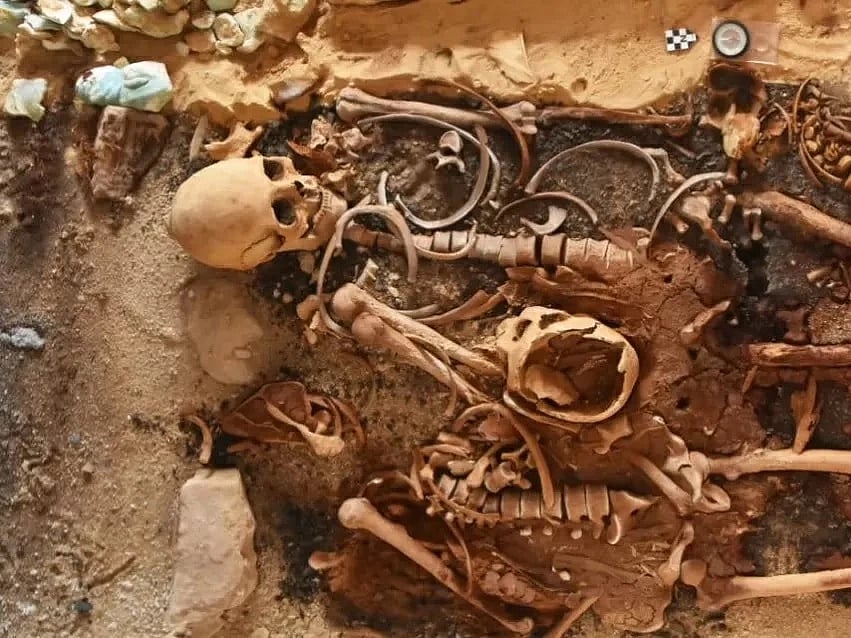
Dubai: Egyptian archaeologists have uncovered 18 ancient tombs, sealed burial chambers and a collection of rare artefacts, including 24 gold tongue amulets and a granite sarcophagus, during excavations at the archaeological city of Marina El Alamein on Egypt's northwestern Mediterranean coast.
The discovery was made by an Egyptian archaeological mission working at the ancient city, where excavations have now brought the total number of tombs uncovered since the site's discovery in 1986 to 44, the Ministry of Tourism and Antiquities said.
Get updated faster and for FREE: Download the Gulf News app now - simply click here.
The latest finds include 11 rock-cut tombs, carved to an average depth of eight metres, and seven above-ground limestone tombs.
Several burial chambers were discovered in an exceptional state of preservation, with their entrances still sealed by original stone slabs that had remained unopened since antiquity.
Archaeologists also uncovered surface burials surrounding the tombs, reflecting the city's diverse social composition, as well as a water well later repurposed for burials, highlighting the continued influence of ancient Egyptian funerary traditions during the Ptolemaic and Roman periods.
Among the most significant discoveries were 24 gold tongue amulets placed inside the mouths of some of the deceased, a funerary practice associated with beliefs that the dead would be able to speak in the afterlife.
The excavation also yielded a gold Eye of Horus amulet, one of the most enduring symbols of protection in ancient Egyptian religion.
The mission recovered a broad collection of artefacts, including complete and near-complete pottery vessels, amphorae, oil lamps, plates, limestone altars and basins, together with architectural elements that once formed part of the tombs.
Among the standout finds was a limestone offering altar featuring a false door, a symbolic element commonly associated with ancient Egyptian burial beliefs.
Archaeologists also uncovered an unfinished marble statue believed to depict the goddess Aphrodite, a limestone funerary stele showing a seated man holding a bird, and a number of glass tear bottles.
Excavations also revealed a 2.5-metre granite sarcophagus with its original lid still in place. Human skeletal remains discovered inside are currently undergoing scientific analysis.
Nearby, archaeologists found the remains of a plaster Sphinx statue, providing further evidence of the enduring presence of Egyptian religious and artistic traditions in Marina El Alamein during the Hellenistic and Roman eras.
The ministry said the excavations also revealed new extensions of the ancient city and previously unknown architectural features, reinforcing Marina El Alamein's importance as one of the Mediterranean's most prominent ancient coastal settlements.
Minister of Tourism and Antiquities Sherif Fathy said the discovery is an important scientific and archaeological achievement that deepens understanding of the cultural identity of the city's ancient inhabitants.
Network Links
GN StoreDownload our app
© Al Nisr Publishing LLC 2026. All rights reserved.