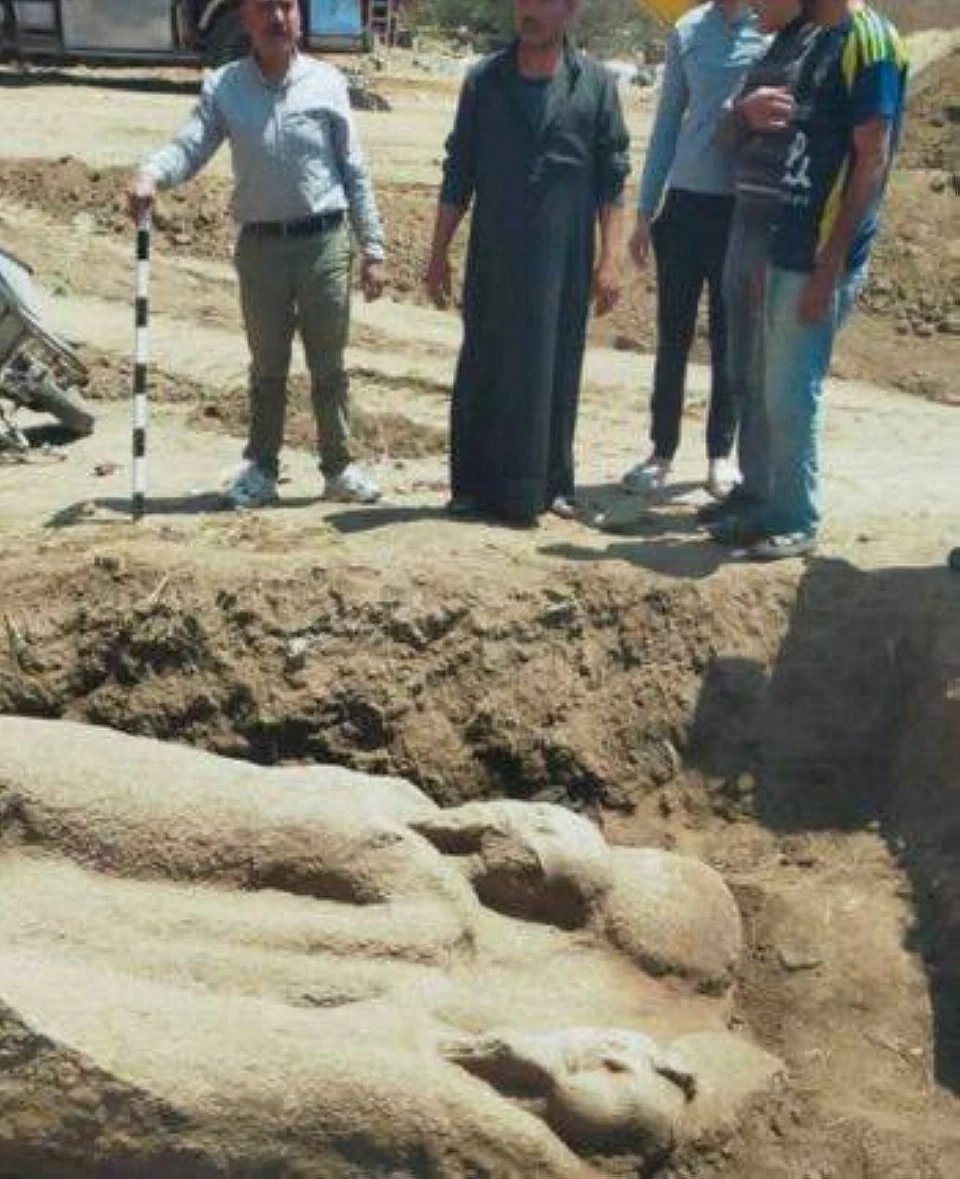
A massive granite statue discovered in Sharqia during residential excavation, believed to date to the era of Ramses II; transferred to San al-Hagar for examination and restoration near Tell el-Faraoun under strict legal supervision
A massive ancient granite statue believed to date back to the era of Ramses II has been discovered by chance in Egypt’s Sharqia governorate during routine excavation work, according to officials.
Get updated faster and for FREE: Download the Gulf News app now - simply click here.
The Ministry of Tourism and Antiquities said that Workers reportedly uncovered the artefact while digging foundations for a facility linked to the Ministry of Youth and Sports in a residential area, in what authorities described as an unexpected find with potentially important historical implications.
Preliminary estimates suggest the statue stands at more than two metres tall and weighs over five tonnes, indicating its scale and possible archaeological significance.
The statue has since been transferred to the antiquity’s storehouses in San al-Hagar, where restoration and detailed scientific examination are set to begin.
Initial assessments indicate the statue could date to the reign of Ramses II, one of ancient Egypt’s most prominent rulers. Experts also suggest it may depict the king alongside a deity, a common artistic style used during that period to emphasise the connection between rulers and gods.
The discovery site lies near Tell el-Faraoun, a historically rich area that has yielded several important finds in recent years, including remains of the ancient village of Imet and a temple dedicated to the goddess Wadjet, uncovered by a mission from University of Manchester.
Network Links
GN StoreDownload our app
© Al Nisr Publishing LLC 2026. All rights reserved.