Ancient discovery in Egypt raises hopes of finding lost Ptolemaic royal tomb
Greek archaeologists uncover massive limestone foundations in Alexandria's royal quarter
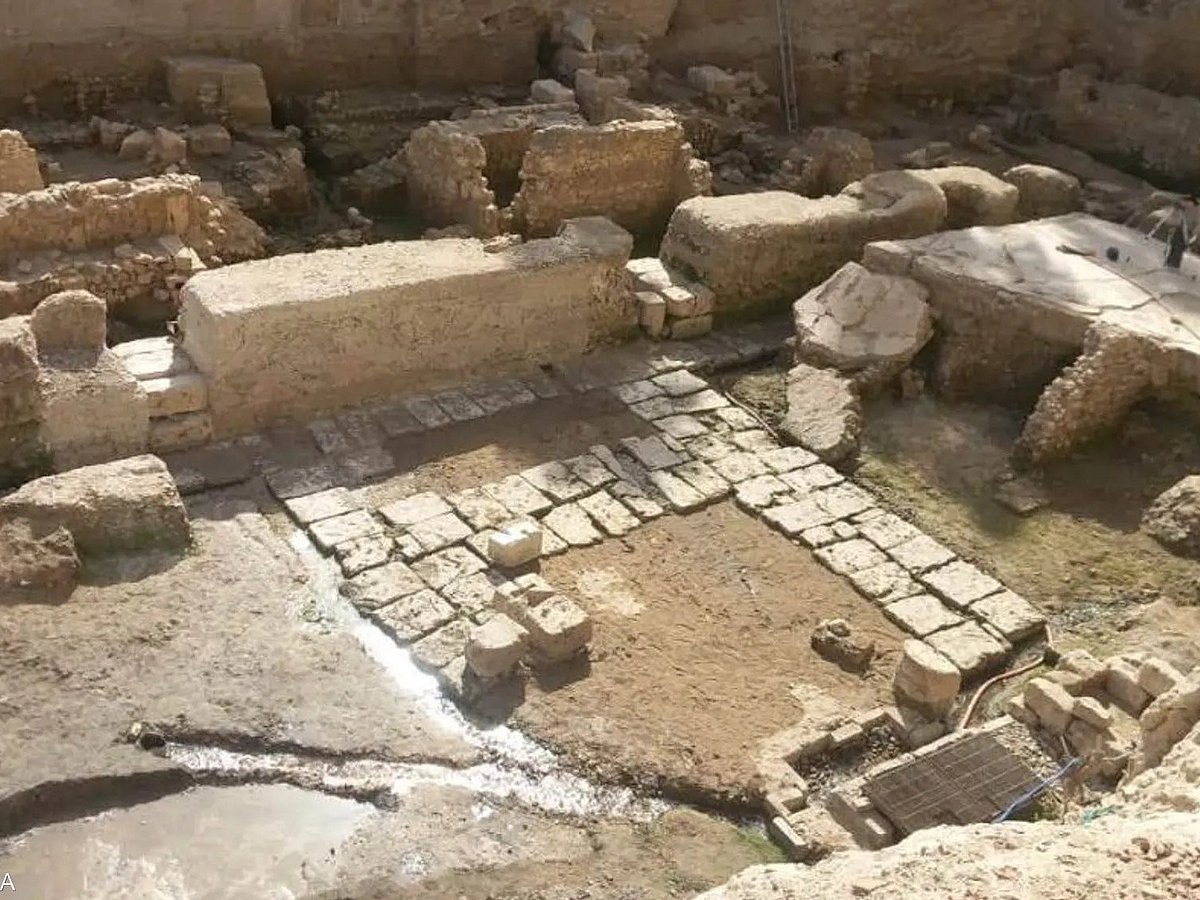
Dubai: A Greek archaeological mission has uncovered the foundations of a massive ancient stone structure in Alexandria's historic royal quarter, raising hopes of locating a long-lost Ptolemaic royal tomb mentioned in ancient historical accounts.
Egypt's Ministry of Tourism and Antiquities said the discovery was made in the Shallalat Gardens area by a Greek archaeological mission affiliated with the Hellenic Research Institute of Alexandrian Civilisation, led by Dr Calliope Limneos-Papakosta.
Get updated faster and for FREE: Download the Gulf News app now - simply click here.
The mission has been conducting excavations in the area for nearly 20 years, searching for remains of the ancient city and its royal district.
Excavations revealed the foundations of a large limestone building surrounded by walls, along with a tunnel extending northwards beneath the structure.
A scientific committee examining the remains has proposed that the building may have served a funerary purpose, potentially linking it to the Ptolemaic royal tomb complex described in ancient historical sources.
According to those accounts, King Ptolemy IV Philopator, who ruled Egypt from 221 to 204 BC, established a royal burial complex associated with the Ptolemaic dynasty.
The discovery could provide fresh clues to the location of royal burial sites that have remained elusive despite decades of archaeological research in Alexandria.
Founded by Alexander the Great in 331 BC, Alexandria became the capital of Ptolemaic Egypt and one of the ancient Mediterranean world's most influential political and cultural centres.
The Ptolemaic dynasty ruled Egypt for nearly three centuries, ending with the death of Cleopatra VII in 30 BC, when Egypt came under Roman control.
Much of ancient Alexandria's royal quarter has disappeared beneath modern buildings or been affected by changes to the coastline, making archaeological investigations particularly challenging.
The ministry stressed that the proposed funerary function remains a preliminary interpretation requiring further scientific investigation.
If confirmed, the discovery could mark a significant advance in efforts to reconstruct Alexandria's ancient royal quarter and identify the burial places of Egypt's Ptolemaic rulers.
Network Links
GN StoreDownload our app
© Al Nisr Publishing LLC 2026. All rights reserved.