Iran’s grip on Strait of Hormuz alarms Gulf states as shipping remains disrupted despite ceasefire
Lebanon strikes and tanker disruption strain already fragile ceasefire
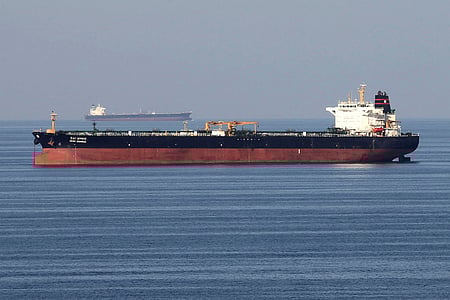
Dubai: Within hours of President Donald Trump announcing a halt to fighting with Iran, confusion over its terms, violations on the ground, and conflicting claims over the Strait of Hormuz cast doubt on whether the ceasefire existed at all.
The uncertainty was immediate and multi-layered. The United States, Israel and Iran offered differing accounts of what had been agreed. Tehran pointed to Israeli strikes on Hezbollah in Lebanon as a breach.
Washington insisted Lebanon was not covered. At the same time, conflicting signals emerged over whether the Strait of Hormuz — a critical global oil artery — was open or effectively under Iranian control.
Gulf states, meanwhile, reported one of the most intense barrages of Iranian drones and missiles in weeks, triggering multiple alerts and underscoring how little had changed on the ground despite the ceasefire announcement.
The confusion did more than destabilise the truce. It exposed deep gaps in trust and perception — and raised a more fundamental concern across the Gulf: Whether the ceasefire itself could end up strengthening Iran’s hand.
UAE: Hormuz must open without conditions
At the centre of that anxiety is the Strait of Hormuz — not just a waterway, but Tehran’s most powerful bargaining chip. Iran’s move to restrict or control transit signalled a shift beyond battlefield confrontation, turning economic leverage into a strategic weapon with global consequences.
Dr Sultan Al Jaber, Minister of Industry and Advanced Technology and managing director and group chief executive of Adnoc, warned that the strait was effectively no longer open, calling for it to be restored with “no strings attached.”
“This moment requires clarity. So let’s be clear: The Strait of Hormuz is not open. Access is being restricted, conditioned and controlled,” he said, adding that passage was being subjected to “permission, conditions and political leverage.”
“That is not freedom of navigation. That is coercion.”
He stressed that the waterway is governed by international law and cannot be treated as a bargaining tool. “Conditional passage is not passage. It is control by another name,” he said.
The concern is not only economic.
Dr Anwar Gargash, Diplomatic Advisor to the UAE President, has warned that any ceasefire that fails to address core security threats risks deepening instability, stressing that Iran’s behaviour has eroded trust. Ahead of the ceasefire announcement, he described Iran as a regime “that cannot be trusted,” pointing to continued attacks on Gulf neighbours despite efforts to avoid escalation.
Experts say those concerns are widely shared across the region. Gulf nations remain wary the United States, eager for an exit, could accept terms allowing Iran to retain some level of control over the strait — effectively institutionalising its leverage over global energy flows, according to Al Jazeera.
“There is a quiet but palpable concern that President Trump, eager for a quick political victory, could tolerate some Iranian leverage over the strait in exchange for a fragile truce, prioritising optics over Gulf realities,” said Hesham Alghannam, a Saudi Arabia-based scholar at the Malcolm H Kerr Carnegie Middle East Center.
Such an outcome would mark a dangerous shift. Rather than resolving tensions, it could entrench them — leaving Gulf economies exposed to recurring disruption, strategic pressure and the threat of economic blackmail.
Why Gulf states are alarmed
Iran controls transit conditions: Ships must seek Iranian approval to pass, with Tehran warning unauthorised vessels could be targeted
Shipping still disrupted: Traffic has collapsed from over 100 ships a day to just 2–7 vessels after ceasefire came into effect
Industry remains cautious: Major shipping firms say normal operations could take weeks or months to resume
Strait effectively under Iranian grip: Experts say Iran still dictates access, maintaining leverage even during the truce
Long-term risk for Gulf economies: Disruptions threaten energy exports, trade flows and regional stability
Nightmare scenario
In a series of coordinated statements, the six Gulf Cooperation Council countries welcomed the ceasefire but stressed that any agreement must guarantee the full and permanent reopening of the strait. Anything short of that, analysts warn, risks creating a “new normal” in which Iran holds a choke point over global trade.
The alternative — a weakened yet hardened Iranian leadership able to dictate terms in Hormuz — would be a nightmare scenario for energy-exporting Gulf states.
“It makes future war more likely over time, while forcing the GCC to live under Iranian strategic pressure indefinitely,” Alghannam said. “That suspended tension is what makes it so unacceptable.”
The stakes were underscored at the United Nations, where a Bahrain-backed resolution calling for defensive measures to keep the strait open was vetoed by Russia and China, despite support from Gulf states.
“No country should have the power to shut down the arteries of global commerce,” said Mohamed Abushahab, the UAE’s permanent representative to the UN, said. “The Strait of Hormuz cannot become a bargaining chip for Iran, nor a lever in wider global politics.”
Against this backdrop, both sides moved quickly to claim success.
Why it matters
Oil at risk: Strait of Hormuz handles a major share of global crude flows
Economic leverage: Iran can pressure markets via tanker restrictions
Regional spillover: Lebanon front complicates already fragile truce
Diplomatic test: JD Vance set to lead high-stakes talks in Pakistan on Friday
Breakdown risk: No clear agreement framework in place
In Washington, officials argued that weeks of strikes had degraded Iran’s military capabilities. In Tehran, supporters took to the streets, portraying resilience in the face of sustained bombardment. Such duelling narratives may create political space for diplomacy — but they also mask unresolved realities.
The disconnect was most visible in Lebanon. Israeli strikes targeting Hezbollah — a key Iranian ally — killed scores and drew sharp condemnation from Tehran, which cited them as evidence the ceasefire had already been violated. The United States countered that the Lebanon front was separate.
That ambiguity exposed a fundamental weakness: key elements of the ceasefire were either undefined or interpreted differently by each side.
The risks extend beyond the battlefield. A prolonged crisis in Hormuz could have devastating consequences for Gulf economies, undermining decades of efforts to position the region as a stable hub for trade, finance and tourism.
Ceasefire timeline — what changed?
April 7–8: US and Iran agree to a two-week ceasefire aimed at reopening the Strait of Hormuz
Conditional transit: Iran says ships can pass only through coordination with its armed forces, citing “technical limitations”
Lebanon trigger: Tehran signals restrictions after Israeli strikes on Lebanon, calling it a ceasefire breach
Status contested: Iran claims control over transit even as the US maintains the strait is open
Shipping hit: Only a handful of vessels transiting daily — far below normal levels
Regional officials have warned that restraint should not be mistaken for weakness. If freedom of navigation is not restored — and if Iran continues to assert control over the strait — the calculus in Gulf capitals could shift.
“The Gulf will leave no stone unturned if Iran continues to take the path of aggression,” Hamad Althunayyan, a political analyst and professor at Kuwait University, told Al Jazeera.
At the same time, a core sticking point remains unresolved. While Iran has signalled openness to limits on its nuclear programme, it has ruled out dismantling it entirely — a red line for Washington.
For now, the ceasefire looks less like a resolution than a pause under strain — one shaped as much by competing narratives and economic pressure as by any genuine meeting of minds.
The war may have paused. The conflict hasn’t.

Sign up for the Daily Briefing
Get the latest news and updates straight to your inbox
Network Links
GN StoreDownload our app
© Al Nisr Publishing LLC 2026. All rights reserved.