Schengen visa update: EU plans to extend 90-day rule for select jobs—who qualifies?
Digital visas, talent attraction, and targeted measures shape Europe’s new visa policy
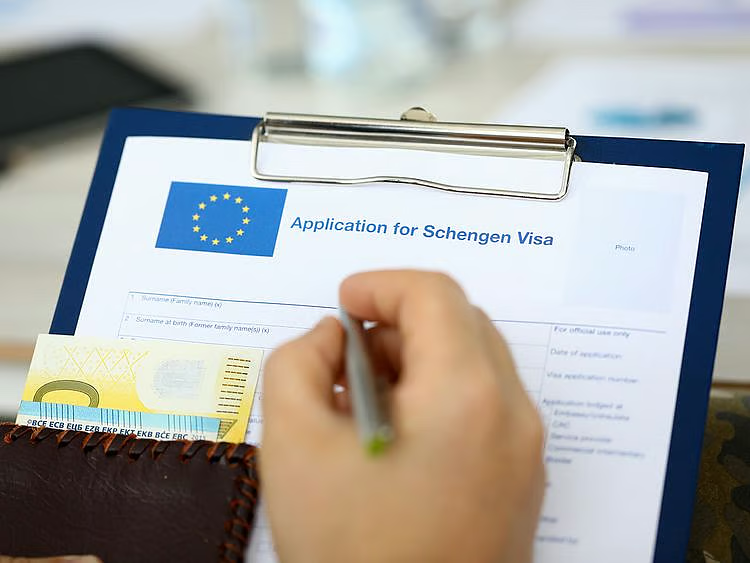
The European Commission has announced plans to explore allowing certain non-EU professionals to stay in the EU beyond the current 90-day Schengen limit within any 180-day period.
The proposal, outlined in a strategy document released on January 29, targets “select” non-EU nationals whose work requires frequent travel between Member States. It forms part of a broader overhaul of the EU visa system aimed at strengthening the economy.
Simplifying visa access for skilled workers
The Commission has also urged EU countries to make visa procedures simpler and faster for skilled professionals, aiming to attract international talent and support economic growth across the Union.
To facilitate smoother travel and further boost economic growth, six categories of professionals have been identified as potential beneficiaries of extended stays,
These include touring artists, athletes competing in sporting events, experts on cross-border projects, personnel supporting EU industries and services, and truck drivers servicing EU businesses.
Who could benefit
Six categories of professionals could be eligible for longer stays without needing a long-stay visa or residence permit:
Touring artists
Athletes attending competitions
Experts on cross-border projects
Workforce supporting EU industries and services
Truck drivers servicing EU businesses
The Commission noted that frequent travel across member states is essential for these roles, making the current 90-day limit restrictive.
Making visas simpler and faster
As part of the strategy, the EU is urging member states to streamline visa procedures for skilled and highly qualified workers. Possible measures include:
Digitised applications with fewer documents
Shorter processing times
Easier transition from study or research to work
Improved mobility within the EU
Security and legal clarity
The Commission will coordinate with member states to ensure legal clarity for travellers while maintaining security. It also plans to review bilateral agreements that allow some third-country nationals to stay beyond 90 days in individual states, aiming for a more consistent application of Schengen rules.
Vice-President Henna Virkkunen said a modern visa system strengthens security while helping the EU attract talent and investment, supporting competitiveness and job creation.
Wider reforms
The EU visa strategy also addresses:
New rules for students, researchers, and highly skilled workers
A legal framework for start-up founders and innovative entrepreneurs
Review of visa-free access for third countries based on security cooperation
EU visa strategy: Key takeaways
Security first: New technologies and stronger monitoring of visa-free regimes aim to prevent illegal migration, terrorism, and document fraud. Targeted restrictions may apply for severe risks.
Smarter visa management: Digital visas and secure online authorisations will replace stickers. EU IT systems like EES, ETIAS, Eurodac, and the Visa Information System will streamline checks.
Driving economic growth: Simplified visas and longer multiple-entry permits will attract tourists, students, business travellers, and skilled professionals.
Attracting innovation talent: Faster, coordinated procedures for students, researchers, and highly skilled workers, supported by initiatives like the European Talent Pool, will aid startups and innovation ecosystems.
Supporting Member States: Frontex Visa Support Office, guidance, workshops, and external service provider reviews will improve visa management.
International leverage: Visa-free travel will be linked to cooperation on migration, security, and rule of law, with targeted measures in response to geopolitical tensions.
The Commission emphasised that visa policy is a key tool for economic growth, security, and competitiveness in the EU.
Network Links
GN StoreDownload our app
© Al Nisr Publishing LLC 2026. All rights reserved.