Philippines: Kanlaon Volcano spews 200-metre ash plume — Phivolcs releases dramatic sped-up footage
Alert Level 2 stays: footage captures dramatic ash emission from volcano's summit
Filipino volcanologists (Phivolcs) said the November 16 morning event lasted from 6:35 am to 7:55 am and produced plumes up to 350 metres high.
A second event at 3:03 p.m. produced a 300-metre plume.
The latest November 20 event produced a 200-metre plume, the smallest in recent days but still significant.
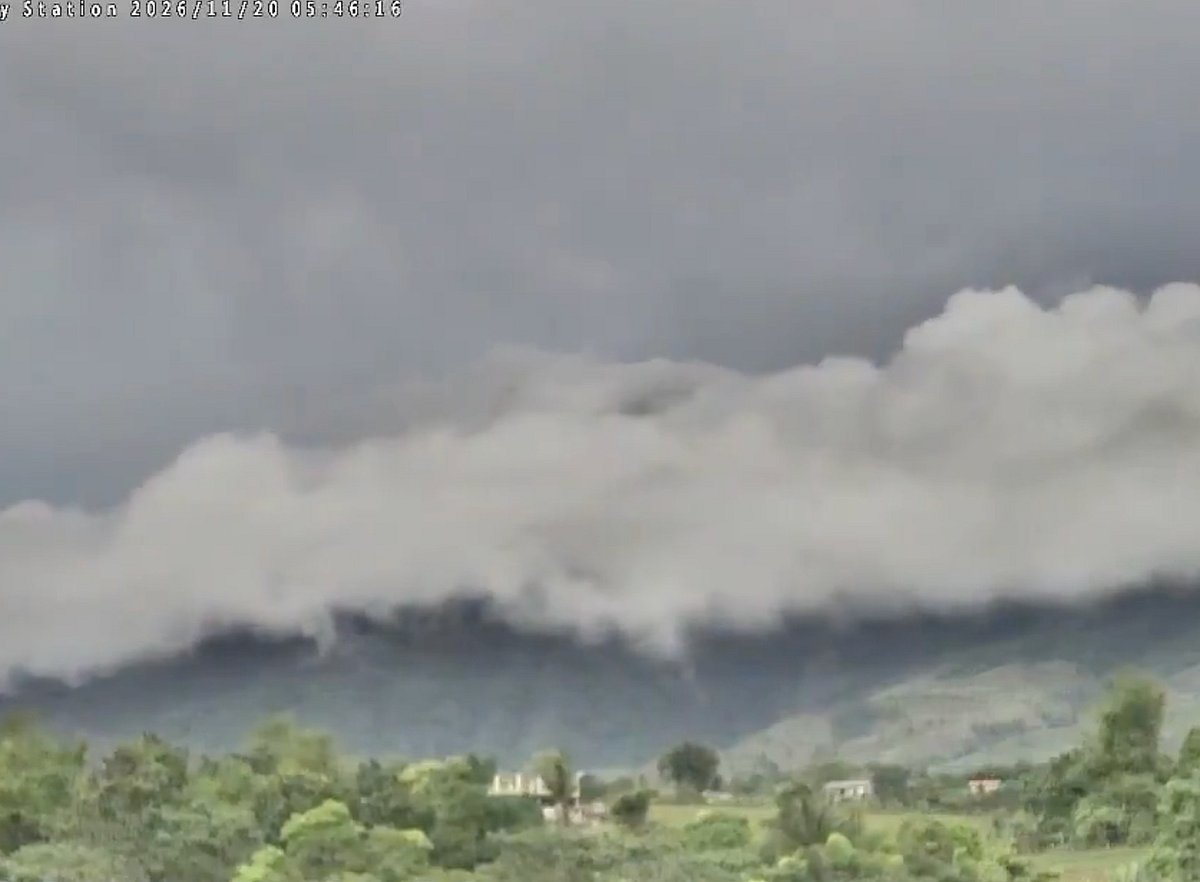
MANILA — The Philippine Institute of Volcanology and Seismology (Phivolcs) released sped-up camera footage on Friday showing ash emission from the summit crater of Kanlaon Volcano at 5:46 am.
The event generated grayish plumes that rose up to 200 metres above the crater before drifting west-southwest.
The footage was captured by the Kanlaon Volcano Observatory in Canlaon City.
Phivolcs said Alert Level 2 remains in effect over Kanlaon Volcano.
Get it: Fast, verified news for FREE ... download the Gulf News app — simply click here
Kanlaon has been emitting ash repeatedly in recent days. On November 14, a plume rose 600 metres above the summit.
On November 15, a plume reached 900 metres. On November 16, plumes rose as high as 350 metres in the morning and 300 metres in the afternoon.
The latest event is smaller than earlier emissions but still shows ongoing volcanic unrest.
Ashfall
For communities around Kanlaon, ashfall can affect health, water, crops and transport. Phivolcs has warned of possible ashfall in nearby areas.
The volcano’s continued activity also keeps emergency response teams on alert.
The Negros Island Region has boosted disaster response amid continued unrest.
Phivolcs is expected to issue further updates as activity evolves. Residents are advised to monitor official bulletins and follow safety guidance.
For residents, the ash emission is a reminder that Kanlaon remains active. For authorities, it underscores the need for continued monitoring and preparedness.
The Philippines currently has 24 active volcanoes. The Phivolcs classifies a volcano as "active" if it has erupted within the last 600 years with documented historical accounts, or within the last 10,000 years (Holocene) based on geological evidence.
Volcanoes spew sulfur, mostly as sulfur dioxide (SO₂) and hydrogen sulfide (H₂S) gases, along with solid sulfur deposits and rare liquid sulfur flows.
Network Links
GN StoreDownload our app
© Al Nisr Publishing LLC 2026. All rights reserved.