Philippine lawmakers attend a session to vote on the impeachment complaint against Vice President Sara Duterte at the House of Representatives in Quezon City, Metro Manila on May 11, 2026.
Philippines: House impeaches VP Sara Duterte — what happens next?
All eyes on senators’ vote as evidence, public pressure mount over Duterte case
Last updated:
4 MIN READ
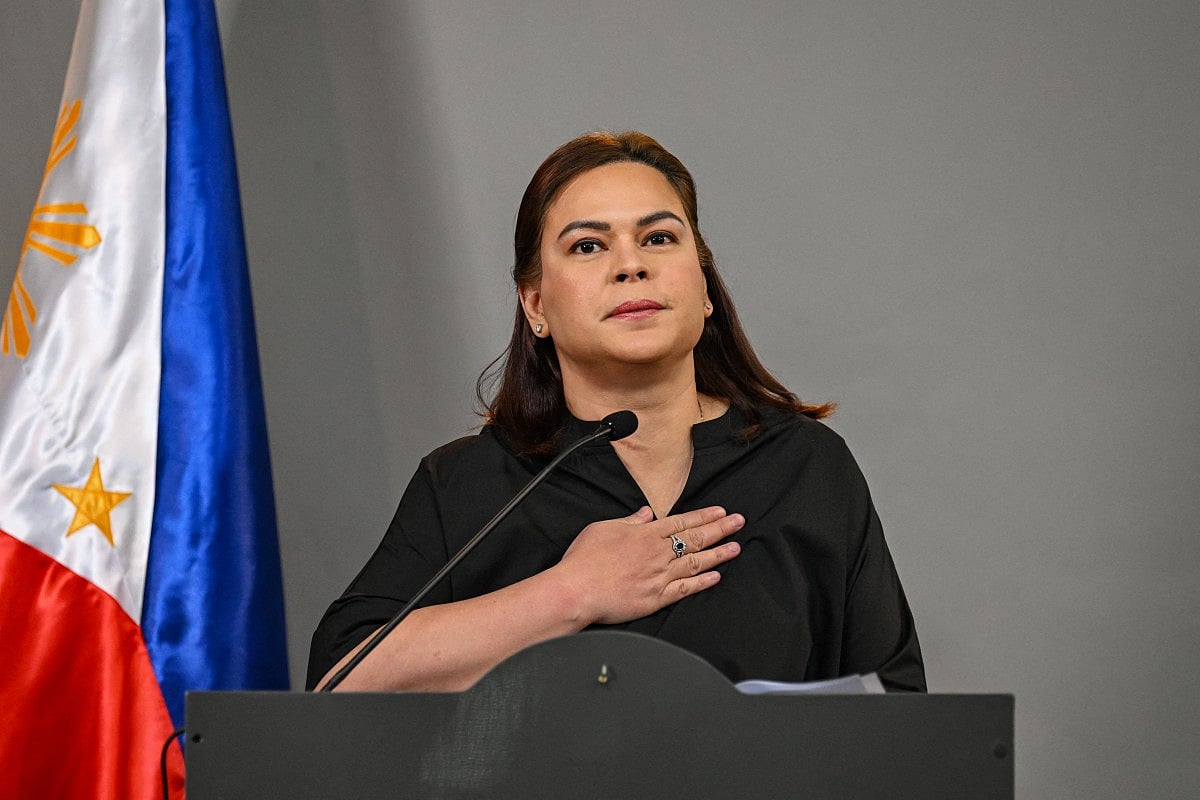
Philippine Vice President Sara Duterte announces her intention to run for the country's presidency in 2028 during a press conference in Mandaluyong, Metro Manila. File photo taken on February 18, 2026.
AFP
Manila: The House of Representatives of the Philippines plunged into high drama Monday (May 11, 2026) as lawmakers voted 257–25, with nine abstentions, to advance House Resolution No. 989, formally impeaching Vice President Sara Duterte and transmitting the case to the Senate for trial.
The vote followed hours of tense debate over allegations that include misuse of public funds, abuse of authority, unexplained wealth and possible constitutional violations.
Outside the Batasang Pambansa complex in Quezon City, progressive groups staged protests urging lawmakers to hold the vice president accountable.
With the House action complete, the constitutional process now shifts to the Senate of the Philippines, which will sit as an impeachment court.
What the House vote means
Now that Vice President Duterte has been formally impeached (for the second time), it means the required House members found sufficient grounds to move the impeachment articles to the Senate.
Here's impeachment the process, as prescribed by the 1987 Constitution:
Impeachment begins in the House.
A verified complaint must be endorsed, at least one-third of all House members to be transmitted to the Senate.
The Monday (May 11, 2026) vote far exceeded that threshold, meaning the articles of impeachment are now formally before senators.
The House’s role is akin to that of a prosecutor: it prepares and approves the charges.
The Senate’s role is to try the case.
What happens in the Senate
Once the articles are received, senators are sworn in as judges in an impeachment court.
The Senate will issue summons to Duterte and set rules and a calendar for the trial.
The trial is expected to involve presentation of documentary evidence, witness testimony and legal arguments from House prosecutors and Duterte’s defence team.
Proceedings are typically public and closely watched.
A conviction requires a two-thirds vote of all senators.
If convicted, Duterte would be removed from office and barred from holding future public office.
If acquitted, she remains vice president.
On Wednesday’s plenary session, Senator Bato dela Rosa (second from right) thundered that ex-DPWH engineer Brice Hernandez — a key figure in the scandal — should be in Senate custody, not tucked away at a police detention centre.
The 1987 Philippine Constitution (Article XI, Sections 2-3) establishes impeachment as a process to remove high-ranking officials — President, Vice-President, Justices of the Supreme Court, Members of Constitutional Commissions, and the Ombudsman — for culpable violation of the Constitution, treason, bribery, graft/corruption, high crimes, or betrayal of public trust.
New Senate leadership under Cayetano
The process will unfold under new Senate leadership led by Alan Peter Cayetano, who is expected to play a central role in organising the chamber’s procedures as it transforms into an impeachment court.
As presiding officer for much of the Senate’s business, Cayetano is expected to oversee the adoption of trial rules, scheduling, and coordination with House prosecutors.
Philippine senators take their oath as jurors in the impeachment trial of Vice President Sara Duterte, with the newly convened court moving to immediately hear a motion to dismiss the case, in Manila. File photo taken on June 10, 2025.
While the Senate President or a designated presiding officer runs day-to-day proceedings, all senators act as jurors bound to weigh evidence impartially.
SENATE: Analysts say Cayetano’s leadership will be crucial in maintaining order and credibility in what is likely to be a politically charged trial with national implications.
Political and constitutional stakes
Impeachment is designed not as a criminal proceeding but as a political accountability process for high officials accused of grave wrongdoing.
The case against Duterte comes amid broader tensions between the executive branch and lawmakers, and could reshape political alliances ahead of future elections.
There are political stakes too: Dela Rosa's appearance in the Senate on Monday (May 11, 2026), following a six-month absence, secured a Senate coup but exposes him to a possible arrest on the basis of a warrant issued by the International Criminal Court (ICC).
The National Bureau of Investigation (NBI) has obtained copy of the ICC arrest warrant against dela Rosa in connection with the crimes against humanity case involving ex-President Rodrigo Duterte, former Senator Antonio Trillanes IV claimed on Monday.
Trillanes made the statement as he showed reporters what he claimed was a copy of the arrest warrant, which he said was the reason for his presence at the Senate premises on Monday.
The International Criminal Court (ICC) Office of the Prosecutor named eight incumbent and past officials, including Dela Rosa, Go, and former Justice secretary Vitaliano Aguire II, as alleged co-perpetrators in the killings that took place during.
For Duterte, the stakes are existential: removal from office and disqualification from future public service if convicted.
For the Senate, the challenge is institutional: to demonstrate independence, fairness and adherence to constitutional duty amid intense public scrutiny.
What to watch
When the Senate formally convenes as an impeachment court.
The trial rules adopted and the timetable set.
Whether senators vote along party lines or assert independence.
The strength of documentary and testimonial evidence presented.
Public reaction as proceedings unfold.
With the House having acted decisively, the spotlight now turns to the Senate — where the fate of the vice president will be decided.
Key constitutional provisions: Exclusive Power Impeachment is one of the most serious constitutional mechanisms available to Congress, used sparingly in Philippine history. The House of Representatives has the exclusive power to initiate all impeachment cases.
Initiation & filing: A verified complaint can be filed by any member of the House, or by a citizen with an endorsement from a member.
Trial & judgment: The Senate holds the sole power to try and decide all impeachment cases, requiring a two-thirds vote of all members for conviction.
One-year limit: No impeachment proceeding can be initiated against the same official more than once within a one-year period.
Penalties: Judgment extends only to removal from office and disqualification from holding any office, but the convicted party is still subject to criminal prosecution.
Sign up for the Daily Briefing
Get the latest news and updates straight to your inbox
Network Links
GN StoreAbout Gulf NewsTerms & ConditionsReach by GNSitemapContact usPrivacy PolicyGN FocusHave your sayWork with usAdvertise with usGulf News epaperPrinting Services
Download our app
© Al Nisr Publishing LLC 2026. All rights reserved.