Cancer patient dies after ambulance stopped in Philippine busway; official in-charge fired
All on-duty ambulances allowed on busway, transport chief clarifies
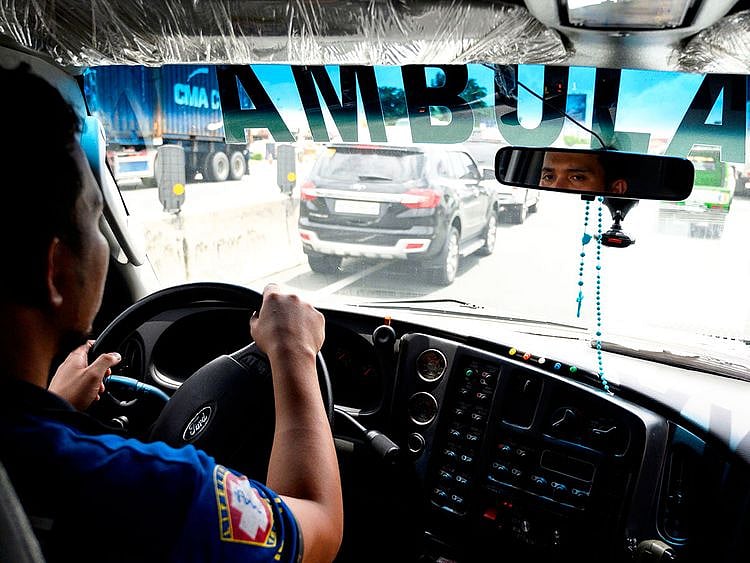
The Philippines’ transport chief has relieved a senior enforcement officer from his post after an ambulance carrying a critically ill patient was stopped from using a dedicated bus lane, resulting in the death of the patient.
With this, acting Department of Transportation (DOTr) secretary Giovanni Lopez has removed Special Action and Intelligence Committee for Transportation (SAICT) special operations group head Rayson Dela Torre from his assignment at the Epifanio de los Santos Avenue (EDSA) busway after the viral incident sparked widespread public reaction.
EDSA is a major highway in the Philippines connecting five cities including Caloocan, Quezon City, San Juan, Mandaluyong, Makati, and Pasay. It is usually congested due to the high volume of motorists using the road.
Ambulance stopped on the way to hospital
The incident came to light after Manuel Palileo shared a post of the incident on his Facebook page, including a video of a television interview of the incident, together with photos clicked inside the ambulance and the patient's coffin.
As seen in the posted clip, the driver of the ambulance has confirmed that they used the EDSA busway as the patient had a check-up at 6am.
On the other hand, Dela Torre has mentioned that non-emergency cases, such as a scheduled medical appointment, were not valid reasons for ambulances to use the busway.
Meanwhile, the DOTr has issued a memorandum clarifying that all on-duty ambulances are permitted to use the EDSA busway, regardless of the patient’s condition.
"On this premise, your statement that only ambulances with patients in critical condition may be allowed to use the busway contradicts the existing policy which neither specify that only extreme cases of emergencies may be allowed nor prohibit the use of ambulances in non-emergency cases," said Lopez in the memo addressed to Dela Torre.
Reorientation ordered for personnel
Lopez has also directed the SAICT to conduct a reorientation of officers assigned to the busway in order to prevent similar incidents. The training will focus on properly implementing DOTr policies.
“The Department of Transportation expresses its heartfelt sympathy to the patient’s family. We are assuring the public that necessary measures are being taken to ensure that enforcement policies will be implemented with compassion and that the people’s safety will always be the transport agency’s priority and paramount concern.”
Many netizens have criticised the way the situation was handled, questioning the judgment exercised by enforcement officers. The public has also called for greater sensitivity and consideration in cases involving medical transport.
Network Links
GN StoreDownload our app
© Al Nisr Publishing LLC 2026. All rights reserved.