Members of the OLTCC were comprised of industry leaders, government agency partners, and NGOs actively engaged in labour migration governance
Abu Dhabi Dialogue set for new push on migrant worker protection
Fair recruitment, social protection, and skills development among key priorities
Last updated:
3 MIN READ
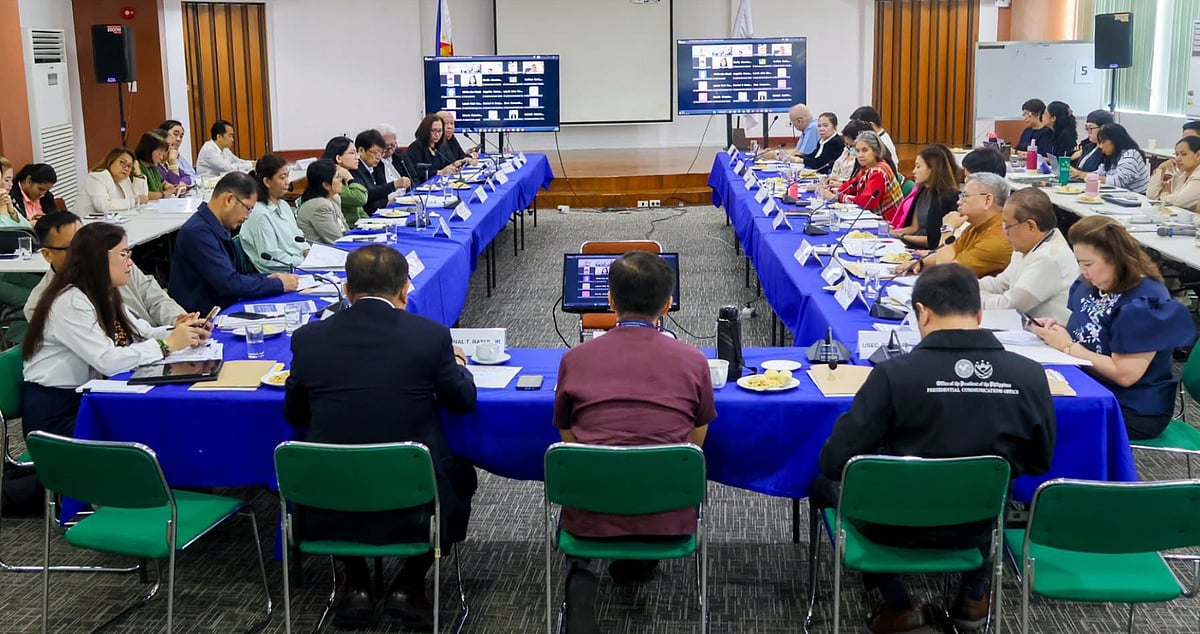
The Philippine Department of Migrant Workers convened the Overseas Landbased Tripartite Consultative Committee on September 1
Facebook / Department of Migrant Workers
Dubai: The Philippines is preparing to put migrant worker protection high on the agenda of the Abu Dhabi Dialogue as it takes over the chairmanship of the regional labour migration forum for 2026 to 2028.
The Philippine Department of Migrant Workers (DMW) has convened the Overseas Landbased Tripartite Consultative Committee (OLTCC) on September 1 to discuss preparations for the ninth cycle of the Abu Dhabi Dialogue, including its key thematic priorities.
DMW secretary Hans Cacdac has met with industry leaders, government agency partners, and non-government organisations involved in labour migration governance.
The Abu Dhabi Dialogue brings together labour-sending and receiving countries to discuss migration management, share best practices, and work towards stronger regional cooperation.
Get updated faster and for FREE: Download the Gulf News app now - simply click here.
Four priorities
The ninth cycle of the dialogue will focus on four areas, digital transformation for inclusive and responsible labour mobility; remittances, financial inclusion, and social protection; fair and ethical recruitment and labour mobility governance; and skills development, upskilling, and education-to-work pathways.
The agenda has particular relevance for the Gulf, which is one of the world's largest migration corridors and hosts an estimated 2.5 million overseas Filipino workers.
The UAE has been among the seven receiving countries participating in the Abu Dhabi Dialogue, alongside Bahrain, Kuwait, Malaysia, Oman, Qatar, and Saudi Arabia. The Philippines has been one of nine labour-sending countries in the forum.
Focus on social protection
Cacdac has noted that the regional platform could help advance fair and ethical recruitment, social protection, skills recognition, and upskilling partnerships.
He has also highlighted the opportunity to compare social protection systems between the Philippines and Gulf receiving countries.
“Our social protection framework is more visible and systematised, including structured pension and benefits coverage. But it would be interesting to know about the social protection systems in the Gulf, which are relatively younger than ours. So it’s good to see the social insurance programs in the receiving countries and to have a comparison and sharing of best practices in how these countries provide social protection,” explained Cacdac.
The discussions have been intended to encourage countries to share approaches and examine how social insurance programmes can better support migrant workers.
Domestic workers on agenda
In addition, the protection of domestic workers has also been raised during the consultation.
Cacdac has assured stakeholders that the issue would be brought up during the Abu Dhabi Dialogue, stressing the importance of developing a united Philippine position.
“We need to strengthen our position and we need to be united. It is just right to include domestic workers in the discussions,” stated Cacdac in a mix of English and Filipino.
From policies to legislation
Officials have pointed out that Abu Dhabi Dialogue discussions over the years have evolved from policy models and national innovations towards regional policy convergence and national legislation.
Among the developments cited have been wage protection systems, technology-driven recruitment procedures, dispute settlement mechanisms, and skills verification.
Undersecretary Jainal Rasul Jr. has given OLTCC members an overview of the Abu Dhabi Dialogue and called on them to submit their comments and inputs.
He has urged stakeholders to bring together ideas that could help shape policies for the benefit and protection of migrant workers.
From left to right: DMW secretary Hans Cacdac and undersecretary Jainal Rasul Jr.
Talks to continue
Preparations for the Philippines’ chairmanship will include high-level technical discussions and multi-stakeholder consultations ahead of the conferences.
The OLTCC has also discussed concerns surrounding the proposed renewal of the Philippines’ bilateral labour agreement with Saudi Arabia and its memorandum of cooperation with Japan.
Assistant secretary Levinson Alcantara, director Jerome Yanson, and Cleobelle Romero have presented details of the proposed agreements. The meeting has been facilitated by assistant secretary Venacio Legazpi and director Francisco Jun Aguilar.
With the Philippines set to chair the Abu Dhabi Dialogue, the consultations have been expected to form its priorities on labour migration and strengthen cooperation between countries that send and receive migrant workers.
Network Links
GN StoreAbout Gulf NewsTerms & ConditionsReach by GNSitemapContact usPrivacy PolicyGN FocusHave your sayWork with usAdvertise with usGulf News epaperPrinting Services
Download our app
© Al Nisr Publishing LLC 2026. All rights reserved.