A crumbling flood control infrastructure in the Philippines: Investigations reveal that lawmakers can pocket as much as 30% to 40% of project costs as kickbacks (known as "tongpats", or "obligasyon"), while district engineers handpicked by politicianms play key roles in the scheme. On October 9, 2025, Public Works Secretary Vince Dizon reported that 421 out of 8,000 flood control defences as "ghost" projects. Senator Panfilo Lacson said inspectors uncovered an additional 252 non-existent, fully-paid flood defences as of December 3, 2025.
673 'ghost' flood projects drain Filipino taxpayers — Senate uncovers $3 billion scam
Shocking probe finds hundreds of fully-paid ghost flood control projects from 2016 to 2025
Last updated:
3 MIN READ
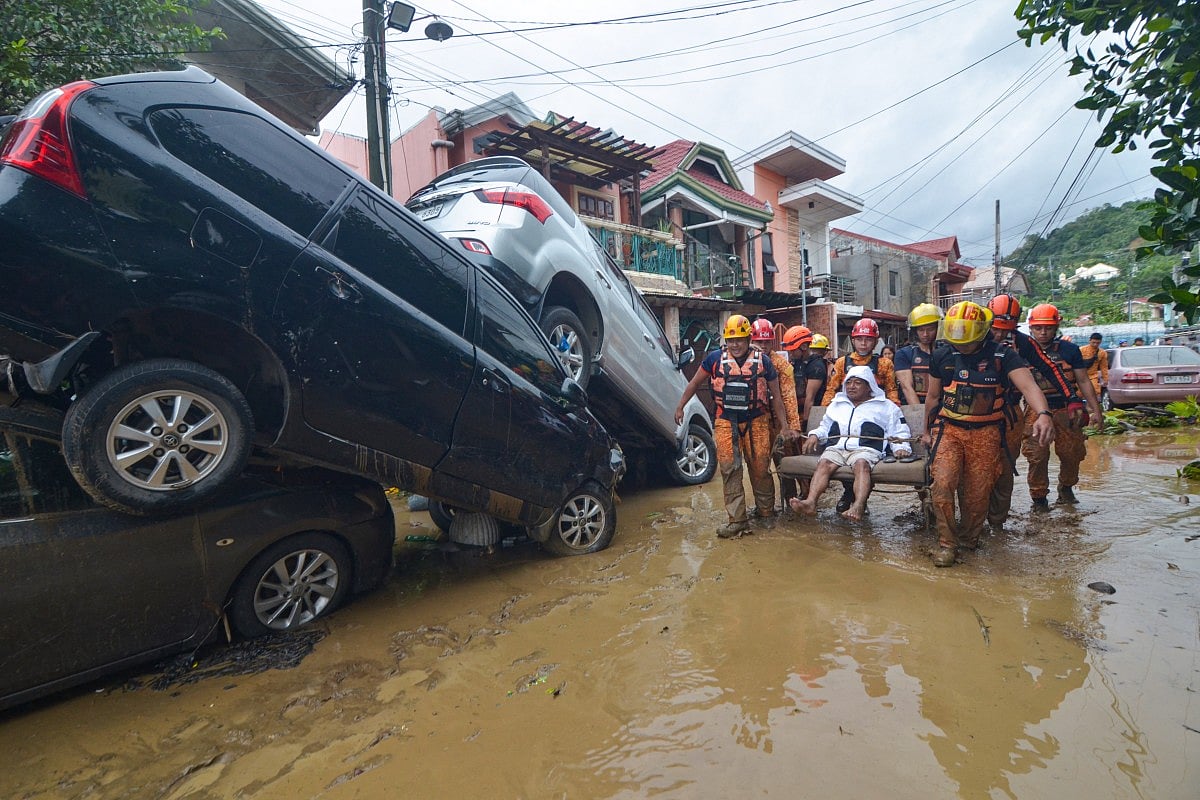
Rescuers carry a resident past cars washed away by floods at the height of Typhoon Kalmaegi at a subdivision of Cebu City in the central Philippines on November 4, 2025.
AFP
Manila: A shocking Senate investigation reveals hundreds of fully paid but non-existent flood control projects from 2016 to 2025, costing Philippine taxpayers roughly ₱180 billion ($3 billion).
With arrests underway and reforms proposed, lawmakers vow to end the opaque budget insertions that fuelled graft.
Filipino taxpayers have lost an estimated $3 billion (around ₱180 billion) in at least 673 “ghost” flood control projects over the past decade, Senate President Pro Tempore Panfilo Lacson revealed on Wednesday (December 3).
These ghost projects — fully paid yet physically non-existent — are only part of the problem, excluding substandard or incomplete flood control works that were also paid in full.
“We estimate around ₱180 billion was lost,” Lacson said on a local radio station in Filipino. This figure only covers ghost projects, not the poorly constructed ones, he explained in Filipino.
The figure emerged from inspections covering approximately 10,000 flood control projects implemented between 2016 and 2025.
About 6% were found to be outright nonexistent despite full disbursement.
The inspections were conducted by teams from the Philippine military, police, and personnel from the Department of Development (DepDev) under an ongoing probe into corruption scams in government infrastructure projects.
It is estimated that about 30,000 flood control projects have been completed and fully paid for over the last 10 years, amplifying the potential scale of these fraudulent schemes.
President Ferdinand Marcos Jr. has condemned contractors allegedly ringfencing billions worth of government contracts—an issue now exposed through a Senate livestream investigation.
Initially, 421 ghost flood control projects were uncovered from an inspection of 8,000 projects.
A later examination of an additional 2,000 projects revealed 252 more ghost projects — bringing the total to 673.
Arrests and crackdown
Several senior officers from the Department of Public Works and Highways (DPWH) have already been arrested as authorities deepen the crackdown on corrupt practices.
In an interview on DZBB radio, Lacson emphasised the Senate’s commitment to transparency to prevent the return of “allocables” and “leadership funds” in the 2026 budget.
“If this 6% ghost project rate persists across the full 30,000 projects funded, about ₱180 billion has been stolen,” Lacson warned. “And that does not even include the substandard flood control works.”
Lacson has been a vocal critic of the allegedly corrupt 2025 spending plan, which included questionable budget insertions.
He highlighted that the Senate leadership is enforcing a “zero tolerance” policy against such insertions during bicameral conference committees.
“The strongest reform is the rule that the bicam will not allow any item that was not in both the Senate and House versions,” Lacson said, stressing the importance of live-streamed deliberations and public transparency in amendments.
How budget insertions enable corruption
Lacson detailed during the interview that opaque “small committee” meetings in past years allowed untraceable pork barrel-like budget allocations without minutes or accountability, making the culprits impossible to identify.
He is pushing for full transparency, requiring public disclosure of every budget amendment proponent, to hold lawmakers accountable for phantom or poor-quality projects.
This follows Senate Concurrent Resolution No. 4, which mandates real-time online postings of all amendments — even those involving complex chains of changes.
Transparency
During August plenary debates, Lacson urged, “The most genuine transparency is full transparency — we must identify proponents.”
On December 2, Lacson took concrete action by moving to cut ₱2 billion in “redundant” right-of-way funds. The Senate also advanced measures to block unrelated budget insertions, aiming for timely approval of the 2026 budget to avoid reenacting the flawed 2025 budget.
“Passing on time is crucial,” Lacson told dwIZ radio. “A reenacted budget revives last year’s problems.”
These reforms aim to restore public trust by making each peso traceable and removing opportunities for corrupt insertions.
Sign up for the Daily Briefing
Get the latest news and updates straight to your inbox
Network Links
GN StoreAbout Gulf NewsTerms & ConditionsReach by GNSitemapContact usPrivacy PolicyGN FocusHave your sayWork with usAdvertise with usGulf News epaperPrinting Services
Download our app
© Al Nisr Publishing LLC 2026. All rights reserved.