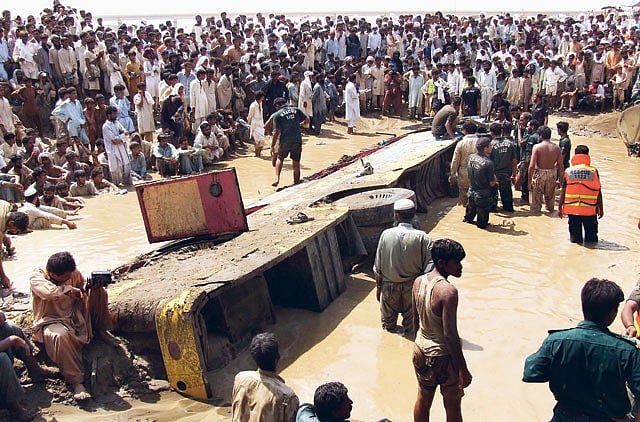
Islamabad: Recovering from the devastating floods still battering Pakistan will take at least three years, Pakistan President Asif Ali Zardari said, as the waters swept south after leaving millions homeless and submerging millions of acres of farmland.
The floods that began nearly a month ago with hammering monsoon rains in the northwest have affected more than 17 million people, the UN estimates. Most of the 1,500 deaths occurred early in the flooding, but the crisis is still growing.
President Asif Ali Zardari defended the government's much-criticised response to the unprecedented floods but acknowledged recovery would take a very long time. "Three years is a minimum," Zardari said in an interview on Monday with a small group of foreign reporters in the capital, Islamabad.
The widespread misery caused by the floods has triggered worries about social unrest, food riots or even a challenge to the government's rule before its term ends in 2013.
Relief efforts
Local charities, the Pakistani army and international agencies are providing food, water, medicine and shelter to the displaced, but millions have received little or no help. Aid officials warn that widespread outbreaks of waterborne diseases such as cholera now pose a threat.
Dr Jahanzeb Orakzai, Pakistan's national health coordinator, said a team has been formed to oversee the response to any health emergencies and includes international groups such as the World Health Organisation and Unicef.
The medical situation is under control in the flood zone, he said, despite some disease outbreaks, but the situation was still tenuous.
"Health problems usually arise in flood-affected areas after four to six weeks, and we need to be alert and prepared to tackle the situation," he said.
Prime Minister Yousuf Raza Gilani warned that the country has to prepare for epidemics.
"Pakistan and its people are experiencing the worst natural calamity of its history," Gilani said at a meeting on health issues in the flood zone. "As human misery continues to mount, we are seriously concerned with spread of epidemic diseases."
Children at risk
More than 3.5 million children are at risk from waterborne diseases, he said, and skin diseases, respiratory infections and malnutrition are spreading in the flooded areas.
The problem is compounded by the flood's impact on the country's medical system, which is already badly overstretched and underfunded.
Gilani said the floods had damaged more than 200 health facilities, for instance, and that about one-third of the country's 100,000 women health workers have been displaced.
Yesterday, officials announced that the government would give Rs20,000 (Dh844) to every family affected by the floods, with a statement from Zardari's spokesman calling the payment "initial assistance".
In Shadadkot, in the southern province of Sindh, authorities are increasingly worried that even the 18 kilometres of new levees soldiers have built may not hold back floods in the city, and in Qambar city further to the south.
Yesterday, workers piled stones and sandbags to plug leaks in the levees.
Sign up for the Daily Briefing
Get the latest news and updates straight to your inbox
Network Links
GN StoreDownload our app
© Al Nisr Publishing LLC 2026. All rights reserved.