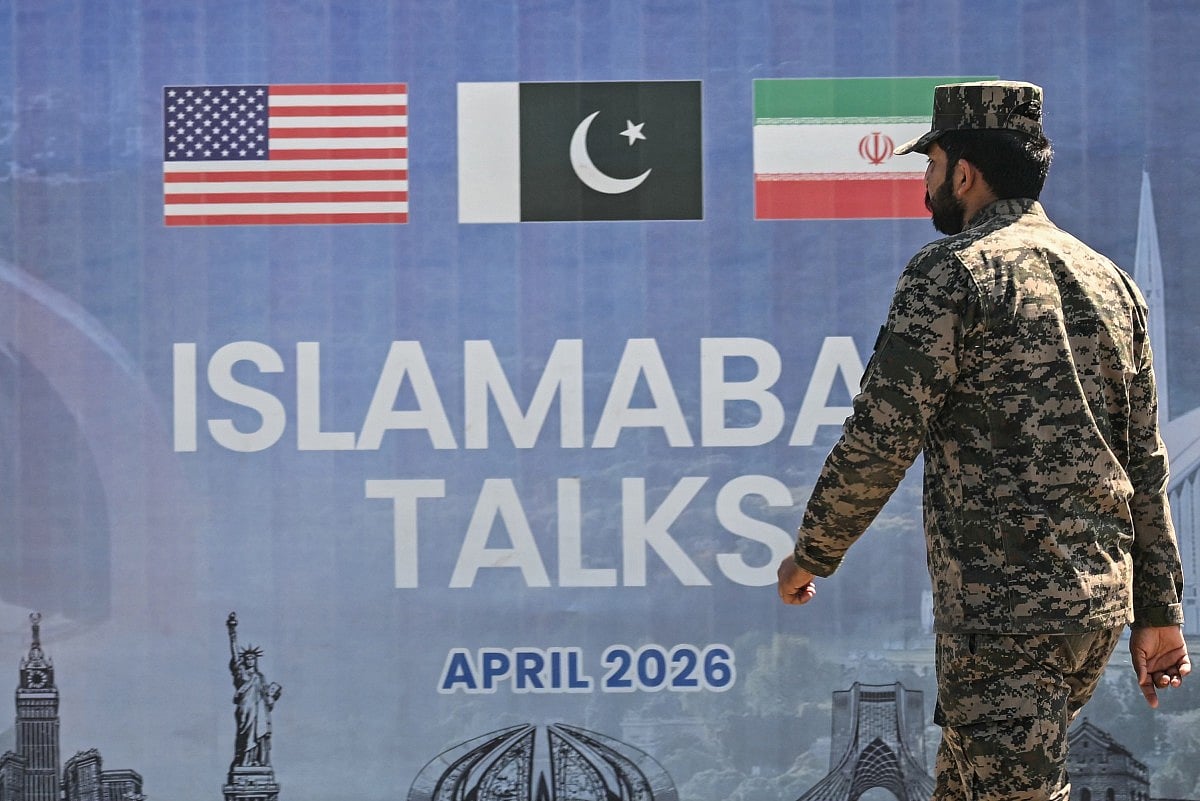
Dubai: Pakistan on Thursday said no date has been set for the second round of talks between the United States and Iran, urging the media to avoid speculation as diplomatic consultations continue under a highly confidential process.
Pakistan Foreign Office spokesperson Tahir Hussain Andrabi, during his weekly briefing in Islamabad, said nuclear issues are among the key subjects being discussed between the two sides but declined to comment on negotiating positions.
“Nuclear issues are among the subjects being discussed by the countries but Pakistan would not disclose details shared in trust by the negotiating parties,” he added.
“We will not comment on the positions of Tehran and the parties involved in the negotiations. This is part of the parties’ trust in us,” Andrabi said, emphasising that confidentiality was essential to the process.
No timeline
He stressed that no timeline had been finalised for the next round of engagement. “Who will come, how large the delegation will be, who will stay, and who will leave, this is for the parties to decide,” he said, urging restraint from speculation over the composition and timing of delegations.
‘Confidential and trust-based process’
Andrabi said the discussions between Washington and Tehran were continuing in an atmosphere of “high trust and secrecy,” noting that Pakistan’s role was strictly that of a facilitator.
“It is essential for us to keep the negotiations confidential. All information received from the parties was being handled with discretion,” he added.
He reiterated that Pakistan’s Foreign Office applied the same policy of confidentiality toward both local and international media.
“The details and information of the negotiations that we had were entrusted to us by the negotiating parties,” he said.
Get updated faster and for FREE: Download the Gulf News app now - simply click here.
Pakistan’s role
At the outset of the briefing, the spokesperson said Pakistan had been recognised internationally for its constructive diplomatic engagement in supporting de-escalation and facilitating dialogue between the US and Iran.
“Through sustained interaction with both Washington and Tehran, Islamabad has sought to encourage dialogue, facilitate the exchange of messages, and help create conditions conducive to meaningful negotiations,” he said.
He added that Pakistan’s approach reflected its “consistent commitment to regional stability and international peace.”
Islamabad talks
Referring to the recent Islamabad round of negotiations, Andrabi said the discussions lasted around 21 hours of continuous engagement, with the full process extending close to 30 hours when breaks and logistical movement were included.
“The entire negotiations process was intensive and extensive, both in terms of scope and timelines,” he said.
He added that leadership from Pakistan, including the Prime Minister, Deputy Prime Minister and Foreign Minister, and the military leadership, remained engaged throughout the diplomatic efforts.
Regional diplomacy
The spokesperson said Pakistan had maintained active diplomatic outreach with multiple regional and global partners through high-level calls and visits as part of efforts to support de-escalation.
He also noted that recent engagements by Pakistan’s leadership in Saudi Arabia, Qatar, and Turkiye, along with the Chief of Army Staff’s visit to Iran, reflected Islamabad’s continued facilitative role.
Lebanon ceasefire
Responding to a question, Andrabi said peace in Lebanon was an important factor within the wider regional context linked to US-Iran discussions.
“Peace in Lebanon is essential for [US-Iran] peace talks,” he said, adding that developments on the Israel-Lebanon front were being viewed as part of a broader regional peace framework.
He stressed that de-escalation in Lebanon would help create a more conducive environment for diplomatic progress.
No breakthrough yet
While acknowledging that the first round of US-Iran talks in Islamabad did not produce a breakthrough, officials described the outcome as steady progress in establishing communication channels.
“There was neither a breakthrough nor a breakdown,” Andrabi said, characterising the process as “serious and constructive.”
He added that Pakistan would continue its role in keeping communication channels open between the two sides.
Sign up for the Daily Briefing
Get the latest news and updates straight to your inbox
Network Links
GN StoreDownload our app
© Al Nisr Publishing LLC 2026. All rights reserved.