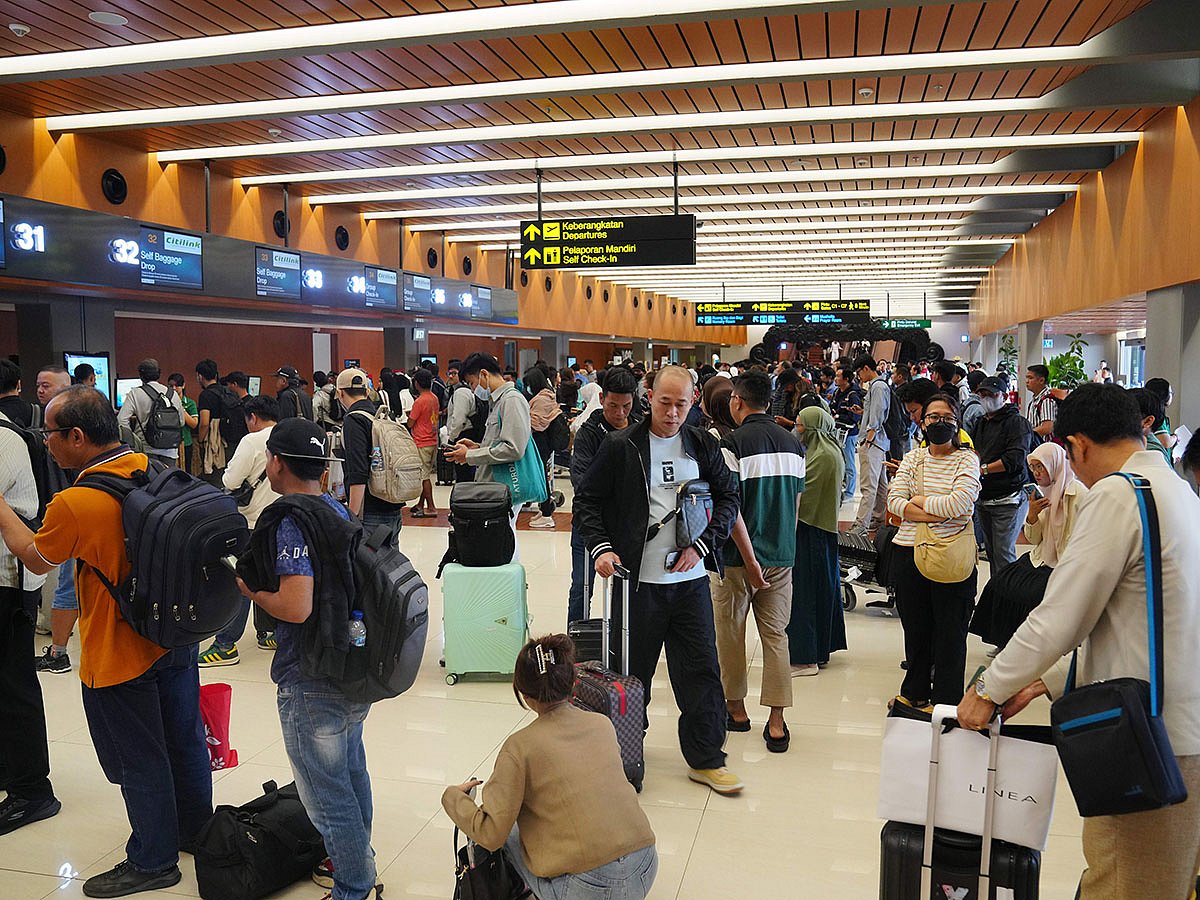
Jakarta: Indonesia halted operations at its main international airport outside Jakarta on Sunday due to ash spewed from the Anak Krakatoa volcano, more than 150 kilometres away.
Mount Anak Krakatoa erupted on Saturday, producing a fountain of lava and booming sounds that could be heard up to 700 kilometres (435 miles) away, the geology agency said in a statement.
Get updated faster and for FREE: Download the Gulf News app now - simply click here.
Two new eruptions were recorded on Sunday, the volcanology agency warned.
Ash from the volcano was detected in the airspace surrounding Soekarno-Hatta International Airport, prompting authorities to suspend operations from 01:30 am Sunday (Saturday 1830 GMT).
"The latest paper test…showed positive results indicating the spread of volcanic ash in the Soekarno-Hatta International Airport area, consequently the airport closure was extended until Sunday at 09:30 am (0230 GMT)," the transport ministry said in a statement Sunday.
More than 22,000 passengers have been impacted by the suspension, the ministry said, adding that 209 flights were affected, in particular to and from Singapore.
Other affected international routes included Doha, Sydney, and Kuala Lumpur.
Anak Krakatoa, which means Child of Krakatoa, sits in a strait that separates the islands of Java and Sumatra.
It has been sporadically active since it emerged from the sea at the beginning of last century in the caldera formed after the 1883 eruption of Mount Krakatoa.
That disaster was one of the deadliest and most destructive in history with an estimated 35,000 people killed.
Indonesia, a Southeast Asian archipelago nation, sits on the Pacific Ring of Fire, where the meeting of continental plates causes high volcanic and seismic activity.
Network Links
GN StoreDownload our app
© Al Nisr Publishing LLC 2026. All rights reserved.