What is Waqf (Amendment) Bill 2024?: Key changes and their impact on governance and property management
Proposed controversial bill on Muslim properties is now one step closer to becoming Act
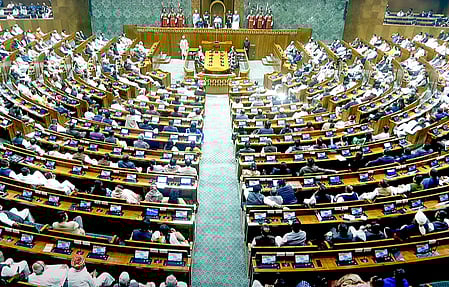
Dubai: The Waqf (Amendment) Bill was cleared by the Lok Sabha on Thursday after a 12-hour-long debate, with 288 members voting in favor and 232 voting against.
If it is passed by the Rajya Sabha, it will be sent to President Droupadi Murmu for her assent before it becomes law.
Here’s a look at the law:
History of the concept
The word “waqf” has its origin in the Arabic word “waqufa,” meaning to detain or to hold or to tie up.
Waqf, in Islamic law, refers to a charitable endowment where an individual dedicates property for religious or philanthropic purposes.
Once designated as waqf, the property cannot be transferred through inheritance, sold or given away.
Waqf structure
Three key parties in the waqf structure:
The waqif is the founder who establishes the waqf, either through a written declaration or by verbally expressing their intent to dedicate the property.
The beneficiaries, referred to as mawqaf ‘alayh, are those who benefit from the waqf.
The mutawalli, or trustee, who is responsible for managing the waqf.
Origin of law in India
The origins of waqf law can be traced back to the pre-colonial era, where Islamic rulers and nobles frequently endowed properties for religious and charitable purposes.
In pre-colonial India, Hindus and Muslims followed their personal laws in family affairs while the judicial system was based on customs governing communities and different walks of life.
Key changes in the Waqf (Amendment) Bill
Removal of ‘waqf by user’ – Land will only be recognised as Waqf if officially declared or endowed, not just by longstanding use.
Donor requirements – Only practicing Muslims for at least five years can dedicate land for waqf. Women’s inheritance rights are protected.
Government land – If mistakenly recorded as waqf, government land will no longer be considered waqf. The District Collector, not the Waqf Board, will have the final say in disputes.
Authority shift – Waqf Boards lose their power to declare and manage waqf land; this responsibility moves to state-appointed officials.
Waqf surveys – Now conducted under the District Collector, aligning with state revenue laws.
Council & Board changes – Non-Muslims can now be part of the Central Waqf Council and State Waqf Boards. At least two Muslim women must still be included.
Tribunal modifications – Removes the requirement for a Muslim law expert. The tribunal will now include a District Court judge and a state government joint secretary.
High Court access – Appeals against tribunal decisions can now be filed in the High Court within 90 days.
Central oversight – The central government gains authority over Waqf registration, audits, and accounts, replacing state control.
Sect-Based Waqf Boards – Shiite and Sunni Boards now extend to Bohra and Agakhani communities.
These changes significantly shift waqf governance, increasing state and central control.
The British political system replaced this system with a uniform judiciary. Waqf cases were frequently brought before the Privy Council from various Muslim-populated regions within the British Empire.
The British legal system refused to recognise family waqf as a legitimate institution in the late 19th century.
Such waqf remained invalid for two decades before the promulgation of the Mussalman Wakf Validating Act in 1913.
How it has evolved after independence
In 1954, the Waqf Act was enacted to provide a comprehensive framework for the registration, management and supervision of waqf properties across the country.
This law was subsequently repealed and replaced by the Waqf Act of 1955, which is the current governing legislation. The 2013 amendments further strengthened the authority of the waqf board while introducing stringent measures to curb illegal alienation of waqf properties.
The 1955 act outlines several key provisions regarding the delineation of waqf properties, the creation of state waqf boards and the establishment of the central waqf council.
The act mandates that every state must appoint a survey commissioner to identify and delineate waqf properties. These are recorded in the state’s official gazette, and a list is maintained by the state waqf board.
The Act establishes waqf boards in every state and Union territory. These boards are statutory bodies responsible for the general administration of waqf properties within their jurisdiction.
The act also establishes the Central Waqf Council, a national-level advisory body under the ministry of minority affairs.
Sign up for the Daily Briefing
Get the latest news and updates straight to your inbox
Network Links
GN StoreDownload our app
© Al Nisr Publishing LLC 2026. All rights reserved.