India bullet train set for August 15, 2027 debut with phased rollout
Phased launch to begin on Mumbai–Ahmedabad corridor using Japanese Shinkansen technology
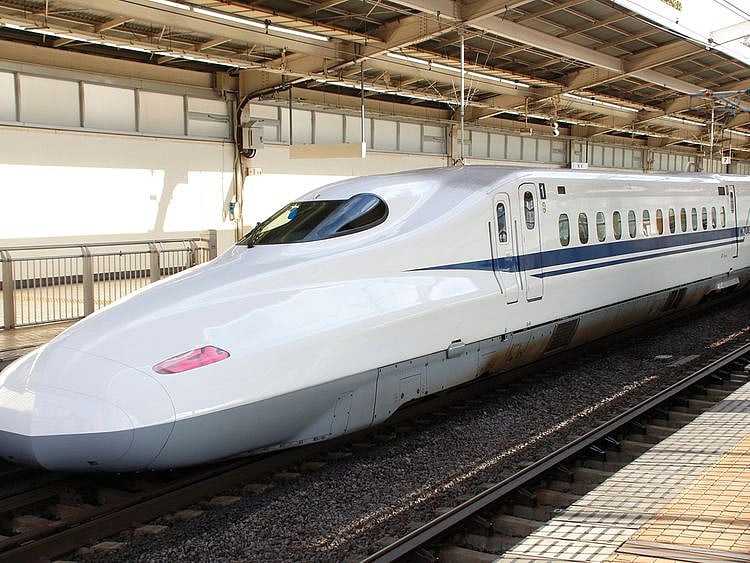
Dubai: India’s first bullet train is set to begin operations on August 15, 2027, Union Railways Minister Ashwini Vaishnaw said on Thursday, outlining a phased rollout plan for the Mumbai–Ahmedabad high-speed rail corridor.
Speaking during a Cabinet press briefing, Vaishnaw said the initial operational stretch of the bullet train will open between Surat and Bilimora, followed by subsequent sections covering Vapi–Surat, Vapi–Ahmedabad, and finally Thane–Ahmedabad, completing the corridor in stages.
The Mumbai–Ahmedabad bullet train project, being developed using Japanese Shinkansen technology, will have a design speed of 320 kmph and is expected to operate at around 300 kmph, reducing travel time between the two cities to approximately two hours once fully operational.
India’s first bullet train: Key details
Launch date: August 15, 2027
Announcement: Union Railways Minister Ashwini Vaishnaw at Cabinet briefing
Corridor: Mumbai–Ahmedabad High-Speed Rail
Total length: 508 km
Technology: Japanese Shinkansen
Design speed: 320 kmph
Operational speed: ~300 kmph
Travel time (full corridor): Around 2 hours
Phased operations plan
Phase 1: Surat – Bilimora
Phase 2: Vapi – Surat
Phase 3: Vapi – Ahmedabad
Final phase: Thane – Ahmedabad
Route coverage
Gujarat & Dadra & Nagar Haveli: 352 km
Maharashtra: 156 km
Key cities: Ahmedabad, Vadodara, Bharuch, Surat, Vapi, Thane, Mumbai
Construction progress
Over 85% of corridor on elevated viaducts
330 km of viaducts and 408 km of piers completed
17 of 25 river bridges completed
560 track-km of RC track bed completed
4.7 lakh noise barriers installed over 235 km
Tunnelling underway in Palghar; 5 km completed on BKC–Shilphata tunnel
The 508-km corridor is India’s first high-speed rail project and a flagship initiative aimed at transforming inter-city mobility. Of the total length, 352 km lies in Gujarat and Dadra & Nagar Haveli, while 156 km runs through Maharashtra, connecting major urban centres including Ahmedabad, Vadodara, Bharuch, Surat, Vapi, Thane and Mumbai.
According to the National High-Speed Rail Corporation Ltd (NHSRCL), construction work is at an advanced stage across much of the alignment. Over 85 per cent of the corridor — about 465 km — is being built on elevated viaducts, with large stretches of piers, track beds and noise barriers already completed. Work on river bridges, tunnels and stations is progressing simultaneously.
Gemstone sector
Prime Minister Narendra Modi reviewed the project during his visit to Gujarat in November, inspecting key infrastructure such as the Surat Bullet Train station, whose design is inspired by the city’s diamond industry. While structural work at the station has been completed, interior finishing and passenger amenities are currently underway.
Vaishnaw said the bullet train project represents a major leap in rail technology and safety standards, with extensive technology transfer from Japan’s Shinkansen system. Officials expect the corridor to not only cut travel time but also boost regional economic activity, employment and urban development along the route.
Alongside the bullet train announcement, the minister highlighted the success of Vande Bharat Express trains, noting that their popularity has created strong demand for more modern rail services. He confirmed that the Vande Bharat Sleeper train, designed for long-distance overnight journeys, has completed testing and certification and will soon begin service, with the Guwahati–Kolkata route proposed as its first run.
With phased commissioning planned from 2027, Indian Railways says the Bullet Train project marks the beginning of a new era of high-speed, safe and modern rail travel in the country.

Sign up for the Daily Briefing
Get the latest news and updates straight to your inbox
Network Links
GN StoreDownload our app
© Al Nisr Publishing LLC 2026. All rights reserved.