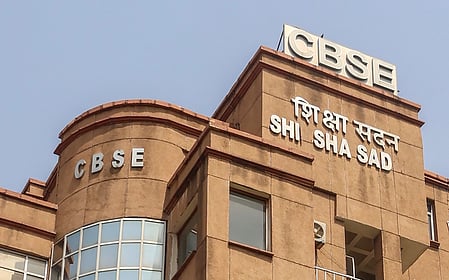
New Delhi: The Central Board of Secondary Education (CBSE) on Monday issued detailed guidelines for implementing the three-language policy in affiliated schools from the 2026–27 academic session, clarifying that the current batch of Class X students will not be covered under the revised language framework.
According to a CBSE press release, the guidelines have been framed to support implementation of the multilingual education recommendations under the National Education Policy (NEP) 2020 and ensure a smooth transition for students and schools.
Get updated faster and for FREE: Download the Gulf News app now - simply click here.
Current Class X students exempt
The Board clarified that students currently studying in Class X will not be required to follow the new language policy.
“The current batch of Class X will not have to follow the new language policy,” CBSE said in the release.
Existing foreign language combinations to continue for some students
CBSE further clarified that students currently enrolled in Classes VII, VIII and IX who have already opted for two foreign languages will be allowed to continue with the same combination. However, they will be required to study one additional native Indian language (Bharatiya Bhasha).
“For the current batches of Classes VII, VIII and IX who had already taken two foreign languages, the same arrangement will continue, along with one additional native Indian language (Bharatiya Bhasha),” the release stated.
Learning resources to support implementation
To facilitate effective implementation of the policy, the Board said grade-appropriate learning resources would be made available within a stipulated timeframe.
“The grade-appropriate resource material would be made available in a time-bound manner,” CBSE said.
Focus on multilingual and holistic education
Emphasising the broader objective of multilingual education, CBSE said language learning should be meaningful and contribute to students’ overall development.
“Language learning will be meaningful, engaging and enriching to contribute to holistic development,” the release added.
CBSE noted that the National Education Policy 2020 recommends that students learn three languages during their school education, with at least two of them being native Indian languages. The policy aims to promote multilingualism, strengthen proficiency in Bharatiya Bhashas and foster inclusive, learner-centric language education.
The Board added that the introduction of a third language at the middle stage (Classes VI to VIII), and its continuation at the secondary stage (Classes IX and X), is intended to strengthen NEP objectives while encouraging linguistic diversity and holistic learning.
CBSE said the guidelines have been issued to ensure uniform and smooth implementation of the three-language policy across all affiliated schools beginning with the 2026–27 academic session.
Network Links
GN StoreDownload our app
© Al Nisr Publishing LLC 2026. All rights reserved.