Asia turns to Covid-era playbook as Iran war fuels energy crisis
Work-from-home, curbs and subsidies return as Hormuz disruption squeezes oil supply
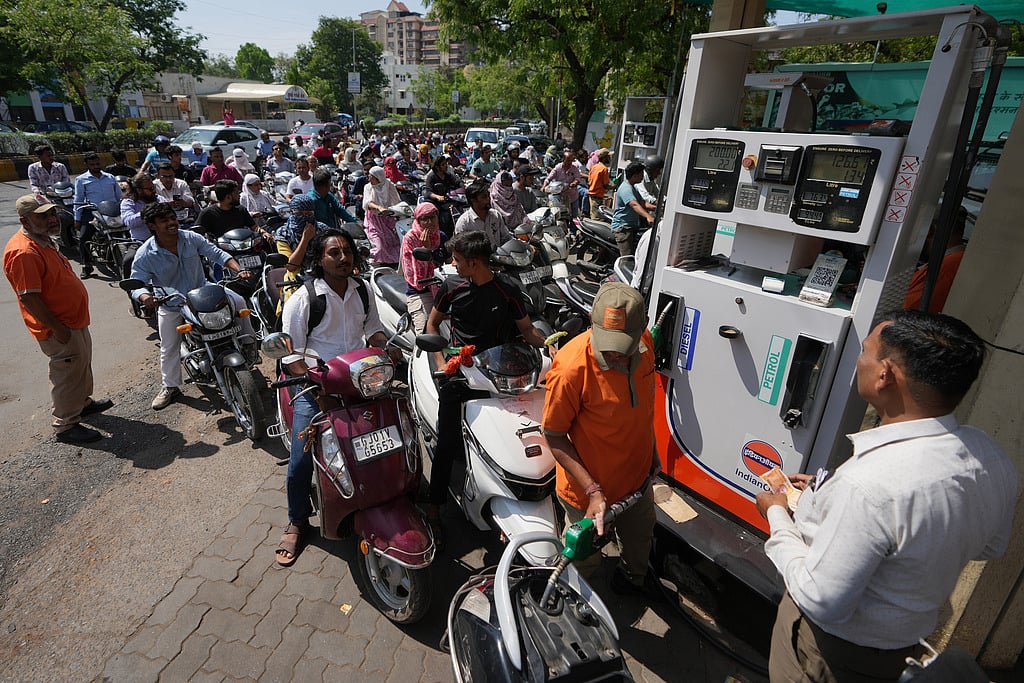
Dubai: Countries across Asia are reviving Covid-era playbooks — from work-from-home policies to fuel-saving curbs and subsidies — as they scramble to respond to a deepening energy crisis triggered by the Iran war, Reuters reported.
The region is at the frontline of the disruption, buying more than 80% of the crude that transits the Strait of Hormuz — a vital artery that has been largely blocked since the conflict began on February 28.
While no country has yet imposed full work-from-home mandates, several governments say such measures are under active consideration as fuel shortages and price spikes ripple across economies.
Pakistan closed schools for two weeks and said office workers would work more from home. The island nation of Sri Lanka declared a public holiday every Wednesday to help make its fuel supplies go further.
Meanwhile, Prime Minister Shehbaz Sharif held a meeting with Pakistan Peoples Party (PPP) Chairman Bilawal Bhutto-Zardari to discuss the evolving regional situation and matters related to national security, sources told Geo News.
Sindh Chief Minister Murad Ali Shah and Balochistan Chief Minister Sarfraz Bugti also attended the meeting. The participants reviewed measures being taken in light of the prevailing regional tensions and exchanged views on the broader security situation.
Sources said the prime minister took Bilawal into confidence regarding Pakistan’s diplomatic role in the ongoing Iran-US conflict.
Smart lockdown in Sindh?
Sindh Local Government Minister Nasir Hussain Shah said on Tuesday that authorities are considering imposing a smart lockdown in the province to conserve fuel amid the Middle East crisis affecting global oil supply, according to Geo News.
Shah, speaking to reporters in Sukkur, emphasised on adopting unusual steps, saying: “The present circumstances are not normal. If the war drags on, everyone will face difficulties.”
Highlighting the province’s steps to conserve fuel and ease pressure on resources, the minister noted that 60% of petrol for government vehicles had already been reduced.
He went on to say that daily meetings are being held to assess the situation, underlining the Sindh government’s proactive approach during uncertain times.
Smart lockdowns, first introduced in Pakistan during the Covid-19 pandemic, are targeted restrictions aimed at controlling movement and limiting gatherings in specific areas.
Under this system, authorities can impose restrictions on individual neighbourhoods, streets, or communities, rather than enforcing a city-wide shutdown.
In areas under a smart lockdown, no more than four people are allowed to gather at a time, and only one person per household may leave their home after explaining their reason to law enforcement.
Public events, social gatherings, and celebrations are prohibited, while neighbourhoods, and targeted zones may be sealed.
The Sindh government had announced a series of austerity measures earlier this month, aiming at reducing fuel consumption and curbing government expenditure amid soaring oil prices linked to the ongoing US-Israel-Iran war.
During the meeting, the chief ministers briefed the prime minister on their respective provinces’ strategies regarding the implementation of smart lockdowns. The participants also discussed the country’s political situation, sources added.
In Sri Lanka, authorities have declared a public holiday every Wednesday to stretch limited fuel supplies.
The urgency reflects a broader regional scramble.
In South Korea, officials are considering work-from-home options while launching a public campaign urging citizens to conserve energy — from cutting shower time to limiting electricity use. The Philippines has shortened work weeks in some government offices and declared a national energy emergency, warning of an “imminent danger” to fuel supplies.
Singapore has advised businesses and households to adopt energy-efficient practices, while Thailand has ordered civil servants to curb travel, reduce air-conditioning use and work remotely where possible.
The International Energy Agency (IEA), which has coordinated a record release of around 400 million barrels from strategic reserves, has urged countries to adopt behavioural changes such as remote working and reduced travel to ease pressure on oil markets.
“These measures helped countries navigate past energy shocks… while keeping the lights on,” IEA Executive Director Fatih Birol said.
Relief and rationing
As fuel prices surge, governments are also rolling out financial support.
Japan plans to tap $5 billionin reserve funds to subsidise fuel costs, while New Zealand has announced weekly cash support for low-income households.
In Australia, panic buying and supply shortages have left some petrol stations dry, prompting the government to move legislation to curb price gouging.
Several countries have also released fuel from domestic reserves and relaxed fuel standards to boost supply.
Policy dilemma deepens
Unlike during the pandemic, however, central banks are not rushing to ease policy.
With inflation rising sharply due to energy costs, some — including the Reserve Bank of Australia — have already raised interest rates, highlighting the growing tension between controlling inflation and supporting growth.
“Central banks face a classic policy dilemma when oil prices surge — inflation rises but growth might weaken,” said Jennifer McKeown of Capital Economics.
As the Iran war disrupts one of the world’s most critical energy corridors, Asia now faces a familiar but more complex challenge: managing shortages without triggering deeper economic pain.

Sign up for the Daily Briefing
Get the latest news and updates straight to your inbox
Network Links
GN StoreDownload our app
© Al Nisr Publishing LLC 2026. All rights reserved.